






































Digital Drive in Education:
Govt Plans Multimedia Classrooms, Edu-ID and Free Wi-Fi Expansion




In line with the electoral manifesto, initiatives are being undertaken to establish multimedia classrooms in primary, secondary schools, and all equivalent educational institutions to make the new generation suitable for global competition. To reduce the digital divide, free Wi-Fi connectivity will be provided in 1,500 institutions (secondary schools, colleges, and universities), along with the introduction of a unique digital identity or ‘Edu-ID’ for every student and teacher, Prime Minister Tarique Rahman has said.
He stated that the electoral manifesto also pledges to make technical education compulsory for all at the secondary level alongside general education.
Highlighting further plans, the Prime Minister said that technical schools and colleges will be established in all upazilas across the country in phases, and polytechnic institutes in all districts. Alongside the modernization of technical and madrasa educational institutions, ‘free Wi-Fi’ will be launched within the next 180 days in 2,336 technical and 8,232 madrasa educational institutions across the country. To make madrasa education modern and time-appropriate, modern smart classrooms will be established, teacher skill development training will be provided, and technical courses will be incorporated.
He made these remarks on Wednesday morning, April 8, while responding to a question from Member of Parliament Md. Selim Reza of Sirajganj-1 constituency during the question-and-answer session of the first sitting of the National Parliament.
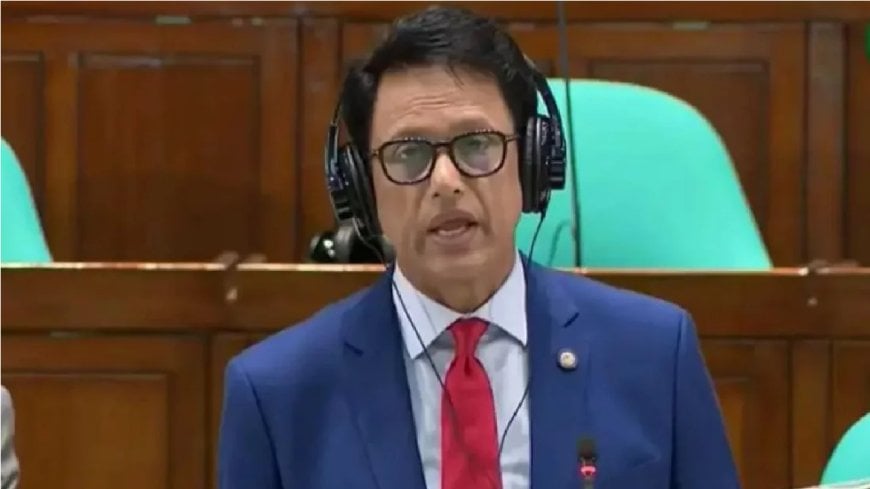
On the 11th day of the first session, the morning sitting was presided over by Speaker Hafiz Uddin Ahmed Bir Bikram. During the session, Md. Selim Reza, Member of Parliament from Sirajganj-1 constituency, asked whether the government has any plans to prioritize education during its tenure, to ensure quality education for the new generation, and to equip them with higher education, information technology, and skills in line with the demands of the current competitive world—and if so, what those plans are.
In response, the Prime Minister further stated that the current democratic government considers education as the best investment for the nation and is committed to building a quality, life-oriented, and inclusive education system. The government has outlined in its electoral manifesto a plan to gradually increase education sector allocation to 5 percent of GDP. Accordingly, 43 areas have been identified in the education sector, and short-, medium-, and long-term plans are being implemented. The manifesto places special emphasis on improving the quality of primary education. To that end, free school uniforms will be distributed among 200,000 students in government primary schools within the current fiscal year.
Earlier, in a written question, the Education Minister was asked whether there is currently a primary school in every village in the country; if not, how many villages lack primary schools along with their names; and whether the government has any plans to establish primary schools in those villages.
In response, Education Minister A N M Ehsanul Hoque Milan said that 2,847 villages in the country do not have primary schools. He stated that not every village in the country has a primary school. The number of villages without schools across divisions is: 717 in Dhaka Division, 818 in Chattogram Division, 355 in Rajshahi Division, 37 in Rangpur Division, 349 in Khulna Division, 45 in Barishal Division, 260 in Sylhet Division, and 266 in Mymensingh Division; totaling 2,847.
He further added that in the future, if proposals are received for establishing schools in villages without schools, necessary steps will be taken considering the requirements and relevant conditions for establishing such institutions.
DBTech/MAR/MUIM/OR









