




































15 Thousand Tons of E-Waste Materials Imported Despite Ban: TIB




Despite an official ban, 14,985 tonnes of e-waste materials were imported into Bangladesh between 2022 and 2024, according to a new study by Transparency International Bangladesh (TIB). The largest volumes were imported for use in the textile and garment, cement and ceramics, and trade and miscellaneous sectors. In contrast, around 1,173 tonnes of e-waste are collected annually from informal e-waste hotspots in Dhaka alone.
The findings were revealed on Tuesday, December 30, at TIB’s Dhanmondi office during the release of its research report titled “E-Waste Management in Bangladesh: Governance Challenges and Ways Forward.”
The study further disclosed that between 2010 and 2024, projects worth $458.5 million were approved from the Bangladesh Climate Change Trust (BCCT), of which an estimated 54 percent was affected by corruption.
Speaking at the press conference, TIB Executive Director Dr Iftekharuzzaman alleged that bribery and illegal transactions dominated project approvals, while large sums were embezzled during implementation by individuals linked to the previous Awami League government. He noted that allocations were heavily skewed toward infrastructure and mitigation projects driven by political and business interests, despite Bangladesh being among the world’s most climate-vulnerable countries. According to TIB, more than Tk 2,110 crore—over 54 percent of the national climate fund—was misappropriated between 2010 and 2024.
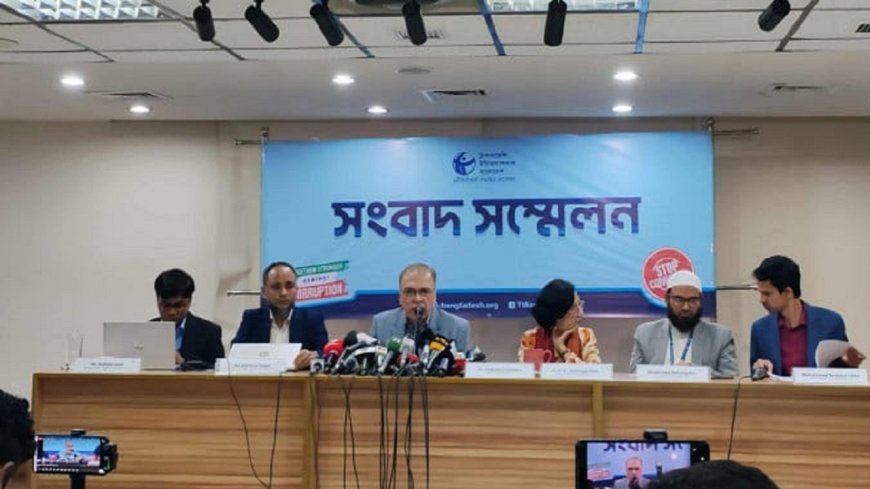
The research, presented by TIB researchers Abdullah Zahid Osmani and Nabil Haque, stated that despite the E-Waste Management Rules 2021 and the Import Policy Order 2021–2024, recyclable and used electronic equipment continued to be imported. Over the past three years alone, e-waste materials worth nearly $700,000 were imported in violation of regulations.
Sector-wise data show that 27 percent of imported e-waste went into the textile and garment sector, 16 percent into trade and miscellaneous uses, and 11 percent each into cement and ceramics, engineering and industry, and medical and scientific sectors. TIB also noted that electronic voting machines (EVMs) used by the Election Commission fall within the category of e-waste.
The study warned of severe environmental risks, noting that burning plastic recovered from e-waste accelerates climate change, while unsafe disposal of refrigerators and air conditioners releases hydrochlorofluorocarbons (HCFCs)—greenhouse gases that contribute to ozone layer depletion. TIB estimates that between 2025 and 2060, Bangladesh could generate 5.5 million tonnes of e-waste from solar panels alone. Meanwhile, 16,724 electric vehicles were imported between FY2022 and FY2025, but the absence of detailed data on their structure makes it impossible to estimate future e-waste volumes.
TIB further revealed that the 2022 floods generated approximately 24,013 tonnes of e-waste, yet Bangladesh currently lacks a disaster-specific e-waste management protocol, resulting in data gaps and poor handling. The organisation highlighted that proper recycling could reduce dependence on mining and imports, estimating that 31 tonnes of copper could be recovered annually from e-waste—worth over Tk 35 million at current market prices.
In its overall assessment, TIB criticised the Ministry of Environment and the Department of Environment, along with customs authorities, for failing to enforce the Hazardous Waste (E-Waste) Management Rules 2021. Although often labelled “informal,” the e-waste sector operates in a structured manner yet remains outside regulatory oversight. TIB said the continued failure to bring this sector under supervision reflects a serious lack of accountability.
DBTech/BSD/MUM/OR









