





































Bangladesh Eyes UNGA Presidency as Digital Diplomacy Takes Center Stage
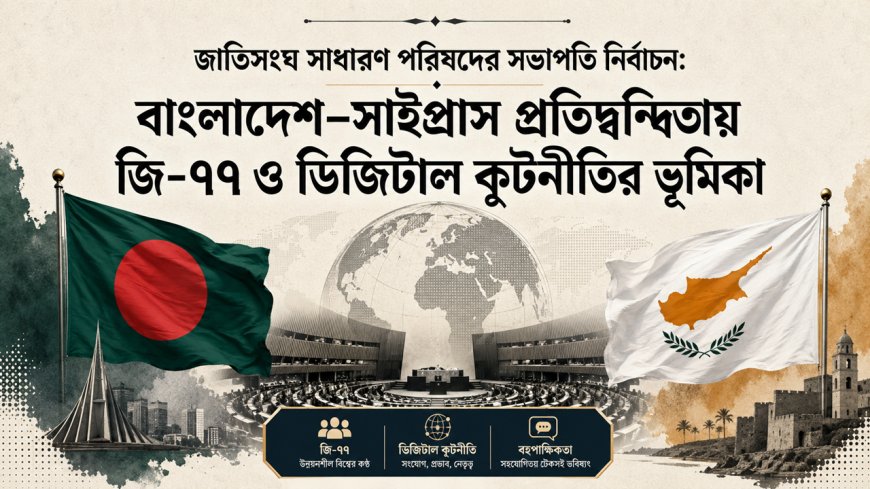



The election for the President of the 81st Session of the United Nations General Assembly (UNGA) is set to take place on June 2, drawing significant attention across global diplomatic circles. While the position is often viewed as largely procedural and lacking the executive authority of the UN Secretary-General or the Security Council, it remains highly influential in shaping multilateral dialogue, facilitating international consensus, and conveying important political messages on the world stage.
This year’s contest has generated unusual diplomatic interest due to the rare competitive race between Bangladesh and Cyprus. The candidacies of Bangladesh’s Dr. Khalilur Rahman and Cyprus’s Andreas Kakouris represent more than a contest between two individuals; they symbolize differing diplomatic approaches, regional dynamics, and competing visions for the representation of the Global South within the United Nations system.
Digital Diplomacy Emerges as a Key Factor
Assessing the significance of the election, media development, information integrity, and digital democracy expert AHM Bazlur Rahman said that Bangladesh’s prospects could largely depend on two critical factors.
The first is the extent to which Bangladesh can consolidate support from the Group of 77 (G-77), the largest coalition of developing countries within the United Nations. The second is the effectiveness of Bangladesh’s digital diplomacy efforts in communicating its message to member states worldwide.
Traditionally, the presidency of the General Assembly is selected through regional rotation and consensus, often eliminating the need for a contested vote. This year’s direct competition between two candidates has therefore transformed the election into a diplomatically significant event.
Although the process formally consists of a secret ballot in which each member state casts a single vote, observers note that the outcome is shaped by extensive lobbying, regional alliances, and complex geopolitical negotiations conducted behind the scenes.
Cyprus and Bangladesh Present Different Strengths
According to diplomatic analysts, Cyprus enters the race with the advantage of a longer campaign period. Having launched its diplomatic outreach earlier, Nicosia has had more time to engage regional groups and cultivate support among member states.
Cyprus’s candidate, Andreas Kakouris, is widely recognized within European diplomatic circles and benefits from the extensive networks associated with the European Union, of which Cyprus is a member.
Bangladesh’s candidate, Dr. Khalilur Rahman, is also a highly respected figure with extensive experience in climate diplomacy, migration policy, international development, and service within the United Nations system.
Bangladesh has long been one of the leading contributors to UN peacekeeping operations and has earned international recognition for hosting nearly one million Rohingya refugees. These achievements have strengthened the country’s standing as a prominent advocate for humanitarian responsibility, South-South cooperation, climate action, and disaster resilience.
Observers believe these credentials provide Bangladesh with a unique opportunity to position itself as a credible voice for developing nations and the broader Global South.
Beyond Traditional Diplomacy
AHM Bazlur Rahman, who also serves as an ambassador on responsible artificial intelligence and antimicrobial resistance issues, emphasized that the G-77 should not be viewed as a unified voting bloc.
According to him, emotional appeals to developing-country solidarity alone will not be sufficient to secure victory. Instead, success depends on targeted, data-driven, multilingual, and coordinated digital diplomacy efforts.
He argued that Bangladesh should complement traditional diplomatic engagements with strategic outreach through digital platforms, highlighting the country's achievements in peacekeeping, climate leadership, humanitarian assistance, and management of the Rohingya crisis.
Such communication, he suggested, should be directed toward influential diplomatic hubs including New York, Geneva, Brussels, and Riyadh, ensuring that Bangladesh’s key messages reach decision-makers effectively.
Geopolitical Considerations
The election is also unfolding against the backdrop of evolving geopolitical alignments.
Some analysts believe that China and Russia may view Bangladesh’s candidacy favorably, seeing it as part of a broader effort to enhance the representation of developing nations within international institutions and reduce the dominance of traditional Western powers.
India, meanwhile, may choose a more cautious and balanced approach, seeking to preserve regional equilibrium rather than openly supporting either side.
Regardless of the outcome, many observers regard Bangladesh’s candidacy as a reflection of the country’s transformation on the international stage. Once primarily associated with development challenges and aid dependency, Bangladesh is increasingly being recognized for its contributions to peacekeeping, climate advocacy, humanitarian leadership, and digital diplomacy.
For many, the June 2 election represents not only a contest for a prestigious UN position but also a visible demonstration of Bangladesh’s growing diplomatic confidence and international influence.
DBTech/BR/EK/OR
(UNGA) is set to take place on June 2, drawing significant attention across global diplomatic circles. While the position is often viewed as largely procedural and lacking the executive authority of the UN Secretary-General or the Security Council, it remains highly influential in shaping multilateral dialogue, facilitating international consensus, and conveying important political messages on the world stage.
This year’s contest has generated unusual diplomatic interest due to the rare competitive race between Bangladesh and Cyprus. The candidacies of Bangladesh’s Dr. Khalilur Rahman and Cyprus’s Andreas Kakouris represent more than a contest between two individuals; they symbolize differing diplomatic approaches, regional dynamics, and competing visions for the representation of the Global South within the United Nations system.
Digital Diplomacy Emerges as a Key Factor
Assessing the significance of the election, media development, information integrity, and digital democracy expert AHM Bazlur Rahman said that Bangladesh’s prospects could largely depend on two critical factors.
The first is the extent to which Bangladesh can consolidate support from the Group of 77 (G-77), the largest coalition of developing countries within the United Nations. The second is the effectiveness of Bangladesh’s digital diplomacy efforts in communicating its message to member states worldwide.
Traditionally, the presidency of the General Assembly is selected through regional rotation and consensus, often eliminating the need for a contested vote. This year’s direct competition between two candidates has therefore transformed the election into a diplomatically significant event.
Although the process formally consists of a secret ballot in which each member state casts a single vote, observers note that the outcome is shaped by extensive lobbying, regional alliances, and complex geopolitical negotiations conducted behind the scenes.
Cyprus and Bangladesh Present Different Strengths
According to diplomatic analysts, Cyprus enters the race with the advantage of a longer campaign period. Having launched its diplomatic outreach earlier, Nicosia has had more time to engage regional groups and cultivate support among member states.
Cyprus’s candidate, Andreas Kakouris, is widely recognized within European diplomatic circles and benefits from the extensive networks associated with the European Union, of which Cyprus is a member.
Bangladesh’s candidate, Dr. Khalilur Rahman, is also a highly respected figure with extensive experience in climate diplomacy, migration policy, international development, and service within the United Nations system.
Bangladesh has long been one of the leading contributors to UN peacekeeping operations and has earned international recognition for hosting nearly one million Rohingya refugees. These achievements have strengthened the country’s standing as a prominent advocate for humanitarian responsibility, South-South cooperation, climate action, and disaster resilience.
Observers believe these credentials provide Bangladesh with a unique opportunity to position itself as a credible voice for developing nations and the broader Global South.
Beyond Traditional Diplomacy
AHM Bazlur Rahman, who also serves as an ambassador on responsible artificial intelligence and antimicrobial resistance issues, emphasized that the G-77 should not be viewed as a unified voting bloc.
According to him, emotional appeals to developing-country solidarity alone will not be sufficient to secure victory. Instead, success depends on targeted, data-driven, multilingual, and coordinated digital diplomacy efforts.
He argued that Bangladesh should complement traditional diplomatic engagements with strategic outreach through digital platforms, highlighting the country's achievements in peacekeeping, climate leadership, humanitarian assistance, and management of the Rohingya crisis.
Such communication, he suggested, should be directed toward influential diplomatic hubs including New York, Geneva, Brussels, and Riyadh, ensuring that Bangladesh’s key messages reach decision-makers effectively.
Geopolitical Considerations
The election is also unfolding against the backdrop of evolving geopolitical alignments.
Some analysts believe that China and Russia may view Bangladesh’s candidacy favorably, seeing it as part of a broader effort to enhance the representation of developing nations within international institutions and reduce the dominance of traditional Western powers.
India, meanwhile, may choose a more cautious and balanced approach, seeking to preserve regional equilibrium rather than openly supporting either side.
Regardless of the outcome, many observers regard Bangladesh’s candidacy as a reflection of the country’s transformation on the international stage. Once primarily associated with development challenges and aid dependency, Bangladesh is increasingly being recognized for its contributions to peacekeeping, climate advocacy, humanitarian leadership, and digital diplomacy.
For many, the June 2 election represents not only a contest for a prestigious UN position but also a visible demonstration of Bangladesh’s growing diplomatic confidence and international influence.
DBTech/BR/EK/OR









