





































AI-Powered Policing: DMP Adopts Smart Technologies to Combat Evolving Crime



As criminal activities become increasingly technology-driven, law enforcement agencies are also embracing advanced digital tools to keep pace with modern threats. While traditional crimes such as theft and mugging remain concerns, cybercrimes—including online banking fraud, digital scams, and AI-generated deepfake content—are becoming more prevalent.
In response to these emerging challenges, the Dhaka Metropolitan Police has begun integrating artificial intelligence (AI) into its policing framework under a broader modernization initiative.
Nine New Digital Services Introduced
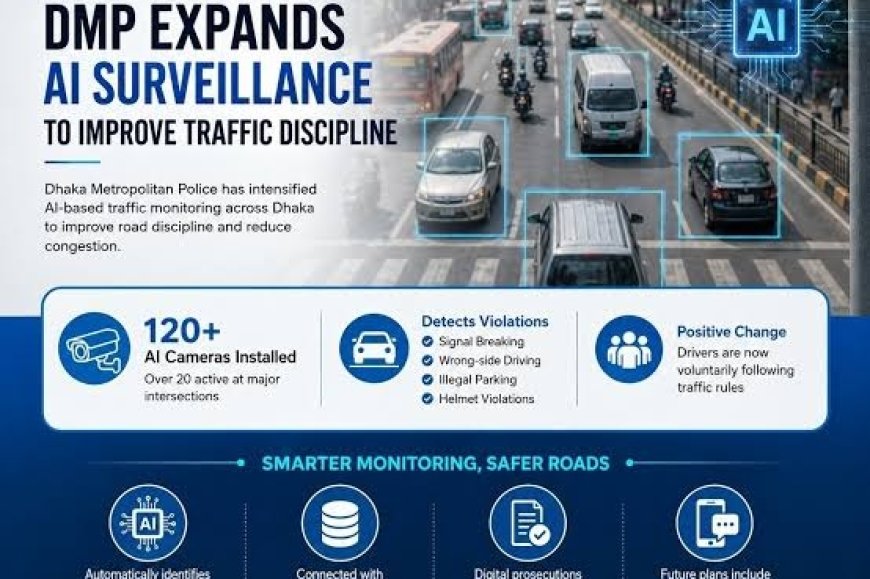
As part of efforts to modernize policing operations, DMP has recently launched nine new digital applications and technological systems. Among them, the AI-based traffic management system has attracted the most attention.
The smart traffic system has already been deployed at several key intersections in the capital, including areas around InterContinental Dhaka, Banglamotor, Karwan Bazar, and Bijoy Sarani. Using advanced video analytics technology, the system can automatically detect traffic violations in real time.
According to police officials and crime analysts, the technology enables automated evidence collection and electronic prosecution through “spot still-image cases” (e-prosecution). As a result, dependence on direct human intervention is expected to decrease while improving the overall efficiency of traffic law enforcement.
Smart Surveillance and Rapid Threat Detection
Sources concerned with the initiative said AI is also being incorporated into smart CCTV networks capable of identifying suspicious movements, abandoned objects, weapons, and potentially violent behavior automatically.
In addition, sensor-based systems can detect gunfire and determine the precise location of an incident within seconds. Such technologies are expected to strengthen urban security while also assisting border security forces in combating smuggling and unauthorized cross-border activities.
Digital Services for Citizens
To improve public access to police services, citizens can now file General Diaries (GDs) and access emergency communication services from home through the BD Police Helpline app.
At the same time, specialized units such as the Cyber Police Center (CPC) under the Criminal Investigation Department (CID) and BD e-GOV CIRT continue to work on cybercrime investigations, digital forensics, and the protection of national information infrastructure.
Tougher Legal Measures Against Deepfakes
Under the country's new cyber legislation, creating deepfake content without authorization, as well as using such content for blackmail or extortion, can result in penalties of up to five years of rigorous imprisonment.
Experts Warn of Privacy and Oversight Challenges
Despite the growing adoption of AI in law enforcement, experts have raised concerns about potential risks associated with the technology.
Towhidul Haque, a criminology expert and faculty member at University of Dhaka, cautioned against issues such as mass surveillance, violations of data privacy, algorithmic bias, and possible misuse of automated systems.
According to him, ensuring strict oversight, transparent governance policies, and robust ethical safeguards will be essential to making AI-driven policing both sustainable and citizen-friendly.
As Bangladesh continues its digital transformation, the integration of AI into policing reflects a broader effort to address increasingly sophisticated forms of crime while balancing security needs with concerns over privacy and accountability.
DBTech/SIS/EK/OR









