





































Roundtable Rallies Response to Retinopathy Risks
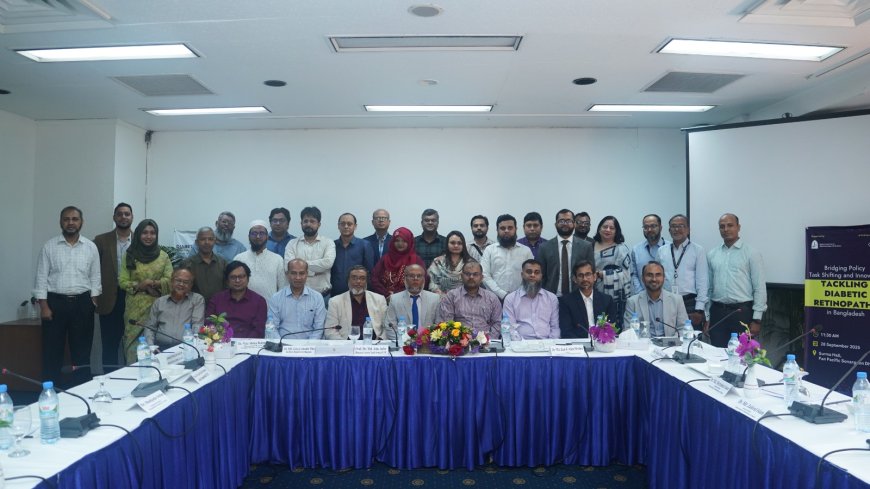



On the occasion of World Retina Day 2025, the National Institute of Ophthalmology and Hospital (NIOH) and Roche Bangladesh jointly organized a roundtable discussion titled “Bridging Policy, Task Shifting and Innovation: Tackling Diabetic Retinopathy in Bangladesh.” The event, held on Sunday, September 28, at the Pan Pacific Sonargaon Hotel in Dhaka, brought together key stakeholders from across the sector.
Among the participants were policymakers, healthcare experts, representatives from international NGOs, and members of the private sector. They engaged in discussions on effective strategies to combat diabetic retinopathy (DR) in Bangladesh.
Diabetic retinopathy, a condition directly associated with diabetes, has emerged as one of the leading causes of blindness in the country. Its rapid rise has turned it into a pressing public health issue. Limited public awareness, inadequate screening initiatives, insufficient health sector preparedness, and a lack of coordination among stakeholders have left detection and treatment coverage far below the required level. Against this backdrop, the roundtable highlighted existing weaknesses in screening, diagnosis, and treatment while exploring the potential of a coordinated national approach through public-private partnerships.
The event was attended by senior government officials and policymakers, members of the Directorate General of Health Services (DGHS), and high-ranking officials from the Ministry of Health and Family Welfare.
Also present were the Director of the National Institute of Ophthalmology and Hospital, senior ophthalmologists, retina specialists, representatives of the Ophthalmological Society of Bangladesh, the Bangladesh Vitreo-Retina Society, BIRDEM, and BADAS.
From the private sector, international development organizations and NGOs—including Orbis International, Helen Keller International, The Fred Hollows Foundation, Sightsavers Bangladesh, Good People International, as well as Roche Bangladesh’s commercial, market access, and policy teams—joined the discussion.









