







































Prioritizes Digital Literacy and Nanotechnology
Milon Maps Modern, Market-Ready Education
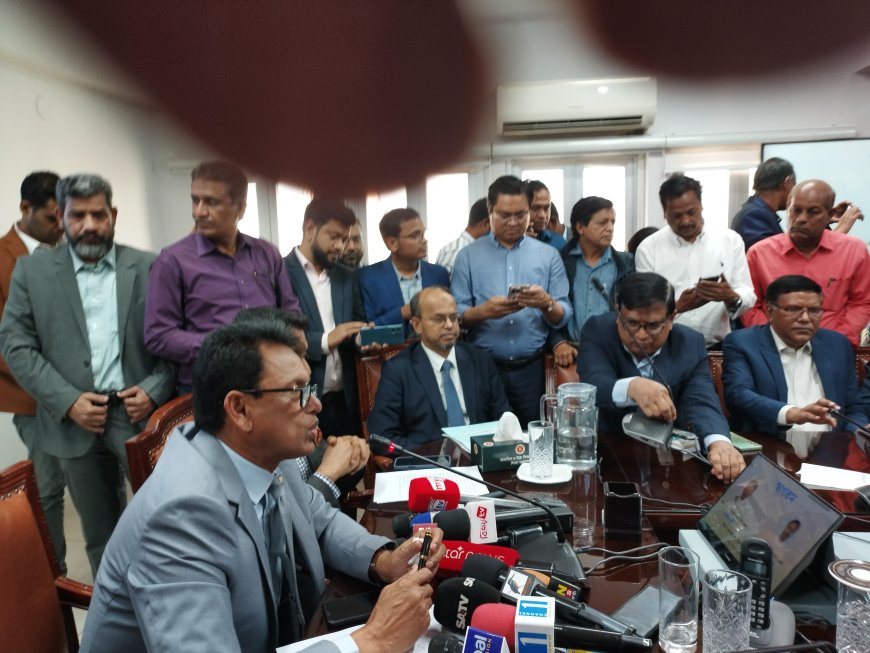



Newly appointed Education Minister Ehsanul Haque Milon has said that necessary reforms will be undertaken to ensure a future-oriented and world-class education system without looking back.
He expressed this view on Wednesday, February 18, while speaking with journalists at the Secretariat on his first day in office. State Minister Bobby Hajjaj also stated that he would work toward the same goal.
Ehsanul Haque Milon said that the country will move from a local standard to a globally competitive, employment-oriented education curriculum. Future-focused global-standard technologies such as digital literacy and nanotechnology will be incorporated into education.
Highlighting the need to modernize the education system to remain competitive with developed countries, the education minister said, “In a global village, we cannot afford to remain backdated with this type of education.”
Emphasizing that Bangladesh must compete with developed nations, he added, “That is why we will prepare accordingly and lay out our plans and programs in that manner and inform you.”
In response to a question about whether the BNP government has any plan to change the curriculum again, Ehsanul Haque Milon said, “Not a curriculum change, but there will be a review.”
At the beginning of the press conference, the minister humorously referred to the viral video of him running and jumping into Parliament to take oath as an MP. On his first day as education minister, he said that bringing change to the education sector would require not just a “high jump” but a “pole vault jump.”
According to him, the education sector requires extensive reforms and development, and achieving meaningful progress will demand bold and significant initiatives.
Journalists also asked whether there would be any major changes or surprises in the education sector under the new government, referring to what they described as a “big jump” in recent years—when a new curriculum was introduced during the Bangladesh Awami League government and later scrapped at the secondary level by the interim government after the mass uprising, reverting to the 2012 curriculum.
In reply, Ehsanul Haque Milon said, “After assuming responsibility in 2001, copying was prevented and question paper leaks were stopped. Those measures have continued, and I do not believe those issues will recur.”
DBTech/IH/OR









