





































Poets Observe July Uprising Anniversary: Science and Technology in the New Cultural Framework Emphasized
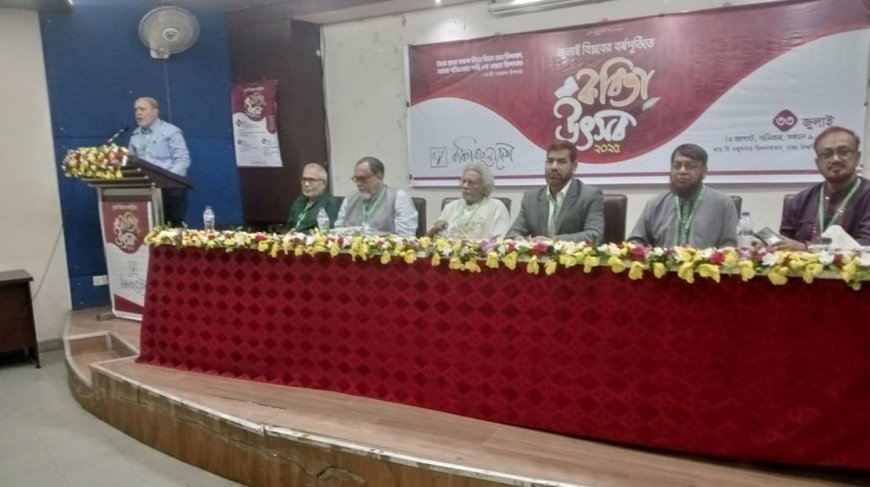



Kobita Bangladesh marked the anniversary of the July Uprising through a seminar and recitation event titled Kobikanṭhe Kobita Paath, held on Saturday, August 2, at the R. C. Majumdar Auditorium, University of Dhaka. The event was inaugurated by releasing balloons, symbolizing aspirations toward humanitarian values, cultural unity, and a new cultural framework that emphasizes the role of science and technology.
Speakers at the event highlighted the significance of fostering science-and-technology-driven literature and culture as guardians of the revolution’s legacy. They envisioned a future where literary expression merges with innovation to defend and preserve the spirit of the uprising.
In his keynote paper, journalist and historian Shahin Hasnat emphasized the need for a "heritage museum" utilizing technology to preserve the graffiti, slogans, poetry, and heroism of those martyred in the July Uprising.
The seminar was presided over by Professor Dr. Abdus Sattar, with Professor Dr. Chowdhury Mahmud Hasan attending as chief guest. Moderated by Dr. Fazlul Haque Tuhin, the session also featured discussions by Dr. Mahbub Hasan, poet and media personality Zainul Abedin Azad, and Dr. Yahia Mannan.
Dr. Chowdhury Mahmud Hasan described literary and cultural engagement with science and technology as a “devotional endeavor.” He said, “Literature and culture cannot attain completeness without science and technology. Through this fusion, culture becomes productive. However, we must avoid using science and technology, as the West does, to develop weapons devoid of divine consciousness. Our vision must be broader. Their productivity is destroying the climate. We must not abandon the Creator because of the crimes of clerics. Only then can we prevent the rise of another Gaza. Through technology, we must strengthen values and unity among people.”
Exploring the distinction between civilization and culture, he added, “Civilization is founded on utility, but culture is rooted in tradition and belief. Our culture is centuries old, and its foundation is faith. This is why we enjoy greater unity. But if we fail to uphold humanistic values and become trapped in inequality or materialism, this unity will collapse. We must establish a just cultural framework.”
In his commentary, Dr. Mahbub Hasan asserted, “Our cultural consciousness predates that of Europe. Surrounded by non-Muslim nations, we have preserved our religious identity and distinct nationhood, leading to the birth of an independent country.”
Poet and media figure Zainul Abedin Azad noted, “Science and technology, too, are acts of devotion. We, as humans, must embrace the created universe. Science and technology have made our lives creative. We must expand our vision—rejecting pettiness and embracing correction and compassion as the foundation of a new cultural framework.”
Shahin Hasnat, in his paper, urged the establishment of a heritage museum to preserve the nation’s true history for future generations. “It will embody our national identity, the ethnographic evolution of our language-based nation-state, political transitions, and the lineage of cultural development. Visitors will be able to witness the glory of the Bengali Sultanate through documented history,” he said.
The event concluded with a poetry recitation session performed by the poets themselves.









