Chief Adviser Dr. Muhammad Yunus has called upon the United Nations to develop effective mechanisms to combat misinformation and uphold ethical standards in both digital and traditional media. He emphasized that not only online platforms but also mainstream media are often sources of misleading information.
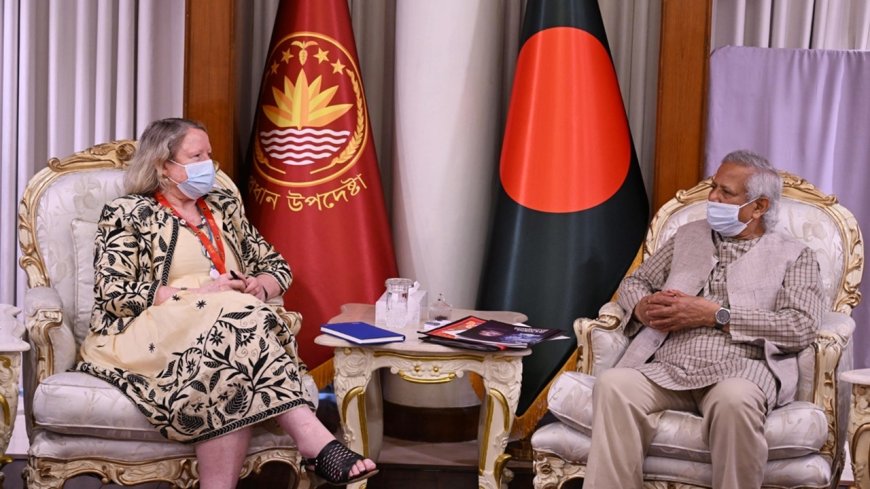
Dr. Yunus made these remarks on Wednesday, July 2, during a meeting at the state guest house Jamuna with Susan Vize, Head and Representative of the UNESCO Bangladesh Office, and Mehdi Benchelah, Senior Project Officer in UNESCO’s Freedom of Expression and Safety of Journalists Section.
“Many times, it is not just the digital platforms; even traditional media outlets spread confusing or false information,” said Dr. Yunus, urging the UN to take a more active role in addressing the issue. “You should not only speak with governments but also engage directly with media outlets,” he added.
The UNESCO officials met with the Chief Adviser ahead of the launch of a report titled Assessment of the Media Landscape in Bangladesh: Focus on a Free, Independent and Pluralistic Media, jointly prepared by the United Nations Development Programme (UNDP) and UNESCO.
“We are truly looking forward to this report,” said Dr. Yunus, acknowledging the importance of such assessments.
He further noted, “Our core problem is misinformation, fake news… some of it is spread by foreign actors, while some locals are also involved. It is like an unending bombardment.”
Calling for international intervention, Dr. Yunus stated, “You are the United Nations. Your words carry weight… we need your support.”
He underscored the necessity of an independent regulatory framework, adding, “If a media outlet consistently disseminates false information, it must be reminded that it is no longer considered credible.”
UNESCO’s Susan Vize remarked that the upcoming report would address issues such as self-regulation and present recommendations aligned with international standards. “It will highlight what is working, what is not, and propose meaningful steps. There will be a need for training government officials, law enforcement, and members of the judiciary so they can better align with these standards,” she said.
Mehdi Benchelah added that the report will also include recommendations on journalists’ working conditions and the safety of women journalists in newsrooms, describing it as a globally relevant issue.
He further emphasized, “Strong actions by the government on these matters could have a significant impact.”
Officials confirmed that the report was prepared under UNDP’s Strengthening Institutions, Policies and Services (SIPS) project and aligns with UNESCO’s mandate on freedom of expression and media development.