





































Seismic Shocks Spur Stark Safeguards



RAJUK Chairman Calls for Time-Sensitive Planning
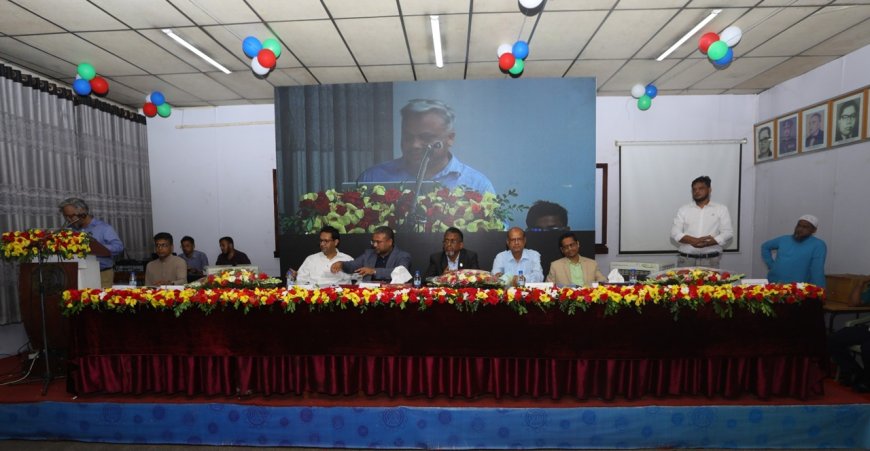
The recent series of earthquakes in Myanmar and Nepal is “a dire warning for the region,” yet Bangladesh remains ill-prepared for a major seismic event, cautioned Engineer Md. Riazul Islam (Riju), Chairman of the Capital Development Authority (RAJUK), during a special seminar jointly organised by the Institution of Engineers, Bangladesh (IEB) and the Bangladesh Earthquake Society. “Although we live in an earthquake-prone zone, the risk is scarcely reflected in urban design, building practice or public awareness,” he said. “We must embed up-to-date seismic resilience in every stage of city planning—and we must do it now.”
BUET Experts Demand Urgent Retrofitting
Presenting the keynote paper, Professor Dr Tahmid M. Al-Hussaini of BUET’s Department of Civil Engineering warned that “about 70 percent of structures in Dhaka were designed without adequate earthquake resistance.” Citing the city’s soft, unstable soil, Professor Hussaini stressed the imperative of large-scale retrofitting. Fellow BUET professors Dr Rakib Ahsan and Dr Md. Jahangir Alam added that many government offices and educational institutions lack basic seismic safeguards and should be prioritised for reconstruction.
Joining virtually from the Asian Institute of Technology in Thailand, Prof. Pennung Warnitchai emphasised the need for “robust data collection, ground-motion analysis and sensor-based early-warning systems.”
Shortfalls in Disaster Preparedness
Director-General of the Department of Disaster Management, Rezwanur Rahman, acknowledged gaps in emergency response infrastructure. “Technology alone is not enough,” he noted. “Regular drills in schools, offices and residential zones are essential.” IEB Honorary General Secretary Professor Dr Engr. Md. Sabbir Mostafa Khan argued that earthquake resilience must permeate technical education, professional training and everyday practice.
Key recommendations from the seminar included mandatory earthquake-resistant design for all new buildings, a country-wide survey and retrofitting of vulnerable structures, preparation of seismic zoning maps for incorporation into zoning laws, regular drills for public awareness, and stricter training and licensing for engineers.
Open-Floor Debate Highlights Implementation Gaps
During an open discussion, engineers and academics—among them Engr. M. Abdul Awal, Professor Zillur Rahman, Professor M. A. Ansary, Abdul Latif Khan and Dr Ali Akbar Mallick—underscored the gap between policy and practice. Seminar chair Professor Tahmid Al-Hussaini concluded, “This is not the remit of a single ministry; Bangladesh needs a coordinated national task-force so that one future disaster does not undo decades of development.”









