





































CEC Cautions on Cyber Concerns and AI Corruption Ahead of Polls



The 13th National Parliamentary Election is scheduled to be held in the first half of February, with the election schedule expected to be announced in early December. Ahead of the polls, Chief Election Commissioner (CEC) A M M Nasir Uddin has once again expressed concern over the possible misuse of Artificial Intelligence (AI) in the upcoming election.
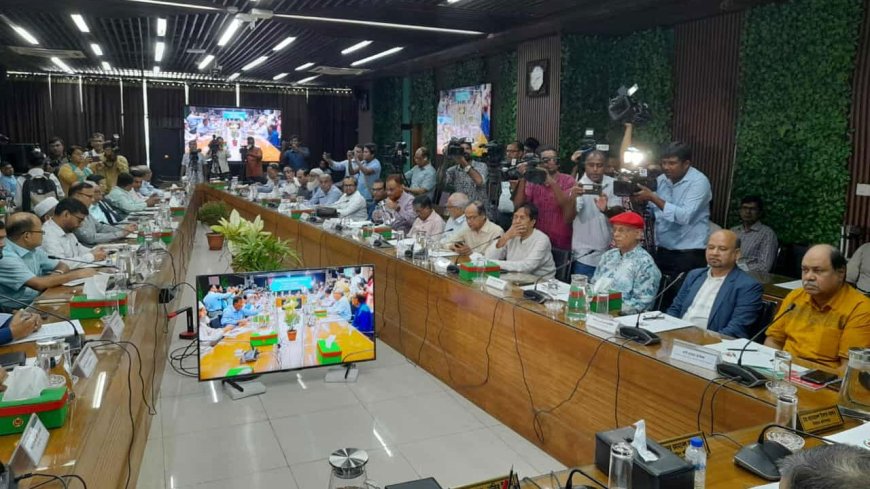
Speaking at a dialogue with journalists at the Election Commission headquarters in Agargaon on Monday afternoon, October 6, the CEC voiced his apprehension regarding the growing challenge of AI abuse in electoral processes.
The CEC said, “You have provided many valuable suggestions. The Canadian High Commissioner came to meet me. We sought assistance from him regarding AI. I told him, ‘You (Canadian High Commission) have held elections—please help us a little. How can AI misuse be prevented?’ The Canadian High Commission also said that AI is a big problem in their country too. They have done many things but could not control it. They tried to reduce it but couldn’t stop it. We will also face many problems with AI. He could not reassure us either.”

He further stated, “We have taken responsibility at a critical time. In the meantime, we are arranging for postal ballots. Although it existed before, it was only in name. We have taken steps for implementation. Our expatriate brothers said, ‘We want to vote.’ Despite many challenges, with the help of experts, we have developed a hybrid system. Alongside digital measures, voters will register online and then vote through postal ballots. It is a mixed method. We seek your support and want you to promote these initiatives.”
The dialogue, moderated by the Election Commission’s Acting Secretary K M Ali Newaz, was attended by four Election Commissioners, EC officials, and representatives from various media outlets.
During the discussion, editors and journalists from print and online media shared their expectations and concerns about ensuring a free, fair, and credible election. They urged the Election Commission to take a “strong stance” against the misuse of AI and the spread of misinformation and disinformation on social media and cyberspace.
Kaler Kantho Editor and National Press Club President Hasan Hafiz remarked, “Various kinds of propaganda are being spread on social media using AI.” He suggested enhancing the EC’s capacity in this regard and, if necessary, seeking foreign assistance. He also emphasized increasing cyber surveillance, simplifying the postal ballot process to ensure voting rights for expatriates, and organizing similar dialogues outside Dhaka.
He added, “The expectation is that you will reach out to the nation as persons of integrity. This is a rare opportunity to rebuild the country—an opportunity that may not come again in 50 or 100 years.” He urged the EC to show determination with a ‘do or die’ attitude.
To ensure credible elections, Hasan Hafiz proposed forming local monitoring committees in every constituency comprising professionals, businessmen, youth, and respected teachers—excluding political activists. According to him, such committees would make the EC’s job easier and instill a sense of responsibility among all.
Highlighting the use of digital tools to influence public opinion, Prothom Alo Executive Editor Sajjad Sharif said, “The former ruling party had built a large digital force, and there are concerns it will be used extensively in the upcoming election.” He stressed ensuring transparency in affidavits and election expenses, saying the EC must take visible actions and “set an example in a few cases to demonstrate moral strength.”
Ajker Patrika Editor Kamrul Hasan demanded that candidates’ affidavits be uploaded to the EC website immediately after submission. “This will allow voters to access all necessary information about candidates promptly,” he said, adding that the EC should refrain from issuing any secret directives that might undermine the promise of transparent elections.
Daily Inqilab Editor A M M Bahauddin urged the Commission to take a firm stance against cybercrimes and the spread of false information. Similarly, Ehsan Mahmud, Executive Editor of Amader Shomoy, requested the EC to conduct a credible mock drill against fake information dissemination to restore public trust.
The dialogue also saw the participation of Bangladesh Pratidin Editor Abu Taher, Jugantor Editor poet Abdul Hai Shikder, Protidiner Bangladesh Editor Maruf Kamal Khan Sohel, Amar Desh Executive Editor Syed Abdal Ahmed, Naya Diganta Executive Editor Masumur Rahman Khalili, The Financial Express Editor Shamsul Huq Zahid, The Daily Star Head of News Ziaul Haque, Banglanews24.com Editor Touhidul Islam Mintoo, JagoNews24.com Editor K M Ziaul Haque, BSS Managing Director and Chief Editor Mahbub Morshed, Sangram Editor Azam Mir Shahidul Ahsan, Khoborer Kagoj Editor Mostafa Kamal, Khobor Songjog Chief Editor Sheikh Nazrul Islam, Dhaka Mail Executive Editor Harun Jamil, Sarabangla.net Head of News Golam Samdani, Banglabazar Patrika Executive Editor Rashedul Haque, Jaijaidin Joint Editor Md. Mahmuduzzaman, Ittefaq’s Political and Election Affairs Editor Saidur Rahman, UNB News Editor Mahfuzur Rahman, Reporters Forum for Election and Democracy (RFED) President Kazi Emad Uddin (Jebel), and RFED General Secretary Golam Rabbani, among others.









