







































China Champions ‘K-Visa’ to Court Global STEM Talent
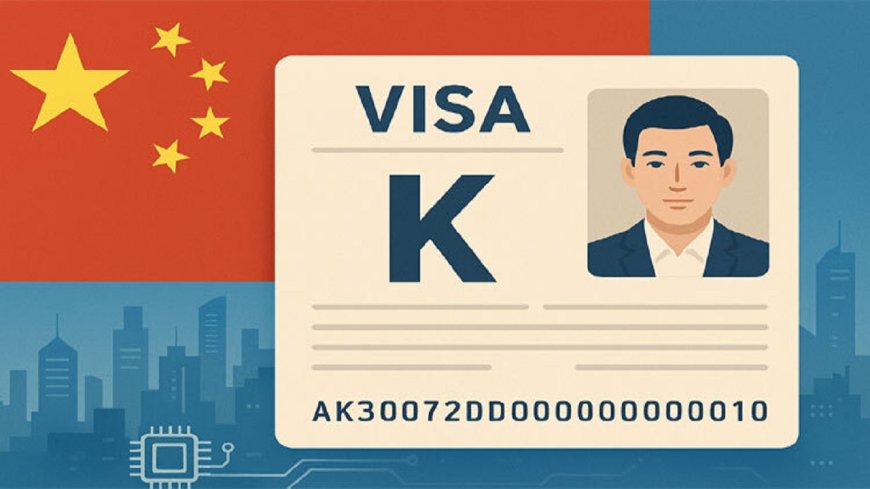



Amid concerns over the $100,000 fee for the United States H-1B visa, China has introduced a new visa category to attract young science and technology professionals. The new “K visa” has already been added to the general visa sections, according to reports.
According to Xinhua, the new regulation will take effect from October 1 and aims to draw skilled young professionals in science, technology, engineering, and mathematics (STEM) from around the world. Gulf News reports that compared to China’s 12 general visa categories, the K visa offers several advantages.
However, questions remain regarding the K visa. Chinese government guidelines are vague on age, educational qualifications, and work experience requirements. No details have been provided on financial benefits, permanent residency, or family sponsorship.
U.S.-based immigration lawyer Matt Mountel-Medici noted, “Symbolically, this is significant. The United States is creating barriers, and China is reducing them.”
Experts point out that the primary benefit of the K visa is that it does not require a sponsoring employer. By contrast, the H-1B visa only allocates 85,000 slots through a lottery system, and the new $100,000 fee for H-1B applications discourages many potential applicants.
China’s talent recruitment policies have traditionally focused on overseas Chinese-born scientists and expatriates, offering benefits such as housing subsidies and bonuses up to 5 million yuan ($702,000). Many Chinese STEM professionals in the United States are returning to China, especially given increased scrutiny in Washington.
In contrast, efforts to attract Indian technology talent remain relatively limited. Das of Sichuan University noted, “While there are strong initiatives to bring back China-born talent, similar efforts for Indians are not as strong.”
A Chinese STEM worker recently employed at a U.S.-based tech firm said, “China does not rely on immigration. There are many ways to attract local talent, so the effectiveness of the K visa remains uncertain.”
Despite an ample domestic supply of skilled engineers, the program aims to present China as more open to foreign investment and talent. In response to U.S. tariff and trade policies dampening economic prospects, China has implemented measures such as opening more sectors to investment and providing visa relaxations for citizens of most European countries, Japan, and South Korea.









