





































SAARC Conference Stresses Sustainable Shift to Regenerative Agriculture
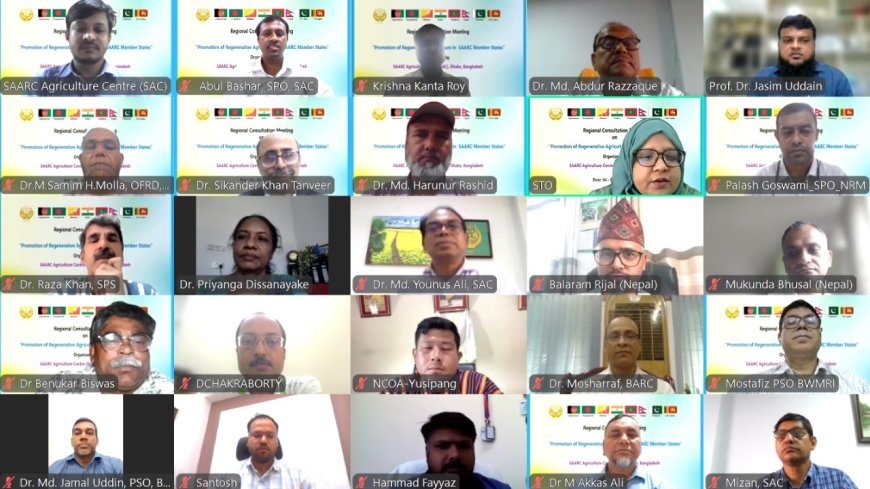



A three-day virtual consultative meeting organized by the SAARC Agriculture Centre has emphasized collaborative efforts among South Asian nations to promote environmentally friendly and sustainable practices through regenerative agriculture. The regional event, titled “Promotion of Regenerative Agriculture in SAARC Member States,” was held from August 4 to 6.
The meeting brought together government officials, agricultural scientists from research institutes, university faculty, and representatives from international organizations across six SAARC countries. Speakers underscored the urgency of addressing climate change, declining soil health, water scarcity, and excessive chemical dependency in the region’s agriculture, advocating for a shift toward more sustainable systems.
Abdul Motaleb Sarkar, Additional Foreign Secretary (SAARC and BIMSTEC) of the Ministry of Foreign Affairs, attended the opening session as the chief guest. He emphasized, “To confront environmental challenges in agriculture, South Asian countries must work together.” He called for the implementation of regenerative agriculture to restore soil health and biodiversity, urging effective engagement of policymakers, researchers, and technology providers in this transformation.
Director of the SAARC Agriculture Centre, Dr. Md. Harunur Rashid, chaired the meeting and delivered the inaugural remarks. He noted, “Regenerative agriculture is not merely a methodological alternative—it is a transformative concept that revives soil vitality and guides agriculture toward harmony with nature.” He added that such approaches can help make the agri-food system more resilient, eco-friendly, and farmer-centric.
Tanvir Ahmed Torofdar, Director (ARD and SDF) of the SAARC Secretariat in Nepal, spoke as a special guest, stating, “Regenerative agriculture is economically beneficial. It not only improves the environment but also contributes to increasing farmers' income.” He stressed the need for integrated frameworks among government, research, and private sectors to facilitate the wider adoption of these practices.
Throughout the three-day meeting, over 20 agriculture and environmental experts presented research findings, technological innovations, and country-level experiences across six technical sessions. Reports from member states highlighted issues such as soil erosion, irrigation water shortages, harmful impacts of chemical fertilizers, and the financial struggles of farmers.
Participants concluded that addressing these challenges requires expanding farmer-level knowledge and skills, extending field-level training, and ensuring broad governmental support.









