





































CPR Consciousness Campaign: Nursing College Hosts Life-Saving Training in Natore



Cardiac arrest can occur suddenly, affecting people of any age at any time. In such moments, immediate medical intervention through Cardiopulmonary Resuscitation (CPR) can be life-saving. CPR is a critical emergency technique used to restore breathing and heartbeat by maintaining blood circulation through chest compressions and, if necessary, providing artificial ventilation.
While CPR is widely practiced in many countries, awareness of this vital first-aid measure remains relatively low in Bangladesh. To address this gap, the Amjad Khan Chowdhury Nursing College in Natore has launched a special initiative to raise public awareness and promote hands-on training in life-saving techniques.

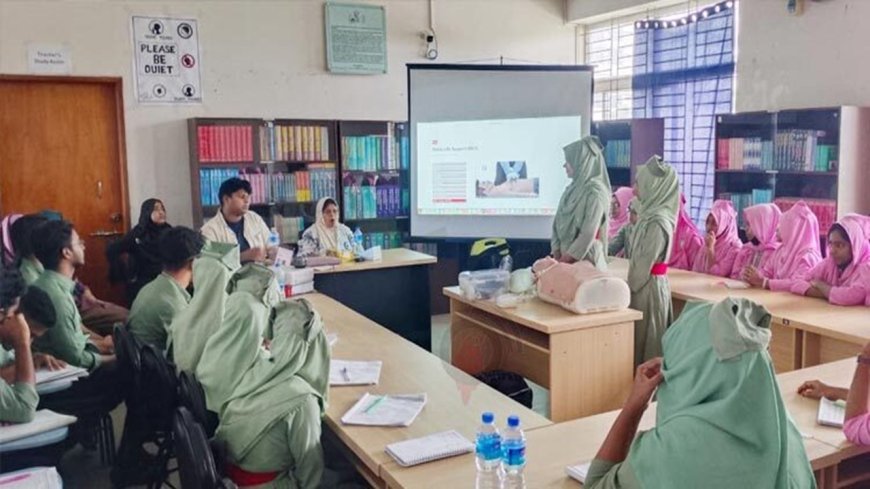
On Saturday, August 2, the institution organized a day-long CPR training workshop using realistic dummy models. Participants practiced the procedure in near-real conditions, guided by professional demonstrations and practical exercises. The hands-on approach included live demos, presentations, and simulations to help trainees understand the correct methods of applying CPR, managing critical situations, and recognizing the importance of timeliness.
“CPR should not only be known by medical professionals but also by common people,” emphasized the trainers. “A trained hand can be the difference between life and death. It can be a powerful act of humanitarian service.”

The workshop was led by Dr. Sera Haque, a founding member of the institution and Assistant Professor at Dalhousie University, USA. A total of 60 participants, including 30 students and 30 healthcare professionals—doctors and nurses—took part in the session.
The training also highlighted crucial safety precautions to observe before administering CPR. These included:
-
Ensuring environmental safety for both the rescuer and the patient.
-
Checking for hazards like electric wires, fire, water, or road traffic.
-
Assessing patient responsiveness by calling or gently shaking them.
-
Instructing bystanders to call 999 and bring an Automated External Defibrillator (AED).
-
Observing the patient’s breathing for up to 10 seconds and initiating CPR if breathing is absent or irregular.
-
Checking for pulse (carotid pulse) if trained; if absent, begin chest compressions.
-
Placing the patient on a flat, firm surface.
-
Using gloves, masks, or face shields for personal protection, especially in cases of infectious risk.
-
Considering the patient’s medical history if known—especially if there are heart conditions, trauma, or spinal injury—before proceeding cautiously.
-
Starting CPR properly with effective chest compressions and rescue breathing, or opting for hands-only CPR if not fully trained.
The workshop underlined that learning CPR can empower ordinary citizens to save lives and become exemplary agents of compassion and care.









