








































Microsoft’s Israel Links and Middle East Cable Cuts Cripple Connectivity



During the ongoing genocide in Gaza, controversy over Microsoft’s close ties with Israel coincided with multiple submarine cable cuts in the Middle East and South Asia.
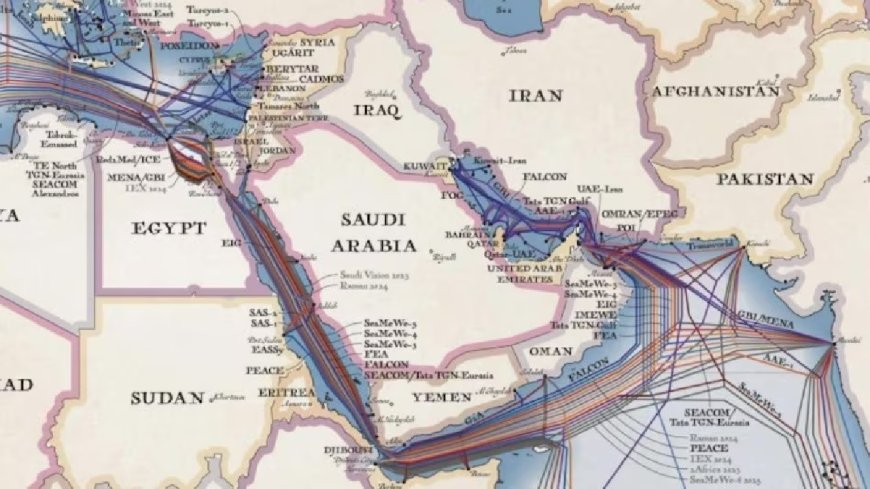
Internet monitoring organization NetBlocks reported in an X post that several countries, including Saudi Arabia, Pakistan, the United Arab Emirates, and India, had experienced “degradation” of internet services, resulting in “reduced speeds and occasional disconnections.” The disruption was linked to faults in the SMW4 and IMEWE cable systems near Jeddah, Saudi Arabia. Houthi-controlled Al Masirah TV also confirmed the cable damage on Sunday morning, September 7, citing NetBlocks.
Meanwhile, Pakistan Telecommunications, one of the country’s largest telecom operators, issued a statement warning customers that internet users could face degradation during peak hours. The company assured that its international partners were working to resolve the issue.
An investigative report by The Guardian, +972 Magazine, and Local Call alleged that Microsoft’s Azure cloud platform has been storing intercepted phone calls and other data for the Israeli military in the occupied West Bank and Gaza. Microsoft, however, claimed it was unaware that Israel’s cyber intelligence Unit 8200 was using its cloud services for mass surveillance, though the company launched an internal investigation in August. It also confirmed the dismissal of four employees who had staged protests at company premises against its ties with Israel.
In a status update on its website, Microsoft acknowledged that “submarine fiber cuts in the Red Sea may cause delays in network traffic routed through the Middle East.” The company added that its Azure cloud computing services—second only to Amazon globally—had been affected, although general internet traffic was not disrupted.
Microsoft stated that the outage began at 5:45 a.m. GMT on Saturday, September 6. Submarine cables form the backbone of global internet connectivity, carrying the majority of worldwide data traffic. The Middle East serves as a crucial hub linking Asia and Europe. These cables may be damaged by ship anchors or targeted in attacks, both of which can trigger widespread outages.
Earlier in 2024, Yemen’s exiled government accused the Houthis of planning attacks on submarine cables in the Red Sea. Several cables were indeed cut, though the Houthis denied responsibility.









