A huge number of former Grameenphone employees gathered outside the mobile operator’s headquarters in Bashundhara Residential Area on the first working day after the Eid holidays to mourn the death of their former colleague, Rajib Mahmud Shanto, and to demand payment of long‑delayed dues.
Dressed in black with matching armbands and holding a banner reading “We are grieving,” the demonstrators accused the company’s current management of “corporate murder.” They alleged that Grameenphone had withheld a 5 percent share of benefit payments owed to Mahmud for 15 years, forcing him to forgo critical medical treatment. Some placards bore Mahmud’s final social‑media appeal: “Give me my money — I need medicine, not food.”
Mahmud, a former senior territory manager in the company’s Commercial Division, died on 8 June after collapsing at home; he was pronounced dead at Shaheed Suhrawardy Hospital and later buried at Azimpur Cemetery. Colleagues say he had suffered debilitating injuries in a motorcycle accident while on duty, later developing rheumatic heart disease and idiopathic thrombocytopenic purpura that required costly, daily care and regular transfusions. Confined to bed, Mahmud had joined the dues‑payment campaign online from hospital.
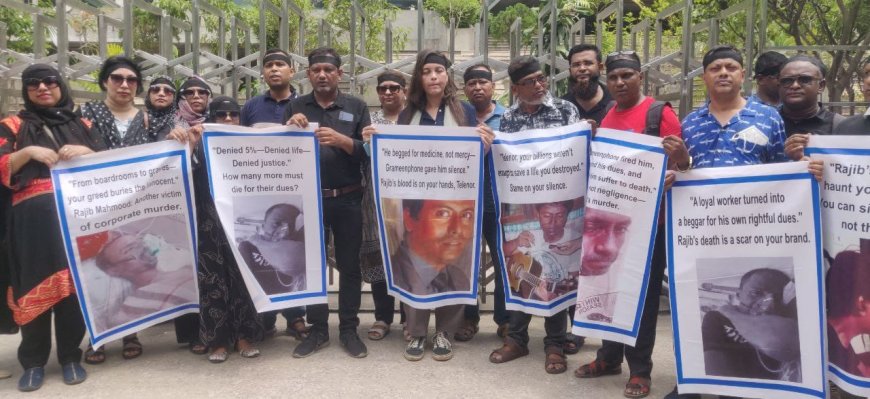
At Sunday’s rally, speakers including former employees Monowar Parvez, Mobasher Ahsan, and Adiba Zerin described Mahmud’s struggle as “a cruel indictment of corporate indifference.” Zerin warned that if the dispute over unpaid benefits is not resolved by 30 June, “far tougher, nationwide action” will follow. Abu Sadat Md. Shoeb, convener of the Grameenphone 5 Percent Dues Recovery Unity Council, called the protest “a cry for humanity and justice” and urged journalists and civil‑society groups to “expose the truth so that no other Rajib dies this way.”
A poem written in Toronto by former Grameenphone employee Maksuda Khanom, titled “The Unfinished Story of a Comrade,” was recited by colleague Sadia Afrin, moving many bystanders to tears. The poem alleged that company executives had silently hoped Mahmud would “die and remove a troublesome chess piece,” reflecting what protesters see as a wider culture of neglect toward former staff.
Organizers said 3,281 ex‑employees have now signed a petition supporting the movement, while former workers abroad are sending video messages of solidarity.
“But despite showcasing various superficial CSR efforts until his death, Grameenphone authorities did not stand by former employee Rajib or respond to his desperate pleas for his rightful dues” — such is the allegation made by his fellow campaigners.
Grameenphone has not publicly commented on the protest or the specific allegations.