





































NEIR Goes Fully Live from January 1, Bringing Handsets Under National Registration



Just like SIM cards, mobile handsets have now been brought under a national registration framework. Although launched on Victory Day, the government allowed an additional 15 days for preparation. As per the announced timeline, the National Equipment Identity Register (NEIR) has been fully implemented from Thursday, January 1.
From now on, every new handset joining Bangladesh’s telecom network must be pre-registered under NEIR. As a result, illegal or grey-market handsets will gradually be brought under a shutdown mechanism. The initiative has long been welcomed by BTRC-listed importers and local mobile handset manufacturers, who see it as a step toward restoring order in the mobile phone market.
Earlier, the Bangladesh Telecommunication Regulatory Commission (BTRC) had postponed the implementation of NEIR following pressure from unlisted importers who bring in handsets through grey channels. In response to their demands, the deadline for submitting IMEI details of unsold or stock handsets was extended until December 31. That deadline expired on the last day of the year, effectively ending the opportunity for tax-free handset registration for those traders.
BTRC Chairman Major General (Retd.) Md. Emdad Ul Bari has clarified that no handset currently active on the network—whether approved or unapproved—will be disconnected. Even unsold handsets whose IMEI details have already been submitted to BTRC will remain operational. Only new handsets joining the network after NEIR’s implementation will fall under the registration requirement.
Under the new policy, expatriates are allowed to bring two additional new handsets along with their personal device when entering the country. They will be given three months to register these phones under NEIR, during which time the devices will remain functional. Registration can be completed by submitting valid travel documents.
Meanwhile, Faiz Ahmad Taiyeb, Special Assistant to the Chief Adviser on Posts, Telecommunications and Information Technology, stated that NEIR would be implemented only if the Advisory Council approved a reduction in handset import and production duties at its Thursday meeting.
Earlier, on December 10, mobile phone sellers staged protests and road blockades at Karwan Bazar in the capital, opposing the shutdown of illegal or grey-market phones. In response, the Posts and Telecommunications Division granted traders a three-month window to register their existing handset stocks under NEIR without duties. However, a BTRC official later stated that the Commission had not been formally informed of that decision. As of December 31, no official data was available on the total number of registered handsets, though it has been confirmed that NEIR implementation has officially begun.
BTRC officials reiterated that only newly connected devices will be subject to NEIR. Expatriates will continue to enjoy the same three-month grace period for registering up to two additional handsets, during which the phones will remain active.
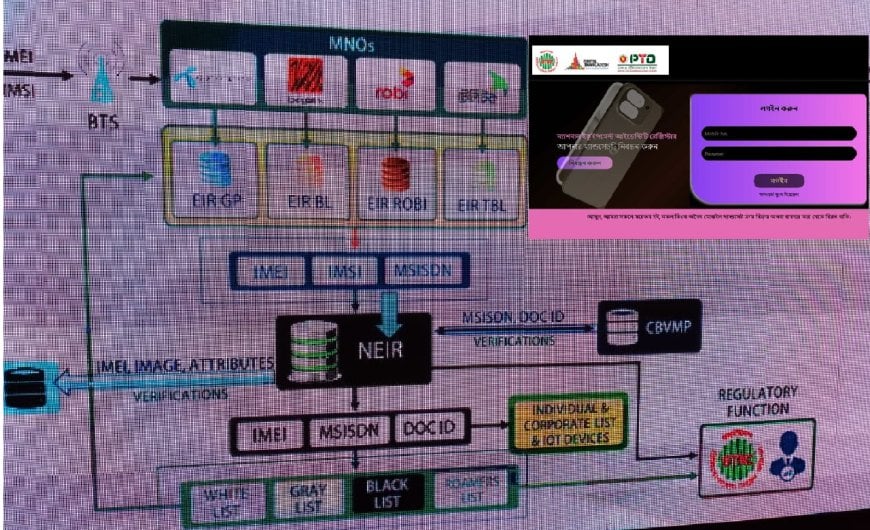
According to BTRC, NEIR has been introduced to prevent illegal handset use, block stolen phones, and bring discipline to the mobile handset market. Technically, NEIR verifies three elements—IMEI (International Mobile Equipment Identity), SIM number, and IMSI (International Mobile Subscriber Identity)—to allow network access. The system does not record calls, read messages, or monitor internet activity.
However, concerns have been raised by civil society groups regarding potential surveillance risks, as NEIR permanently links devices and SIMs in a central database. Experts argue that while NEIR itself is not a surveillance tool, weak data protection mechanisms could create opportunities for misuse.
Similar systems are already in place in countries such as India, Pakistan, the United Kingdom, and Australia to curb the use of stolen phones. Experts believe NEIR can help reduce fraud in the digital economy. Critics, however, maintain that its legitimacy will depend on strong legal oversight, transparency, proportionality, and robust privacy protections.
Addressing these concerns, Faiz Ahmad Taiyeb said that the amended Telecommunications Ordinance, approved by the Advisory Council on December 24, includes provisions to protect users. A new clause explicitly prohibits surveillance or harassment of citizens through SIM and device registration, and any violation of this provision will be treated as a punishable offense.
DBTech/DSR/EK/OR









