





































Engineers’ Enmity Escalates to Embarrassing Extremes
No Scope to Recognize Engineering with a Single Degree
Faiz Ahmad Taiyeb



The rivalry between BSc engineers and diploma engineers in Bangladesh has reached an alarming and deeply embarrassing stage, marked by clashes, threats, and violent attacks. Both groups have taken their disputes to the streets in protest. While disagreements between the two groups are not new, the escalation into violence and incitement is unprecedented. Such behavior, observers note, does not reflect professional skill or excellence.
The engineering profession of a country cannot be defined by a single institution, degree, or academic domain. “Defining engineering solely through Bangladesh’s substandard, mediocre, or narrowly high-standard BSc degrees or curricula is misguided,” the author of this commentary argued.
According to European standards, engineering education generally falls into three categories:
-
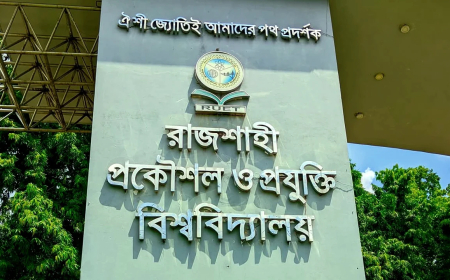
Primarily Theoretical Engineering Education – This includes universities like BUET, CUET, RUET, and KUET, where coursework is heavily theory-based, with mathematics and scientific formulas dominating, and hands-on training limited to 15–20% of the curriculum. The purpose of such programs should be to solve complex national engineering problems, conduct advanced research, drive innovation, and engage in research and development, operations, and planning. These graduates are also suited for training, teaching, and academic leadership.
-
Fifty-Fifty Mix of Theoretical and Applied Education – A balanced 50-50 blend of theory and applied coursework. “Bangladesh essentially lacks this model of engineering education,” the writer noted, though he added that he is personally trying to establish an institute aligned with labor market skills to fill this gap.
-
Applied-Focused Engineering Education (25% Theory, 75% Applied) – Designed for industrial operations, maintenance, design, and planning. In Bangladesh, this workforce is supplied by diploma engineering colleges. The author stressed that research, innovation, and development are natural across all domains.
The country, however, faces three key problems: (1) There is no academic linkage or flow between these tiers, unlike in Europe; (2) Professionals often refuse to respect colleagues from other streams; (3) A severe scarcity of jobs.
The scarcity of engineering jobs has triggered further disputes: BSc engineers seek positions designated for diploma engineers in the 10th grade, while many BSc engineers themselves struggle with limited posts in the 9th grade. The author suggests introducing an 11th grade as a compromise to ease tensions. “In reality, too many BSc engineers are being produced, while in most countries, diploma engineers outnumber them,” he observed. A rational review of job allocation across grades 11, 10, and 9 is therefore needed.
The shortage of opportunities is also prompting many capable engineers to leave the country. “A survey found that three out of four BUET graduates aspire to go abroad, and nearly half succeed. Those who remain often opt for the civil service (BCS),” the commentary noted.
On the contentious issue of professional titles, the writer was blunt: “Some so-called elite engineers, who study a little more but often do the same work, are now saying that others cannot rise to the elite stage of using the title ‘Engineer.’ Personally, I do not favor attaching ‘Engineer’ before one’s name. A profession is not the same as a name given by one’s parents. A PhD, however, represents academic excellence.”
Outlining his stance on the three-point demand, he wrote:
-
The 9th grade must not be closed or reduced. Posts should remain open to BSc engineers based on merit and performance, not quotas.
-
The 10th grade should remain for diploma engineers, with promotion also based on performance, not quotas. The 33% quota should be abolished.
-
Professionals must refrain from insulting others within the same field. Appointments and promotions must follow clearly defined performance KPIs.
He further criticized professional organizations: “The Institution of Engineers, Bangladesh (IEB), and the Institution of Diploma Engineers, Bangladesh (IDEB), are not true institutions but mere clubs where syndicates dominate. Genuine professional work is rare.”
The writer also called for a new administrative cadre in data science, telecom, ICT, AI, and Gen-AI to support the country’s digital transformation across ministries. “This should not remain dependent on ad-hoc consultants,” he argued.
In conclusion, the author noted: “Do you know why these fights are happening? For 5% of jobs provided by the government. No one talks about the remaining 95%—their work conditions, allowances, health insurance, transport, or pensions. Let us focus on that 95% as well. Only then can we build a foundation for sustainable development. The role of engineers in national progress is indispensable.”
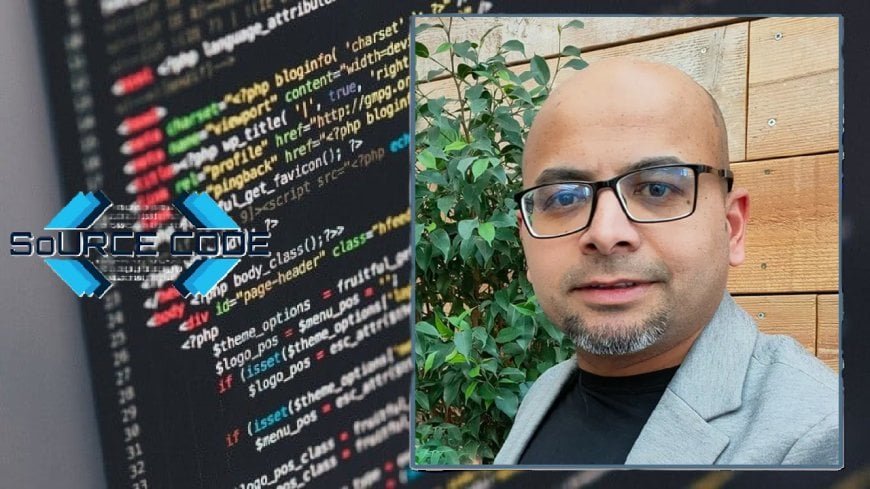
Writer: Faiz Ahmad Taiyeb, Technologist, Special Assistant on Telecom and ICT to the Chief Adviser
Disclaimer: The views expressed in this opinion piece are solely those of the author and do not represent the editorial stance of Digital Bangla Media. In the interest of pluralism, the article has been published without editorial intervention. Any discontent or provocation arising from it remains a personal matter.









