





































Unified Platform Urged to Protect Women and Children Online
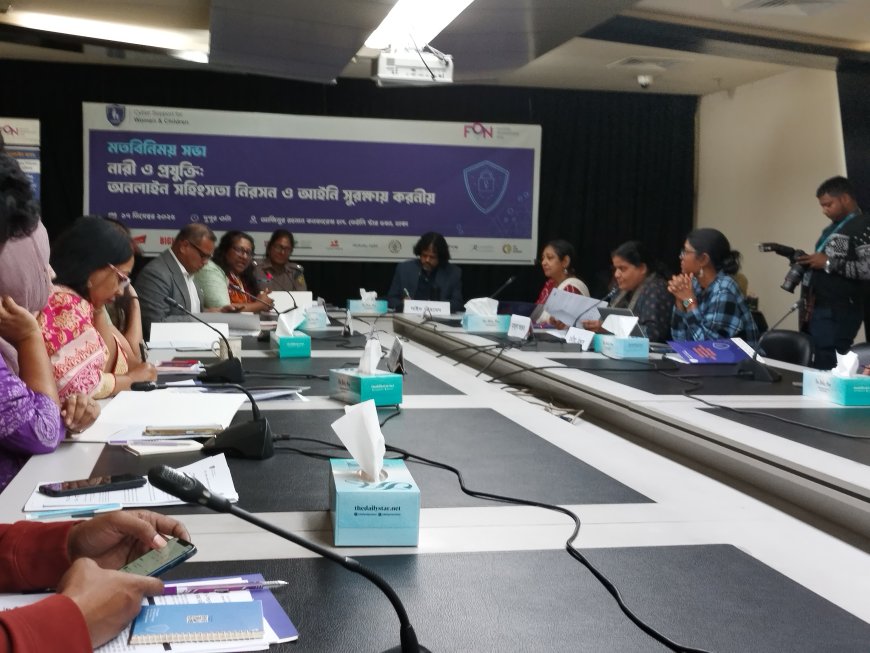



Stakeholders have called for a unified, government–private sector platform to ensure the online safety of women and children, citing legal bottlenecks and coordination gaps in the country’s current response mechanisms. Experts emphasized that technology-facilitated violence must be countered with technology, alongside stronger law enforcement and public awareness.
The recommendations were made at a dialogue titled “Women and Technology: Addressing Online Violence and Strengthening Legal Protection,” held on December 17 at the Azizur Rahman Conference Hall of The Daily Star building in the capital. The event brought together lawyers, researchers, academics, human rights activists, stakeholders, and members of the Cyber Support for Women and Children (CSWC) platform working to prevent and respond to online and technology-based violence.
Participants highlighted lived experiences of online abuse and the practical challenges victims face in accessing legal support. Speakers noted that as technology advances, the risk of online violence against women and children is rising, while many victims remain silent due to complex complaint procedures and legal hurdles.
Presenting key findings, Monisha Biswas, Senior Research Officer at BLAST, said Bangladesh has over 80 million internet users, and studies show around 78 percent of women have experienced technology-facilitated sexual harassment. However, most do not pursue legal action due to a lack of awareness about complaint mechanisms.
Chaired by Saeed Ahmed, CEO of the Institute of Informatics and Development (IID), the discussion featured remarks from Supreme Court Advocate Barrister Priya Ahsan Chowdhury; Barrister Hamidul Mesbah; The Daily Star Senior Sub-Editor Najiba Bashar; Associate Professor Nova Ahmed (North South University); Deputy Commissioner Farhana Yasmin (Victim Support Center); 109 Helpline In-charge Raisul Islam; Cyber Teen founder and Children’s Peace Prize laureate Sadat Rahman; Cyber Crime Awareness Foundation Vice President and DigiBanglaTech Executive Editor S M Imdadul Haque; and Advocate Fahmida Akter, among others.
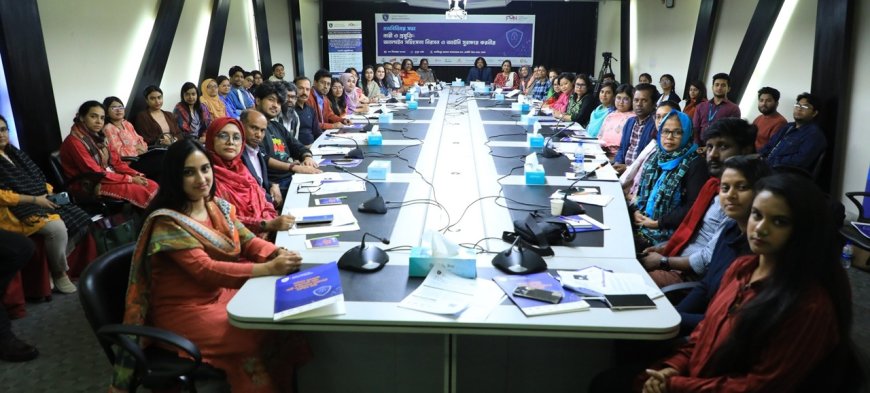
Saeed Ahmed said that post–July mass movement graffiti reflected public aspirations for equality, safety, and rights—values that must be restored in policy and practice. He stressed prioritizing recommendations of the Women’s Reform Commission and ensuring inclusive dialogue on women’s rights to strengthen online safety.
Barrister Priya Ahsan Chowdhury noted that victims often have to self-manage cases, discouraging them from seeking justice. She underscored the need for gender-sensitive training for all case-handlers, mandatory digital forensic evidence, district-level forensic cells, and robust victim and witness protection.
Associate Professor Nova Ahmed said cyber violence spreads rapidly and is difficult to erase, while victim-blaming remains entrenched. She warned that inadequate access to remedies pushes women away from technology, limiting their potential, and urged regular updates to tech-related laws and policies.
Najiba Bashar observed that having laws is not the same as enforcing them, calling for empathetic judges, responsible lawyers, and sensitive law enforcement. She also emphasized the need for digital literacy and comprehensive sex education.
Barrister Hamidul Mesbah highlighted procedural barriers—such as surrendering personal devices for forensic preservation—that deter complaints, and suggested technology-led solutions and fine-based penalties for faster relief.
From a policy perspective, Sharmin Khan, Legal Consultant at ICNL, stressed improving technical infrastructure, administrative capacity, and interactive apps, alongside clear evidence-preservation guidelines.
Raisul Islam, In-charge of the national women and child helpline 109, said cyber-related cases are increasing and announced plans to establish a separate cyber unit to extend services nationwide.
Deputy Commissioner Moksuda Akter of the Dhaka Victim Support Center pointed to training gaps among investigators and urged psychosocial services and school-level help desks for adolescents.
During the open discussion, participants called for awareness among marginalized women, stricter controls on children’s access to pornographic websites, curriculum-based digital literacy, faster app-based assistance, and greater accountability from social media platforms.
Imdadul Haq, Vice President of the Cyber Awareness Foundation, urged tackling online violence primarily through technology—such as mechanizing call centers like 999, ensuring encrypted contact numbers, and integrating multiple services into a single app through coordinated public–private efforts.
In closing remarks, IID Executive Director Saeed Ahmed stressed reducing victims’ burden through paralegal support within 24 hours, enhancing inter-agency coordination, increasing budgets and training, and fostering a more empathetic institutional approach by bringing legal and technology experts together.
DBTech/AI/EK/OR









