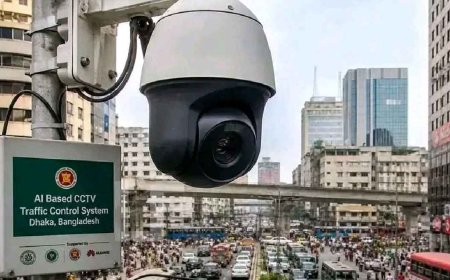
Experts and educationists have emphasized the need to build a technology-driven education system to prepare the new generation for international competition. However, they stressed that the focus should not merely be on learning technology, but on teaching students the ethical use of technology — ensuring a balance between innovation and values.
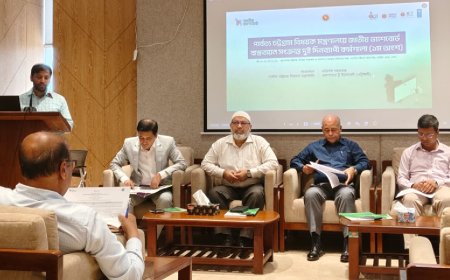
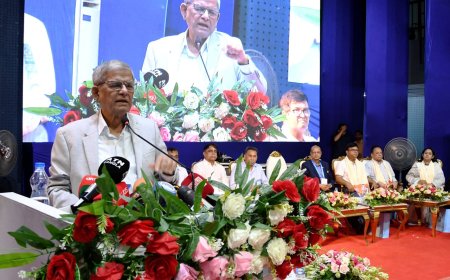
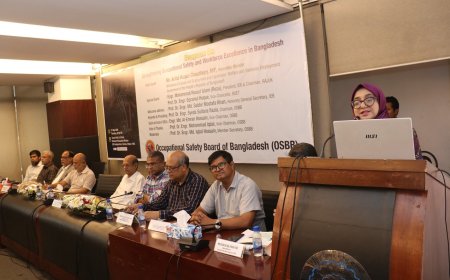
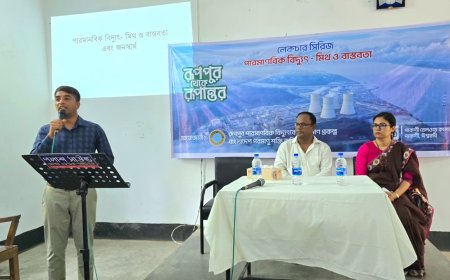
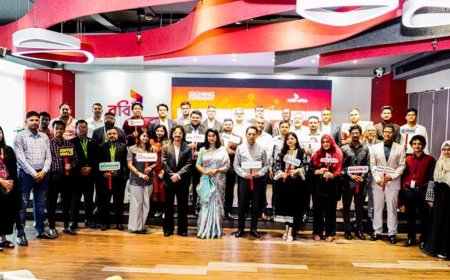
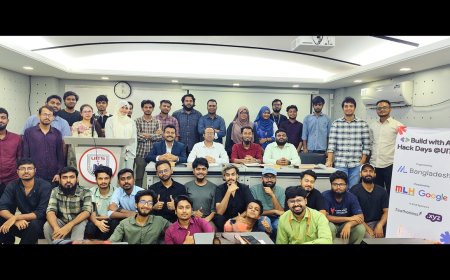
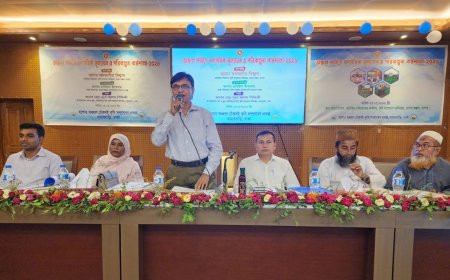
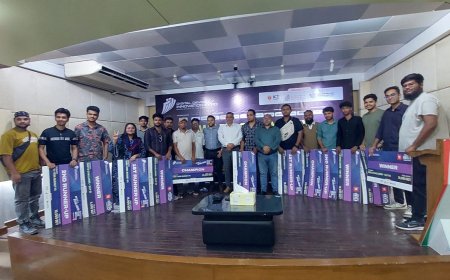
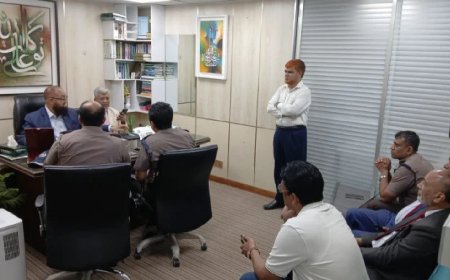
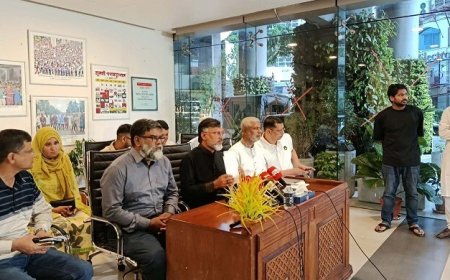
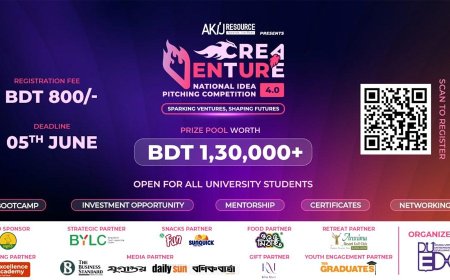
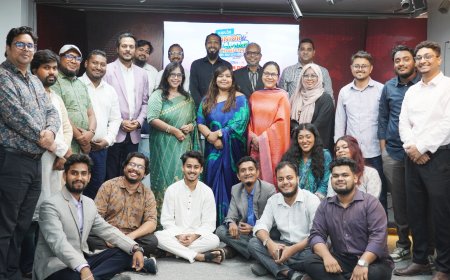
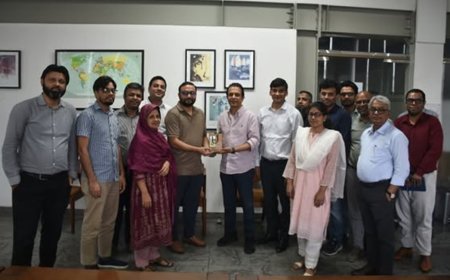
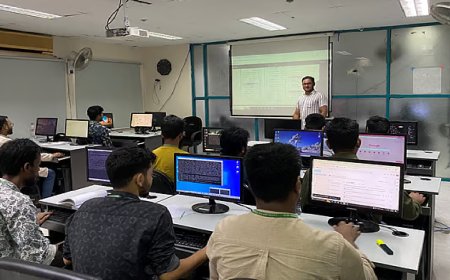
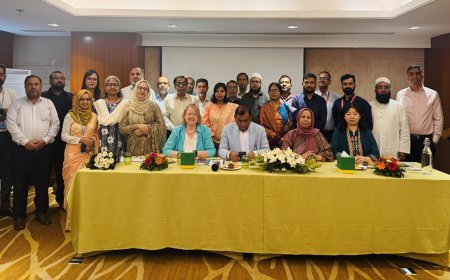
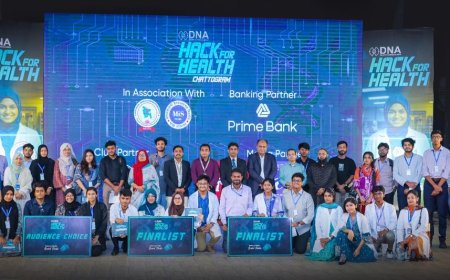
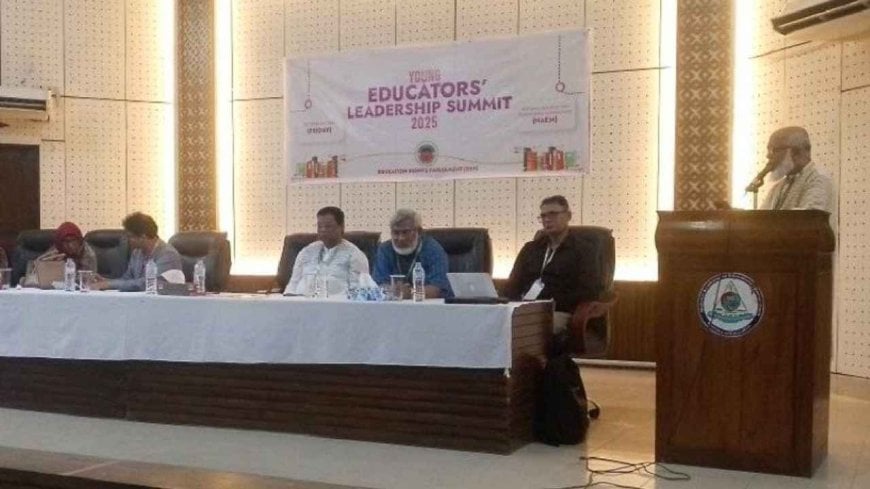
Speakers made these observations at the “Young Educators Summit 2025,” titled “Reimagining Education in Bangladesh 2.0: Vision 2030 and Beyond,” held on Friday, October 24, at the National Academy for Educational Management (NAEM) in Dhaka, organized by Shikkha Odhikar Sangsad. Over 150 students from education and research institutes across the country participated in the conference.
The main session was presided over by Professor Dr. Md. Niaz Asadullah, international education researcher, economist, and convener of Shikkha Odhikar Sangsad. The session was attended by former Senior Secretary of the Technical and Madrasah Education Division Kh. M. Kabirul Islam; former Chairperson of the Institute of Education and Research (IER), University of Dhaka, Professor Hosne Ara Begum; Assistant Professor Dr. Nure Alam Siddique of the same institute; Professor Dr. Muhammad Mahbubur Razzak of the Department of Mechanical Engineering, BUET; NAEM Director General Professor Dr. Md. Zulfiqar Haider; and National Curriculum Coordination Committee member Professor Dr. Sultana Razia.
In his keynote speech, Kh. M. Kabirul Islam underscored the need to restructure Bangladesh’s education system by integrating values with technology. “Children are no longer attending schools. Alarmingly, they are going to Qawmi madrasas,” he said. “The concern is that Qawmi madrasas don’t offer employment opportunities. So why are parents sending them there? Because they feel their beliefs are not reflected in schools. Hence, we need to integrate morality and technology.”
He also cautioned against the indiscriminate use of technology among students. “We must consider at what age which technology should be introduced. South Korea has recently adopted a policy restricting many devices for children under 16. An Australian researcher told me that excessive technology use is damaging children’s communication skills.”
Kabirul Islam further criticized the deterioration of the education system due to administrative negligence and societal apathy. “We are all doing jobs without motivation,” he remarked. “We have become overly materialistic. For parents, achieving GPA-5 has become more important than acquiring knowledge. Over the past 15 years, education has suffered immensely. Whatever remains is not institutional — it survives only through individual efforts.”
Advising teachers, he added, “Target the weakest student in the class; the better ones will learn gradually.”
Former IER Chairperson Professor Hosne Ara Begum called for modernization and reform of the education system, highlighting the need for “digital curricula, e-learning, and prioritizing science and technology.” She noted that “technological education in rural and government institutions remains severely limited,” identifying inequality, lack of technological infrastructure, and teacher inefficiency as the major challenges.
BUET Professor Dr. Muhammad Mahbubur Razzak pointed out that despite the apparent rise of technology in schools over the last 15 years, “the reality is quite different.” Responding to a question, he said, “Statistically, we have established labs in schools across districts and upazilas. But whether these labs are actually used is questionable. I am involved with a school myself — there, the lab is merely a showpiece. Students are overcoming their fear of technology, but teachers seem not to have done so. They need extensive training.”
NAEM Director General Professor Dr. Md. Zulfiqar Haider stressed the importance of enhancing teachers’ technical training. “A new body of knowledge now emerges almost every three days,” he said. “Yet, we tend to view technology only through a physical lens, which does not ensure technology-based education. When my classroom includes AI or a high-tech environment, our methods must change. The current teacher training is designed for face-to-face classes — we must move beyond that. Teachers and trainers alike must build both technical and capacity-based competencies. While we talk about values and technology, there’s a conflict — this must evolve into collaboration. Technology can be used to promote values too, and the government has begun to realize this. But we need a unified framework combining education, science, and technology experts.”
Dr. Nure Alam Siddique, Assistant Professor at Dhaka University’s IER, urged immediate curriculum revision, saying, “Artificial intelligence and technology education must be integrated into the curriculum. We must promote problem-based learning and link it to real-life contexts — that’s how students will stay engaged. However, core subjects cannot be excluded. Technology and AI should be incorporated alongside them. At the same time, students must learn how to use technology ethically and skillfully. A paradigm shift in teaching is now imperative.”