





































Bangladesh Federal Journalists’ Union Unveils Unified Wage Demands
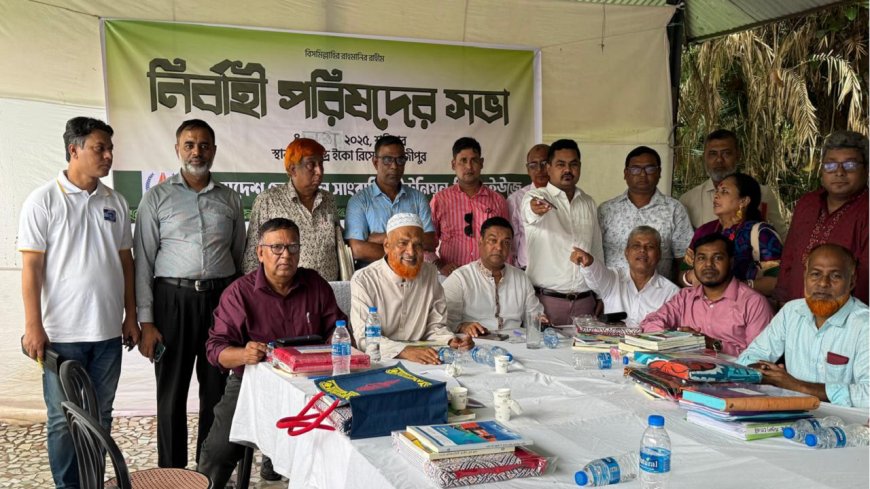



The Bangladesh Federal Journalists’ Union (BFJU) has presented ten specific demands, including the formation of a unified wage board covering newspapers, online platforms, television, radio, and multimedia, with integration of digital media. The announcement was made during an executive committee meeting on Saturday morning, October 4, in Gazipur. Key demands include the immediate implementation of the ninth wage board, formation of the tenth wage board, formulation of a journalist protection policy, establishing a two-day weekly leave for journalists, justice for murdered journalists including the Sagar-Runi case, repeal of all laws restricting media freedom, making the Department of Films and Publications (DFP) corruption-free, and ensuring transparency in government advertisement and circular allocation.
Regarding weekly leave, the meeting highlighted that while government offices observe two-day weekends and many private organizations follow the same, journalists have no fixed working hours or guaranteed weekly leave, increasing their physical and mental stress.

The meeting was presided over by BFJU acting president Obaydur Rahman Shaheen and conducted by secretary-general Kader Goni Chowdhury. Other attendees included vice-presidents Muhammad Khairul Bashar and AKM Mohsin, assistant secretary Bachir Jamal, Dr. Sadiqul Islam Swapon, Ehteshamul Haque Shawon, treasurer Shahidul Islam, organizational secretary Erfanul Haque Nahid, office secretary Md. Abu Bakar, publicity secretary Md. Shahjahan Saju, executive committee members Md. Modabber Hossain, Arpana Roy, Muhammad Abu Hanif, Hamidul Haq Manik, and several union leaders from Dhaka, Chattogram, Khulna, Bogura, Cox’s Bazar, Comilla, Dinajpur, Mymensingh, Gazipur, Feni, Barishal, and Rangpur.
A proposal emphasized that despite long-standing promises, wage boards for journalists have yet to be implemented, while rising living costs continue to escalate. The BFJU urged the government to act promptly on the ninth wage board and establish the tenth, ensuring a unified wage structure for all media sectors.
Another proposal compared restrictive laws to landmines set to silence journalists. Currently, at least 20 laws pose potential threats to journalists, and according to the Media Reform Commission, the number may be as high as 32. “Journalists must think 32 times before writing or speaking,” the meeting noted, warning that fear of legal traps often forces self-censorship.
Criticism was also leveled at the government for failing to repeal media-restrictive laws even a year after the fall of a fascist regime. “Laws against media freedom put journalists at risk of lawsuits and harassment. These laws must be identified and repealed,” the meeting declared.
Regarding journalist protection policies, the union highlighted gaps in legal and job security. Many media outlets do not provide regular salaries, employment contracts, or severance according to wage board standards, leaving journalists vulnerable. Salaries for journalists outside Dhaka are often inadequate, sometimes as low as BDT 2,000–5,000, and some television stations demand payments from district correspondents.
The BFJU stressed that compensation policies for physical damage to equipment — such as cameras, laptops, motorcycles, and vehicles during high-risk assignments — are essential. Provisions for accident insurance, medical care funded by media owners, dedicated funds for hazardous assignments, safety equipment, and accident allowances must be ensured. Permanent journalists should receive accident insurance, medical coverage, life insurance, provident fund, and gratuity. Legal assistance for journalists should be institutionalized, and appropriate facilities, including separate restrooms for female journalists, should be provided.
The union concluded that these reforms are crucial to ensure the welfare, safety, and professional independence of journalists across Bangladesh.









