




























































































































Online Offences Against Women on the Rise Amid Growing Digital Threats
Faria Iffat Mim




In recent times, women have increasingly become victims of online fraud and abuse. Acts of vengeance, insensitivity towards women, or disagreements with a woman’s opinion often result in attacks on their personal lives. From leaking private information online to using deepfake and AI tools to distort content, online harassment has taken a dangerous turn. Intimidation and threats have alarmingly become a trend.
Women’s voices are frequently suppressed, and stalking remains rampant, keeping them under constant digital surveillance. As a result, it’s not uncommon to see images of ordinary women used in clickbait headlines.
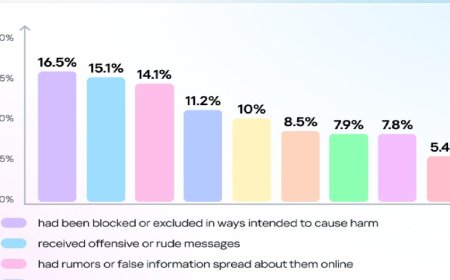
Once it was assumed that women primarily faced such violence from familiar individuals, but that narrative no longer holds. Now, any woman online can become a target. According to a 2024 UN Women report, 67% of women have faced online violence, and nearly 73% of female journalists reported the same.
In December 2024, German development and justice-focused organization NETZ published research on Bangladesh, revealing that over 78% of victims experienced tech-based violence. Of the incidents documented, 78.4% occurred on Facebook, while 28% took place on messaging apps such as WhatsApp and IMO.
While internet expansion has simplified lives, its misuse has created new challenges. Personal data breaches are on the rise, especially in countries like Bangladesh where internet usage is growing rapidly. Social media platforms like Facebook, Messenger, and WhatsApp, along with other personal accounts, have increasingly become targets of hacking.
Phishing attempts and malware attacks are becoming more sophisticated. Hackers often design fake websites or emails that appear legitimate. When users input personal details like usernames and passwords, the information is stolen. Harmful software, once installed on a device, can collect and transmit personal data to hackers, often through email attachments, suspicious links, or unsecured websites.
Social engineering has emerged as a major tool for hackers, manipulating users psychologically to extract sensitive information. They may impersonate mobile banking agents, bank officials, or trusted acquaintances to deceive victims. Many fall prey to such schemes.
Women, in particular, remain more vulnerable to data theft online. Stolen personal materials such as photos, videos, or chat screenshots are frequently used to blackmail or harass. Victims often experience emotional trauma and hesitate to seek legal support due to fear of social stigma. Fake accounts using women’s data to spread misinformation is also a common tactic.
Bangladesh has enacted various laws, including the Digital Security Act, to combat cybercrime and protect personal information. However, enforcing these laws remains challenging. Hackers constantly innovate, making it difficult for law enforcement to keep pace—especially when perpetrators operate from abroad. Additionally, victims often lack sufficient evidence, which complicates investigations.
Despite being active on social media, many women are unaware of social engineering techniques. Hackers exploit this psychological vulnerability by gaining trust—posing as friends or romantic partners—to manipulate victims into sharing confidential information. Women are disproportionately targeted and often stay silent out of shame or fear, allowing such crimes to fester within society.
Therefore, it is essential for victims to speak out and seek support from family, friends, or trusted individuals.
Translated from the Write-up of Fariya Iffat Mim, Human Rights Activist and Researcher
Disclaimer: The views expressed in this opinion piece are solely those of the author. Digital Bangla Media bears no responsibility for the content. As a reflection of media’s commitment to diverse perspectives, this article has been published without editorial intervention. Any discontent or reaction to its content is entirely personal.