



































Falsehoods and Female Figures: Disinformation Targets Women Politicians in Bangladesh
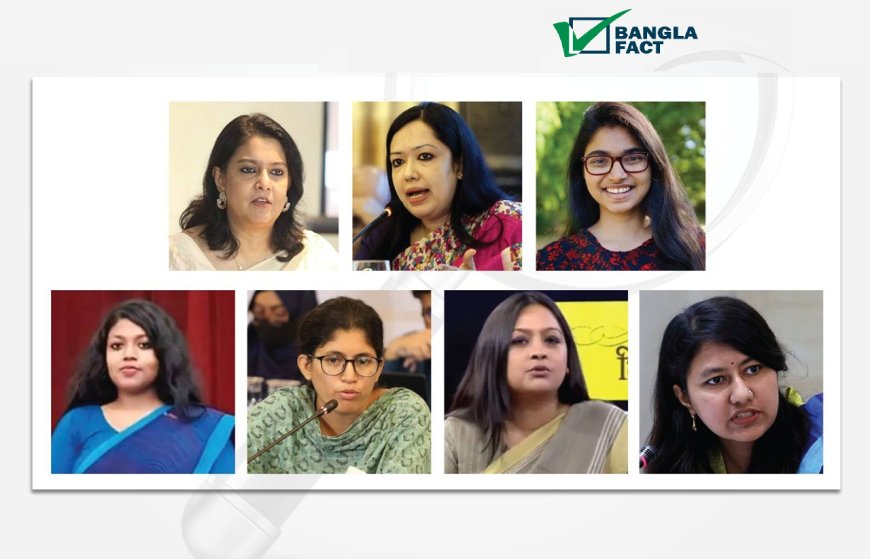



In recent years, objectionable content targeting women has become a regular feature on various internet platforms such as Facebook, X (formerly Twitter), YouTube, and TikTok. However, this troubling trend has surged significantly in recent times, with female political figures—especially those aligned with the previous ruling party—being disproportionately targeted.
An investigative report released on Tuesday, June 24, by BanglaFact, the fact-checking and media research team of the Press Institute Bangladesh (PIB), reveals alarming details regarding this digital harassment.
According to the report, since the ousting of autocratic ruler Sheikh Hasina on August 5 last year, a number of women politicians who rose to prominence in the aftermath have been the focus of a persistent campaign of misinformation across online platforms. False content includes the creation of fake social media accounts in their names, doctored photo cards bearing mainstream media logos, lewd edited images, deepfake videos, and derogatory comments used to malign their reputation. To make the content appear credible, fake photo cards often feature logos and names of recognized media outlets.
The report identifies 27 such objectionable pieces of content related to five emerging female politicians, one established political figure, and one female advisor. All claims made in these contents were found to be false. It also acknowledges that there may be other instances of such harmful content that were not captured due to verification limitations. Several other fact-checking organizations in the country have similarly flagged these contents as fabricated.
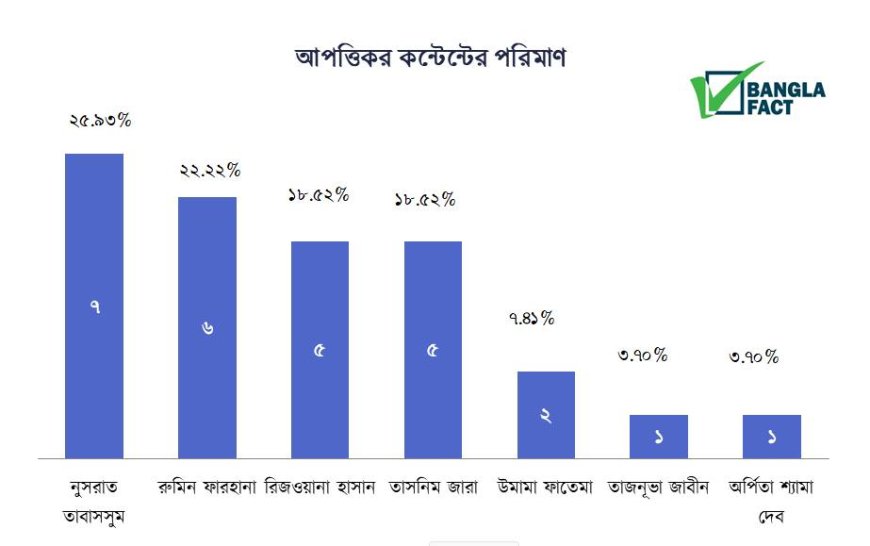
Of the total, 18.52 percent targeted Syeda Rizwana Hasan, Environmental, Forest, and Climate Advisor. Rumeen Farhana, BNP’s Assistant Secretary for International Affairs, was the subject of six objectionable items—22.22 percent of the total. Tasnim Zara, Senior Joint Member Secretary of the National Citizens’ Party (NCP), was targeted with five (18.52 percent), while Nusrat Tabassum, NCP’s Joint Convener, had the highest share—seven items, accounting for 25.93 percent.
Umama Fatema, spokesperson of the Anti-Discrimination Student Movement’s convening committee, was targeted in two cases (7.41 percent), and Tajnuba Zabeen and Arpita Shyama Dev, both Joint Conveners of the NCP, were each featured in one item, comprising 3.70 percent respectively.
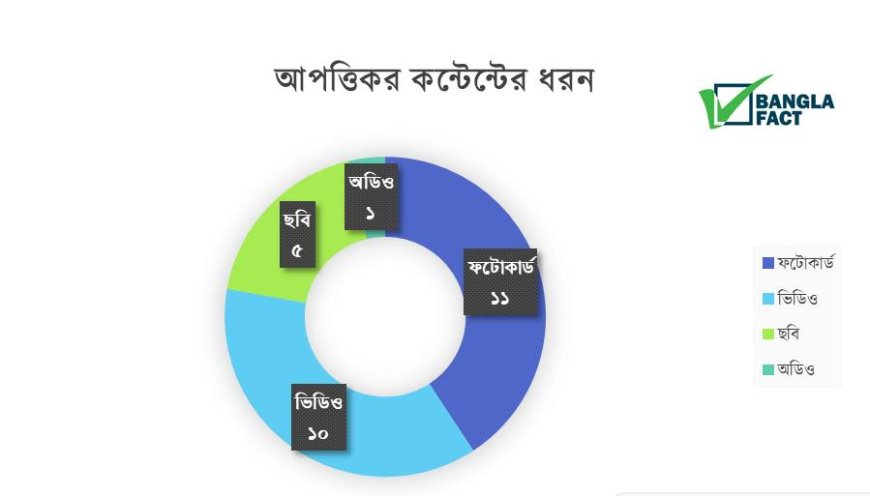
Out of the 27 items, only three—targeting Rumeen Farhana—were circulated prior to the July uprising. The rest appeared afterward. Additionally, the report notes that beyond these objectionable contents, other forms of false information involving these women—touching on political and religious issues—have also spread online, though this particular investigation focused solely on offensive material.
Among the formats analyzed, 11 were photo card-based, 10 were video-based, five were image-based, and one involved audio content.









