





















































































































































Bandwidth Battle and Broken Promises
Mohammad Aminul Hakim




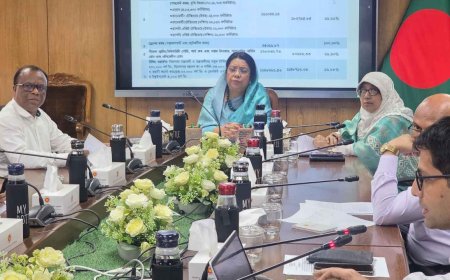
The promise sounded clear enough: “From 1 July internet wholesale rates at the ISP and IIG tiers will fall by 20 per cent, and retail prices will follow,” announced Faiz Ahmad Taiyeb, special assistant to the chief adviser responsible for the Ministry of Posts, Telecommunications and Information Technology, at a press briefing held on 15 May at the BTRC headquarters in Agargaon to mark World Telecommunication and Information Society Day.
In the days that followed, the country’s major transmission providers hurried to issue their own public notices:
-
21 April – Fiber@Home: 10 per cent on ITC, 15 per cent on NTTN
-
22 April – Summit Communications: 10 per cent on ITC, 15–20 per cent on NTTN
-
29 April – Bahon Ltd.: 10 per cent on NTTN
Today is 21 June—and not a single taka has actually been shaved off an internet bill.
“Announcements abound, reality is absent,” complain ISP operators. According to them, the transmission companies have told ISPs they will cut their per‑megabit rates, but monthly invoices must remain unchanged. The catch? ISPs will be compelled to lease excess bandwidth they neither need nor can resell, wiping out any theoretical savings.
Operators add that bandwidth accounts for only seven to eight per cent of an ISP’s total costs; every other expense—staff salaries, power, fibre maintenance—continues to rise. Without parallel reductions elsewhere, the proclaimed wholesale discount will never reach the end‑user.
Floor and ceiling—but only for some
The sector’s value‑chain—ITC, BSCCL, NTTN, IIG, ISP and mobile carriers—is riddled with asymmetry, ISPs argue. Every layer except ISPs enjoys a BTRC‑mandated floor price, guaranteeing profitability. Yet no ceiling price is ever imposed on mobile data, even though broadband tariffs have repeatedly been capped under the “One Country, One Rate” policy.
“In the name of reform, the imbalance persists,” says an ISP association spokesperson. Rumours now suggest mobile operators may soon receive blanket permission to lay fibre, a move broadband players fear would undercut their own infrastructure investments.
‘Does the government fear the mobile operators?’
BTRC’s latest report (updated 2 June) shows 116.54 million mobile‑internet users versus 14.32 million fixed‑broadband subscribers. “Yet regulatory pressure keeps falling on the smaller broadband segment,” industry insiders note. Voice tariffs for mobile calls are regulated, they add, “but data prices have never been bound by a ceiling. We keep hearing about cost‑modelling studies and ITU consultants—but nothing materialises. Mobile data prices stay high. Does the government fear the mobile operators?”
A softer tone—and a harder question
In a Facebook post on 21 April, Faiz Ahmad Taiyeb wrote that a three‑ to four‑step price‑reduction plan was under way across licensing tiers. Citing multiple concessions already granted to mobile operators, he added: “There remains no reasonable excuse for private mobile companies not to reduce internet prices. The government has offered them policy support.”
But will polite requests suffice where years of cajoling have failed? Observers say only decisive regulatory action—setting a binding ceiling alongside the floor—can guarantee consumers any relief.
Author: Mohammad Aminul Hakim, CEO, Amber IT Ltd.
Editorial note: The views expressed in this article are those of the original author and do not necessarily reflect the position of Digital Bangla Media. The text has been translated without substantive editorial alteration to preserve a diversity of opinion.