























































































































Begum Khaleda Zia, The Visionary Leader Who Shaped Bangladesh’s Digital Transition



Science and technology did not become part of Bangladesh’s development journey by chance; rather, they were the outcome of long-term planning. The tenure of Begum Khaleda Zia as Prime Minister (1991–96 and 2001–06) marked a decisive turning point in the country’s engagement with information technology, science, and engineering. Her periods in office are widely regarded as a transitional phase—when Bangladesh began moving from an analog framework toward a digital future.
During her leadership, the use of engineering and technology in agriculture was formally initiated. A landmark moment came in 1995 with the installation of a rubber dam on the Bakkhali River in Cox’s Bazar, a project that proved transformative for irrigation and agricultural productivity and later became a model for similar initiatives nationwide.
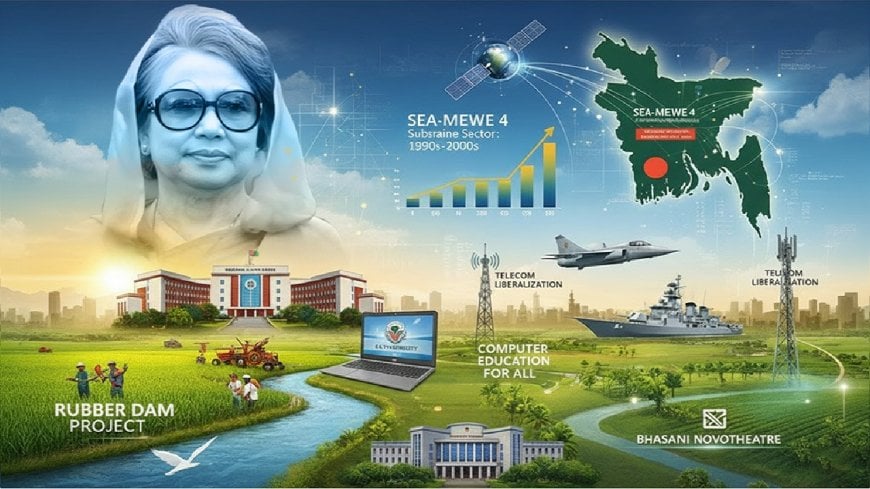
Her government also took several strategic decisions that reshaped the country’s technological landscape. These included declaring ICT a thrust sector, joining the SEA-ME-WE 4 international submarine cable consortium, establishing science and technology universities, forming the state-owned mobile operator Teletalk, allocating land in Kaliakair, Gazipur for the country’s first high-tech park, and laying the foundations for what are now the Bangabandhu Novo Theatre and the National Science and Technology Museum.
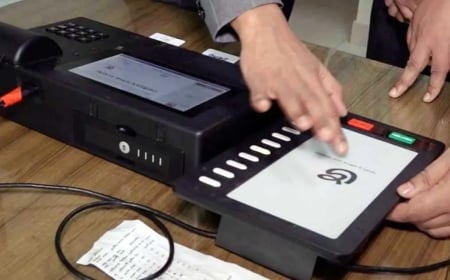
Observers of the period recall the 1990s and early 2000s as an era when Bangladesh consciously stepped into the digital age. The National ICT Policy of 2002 provided the basis for today’s digital administration. Computerization was introduced in voter list management and electoral information systems, alongside the use of transparent ballot boxes. These decisions, particularly in the early 1990s and the beginning of the 21st century, helped lay a strong foundation for a self-reliant Bangladesh.
Submarine Cable and the Internet Revolution
The high-speed internet services enjoyed today trace their origins to 21 May 2006, when Bangladesh was connected to the global information superhighway through SEA-ME-WE 4 under Khaleda Zia’s leadership. At the time, critics questioned the value of the investment. However, the success of Bangladesh’s freelancing sector—now generating billions of dollars—has since underscored the foresight of that decision. At a 2003 press conference, Khaleda Zia famously remarked that the nation’s youth were moving “from the plough to the computer keyboard,” capturing the spirit of the transformation.
Liberalization of Telecommunications
The liberalization of the telecom sector, initiated in the 1990s, reached maturity during her 2001–06 term. On 26 December 2004, Teletalk Bangladesh Limited was formed out of BTTB’s mobile wing, paving the way for competition among private operators. Simultaneously, the transformation of BTTB (now BTCL) from analog to digital exchanges revolutionized communication services across the country.
ICT as a Thrust Sector: From Pen to Computer
Following 2001, ICT was formally declared a thrust sector. Reforms in the tariff structure made hardware more affordable, bringing computers within reach of the middle class and marking the first step toward digital literacy. Khaleda Zia’s government accelerated the establishment of science and technology universities across the country, expanded computer education at the secondary level, and introduced scholarships and laptop support for meritorious students. Her administration also ensured free education and stipends for girls up to grade ten, a policy widely regarded as a global model that indirectly boosted women’s participation in the IT sector.
In 2004, the modern Novo Theatre was inaugurated in Dhaka’s Bijoy Sarani, then among South Asia’s most advanced facilities for space science education. The modernization of the National Science and Technology Museum and the drafting of the first comprehensive National ICT Policy in 2002 further reinforced the country’s scientific infrastructure.
Industry, Economy, and Defense Modernization
Her government supported technological upgrades in export-oriented industries, particularly readymade garments, by offering duty benefits for computerized design and production systems. The establishment of EPZs in Comilla, Ishwardi, and Uttara helped decentralize technology-driven industrialization.
In defense, Bangladesh entered a new era of modernization with the induction of MiG-29 fourth-generation fighter jets, advanced radar systems, missile frigates, and modern naval vessels. These initiatives enhanced airspace security, maritime capability, and participation in UN peacekeeping missions through improved logistics and communications.
A Quiet Revolution in Agricultural Engineering
Perhaps one of the most understated revolutions of the era was in agriculture. The introduction of rubber dam technology transformed dry-season water management and irrigation, particularly in Cox’s Bazar and other regions. Combined with duty-free imports of power tillers, irrigation pumps, and modern machinery, agriculture began to shift decisively toward mechanization. The modernization of Bangladesh Rice Research Institute (BRRI) and increased investment in research led to significant advances in high-yield and climate-resilient crop varieties, pushing the country closer to food self-sufficiency.
Analysts argue that Khaleda Zia’s science and technology vision was not centered on isolated projects, but on a long-term national roadmap. From agriculture and education to defense and digital infrastructure, the seeds planted during her tenure have since grown into the pillars of a modern, knowledge-based Bangladesh. History, they contend, will remember her not only as an uncompromising political leader, but also as a visionary of a science-driven nation.
— SM Imdadul Haque, Executive Editor, DigiBanglaTech.news
Note: This article was published in the Opinion section. The views expressed are solely those of the author and do not necessarily reflect the position of the digital media authority. The piece is published without editorial alteration as part of the media’s commitment to pluralism.