





































SAARC Seeds Seminar Spotlights Sustainable Strategies
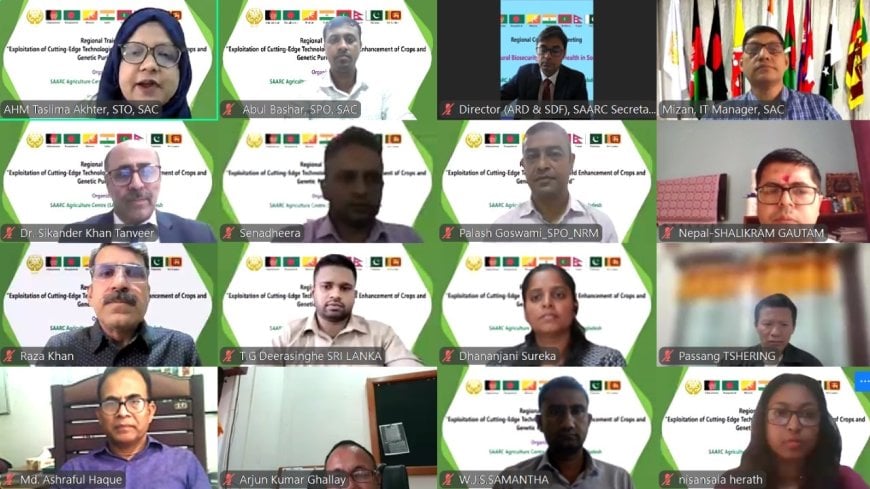



The four-day regional training program organized by the SAARC Agricultural Centre, titled “Use of Modern Technology for Crop Productivity Enhancement and Genetic Purity of Seeds,” was inaugurated virtually on Monday, September 22. Leading agricultural scientists, experts, and policymakers from SAARC member countries are participating in the program, discussing strategies to boost crop production using modern technologies and ensure sustainable food security.
The training aims to strengthen regional cooperation, facilitate the exchange of knowledge and experience, and encourage the adoption of innovative agricultural technologies, enabling SAARC countries to advance in food security and sustainable agricultural development.
In his inaugural address, Dr. Sikandar Khan, Senior Program Specialist (Crops) at the SAARC Agricultural Centre, outlined the objectives of the training. During the session, Dr. Velu Govindan, Chief Scientist at the International Maize and Wheat Improvement Center (CIMMYT) in Mexico, presented a paper titled “Modern Agricultural Technology: Concepts, Importance, and Availability in South Asia.”
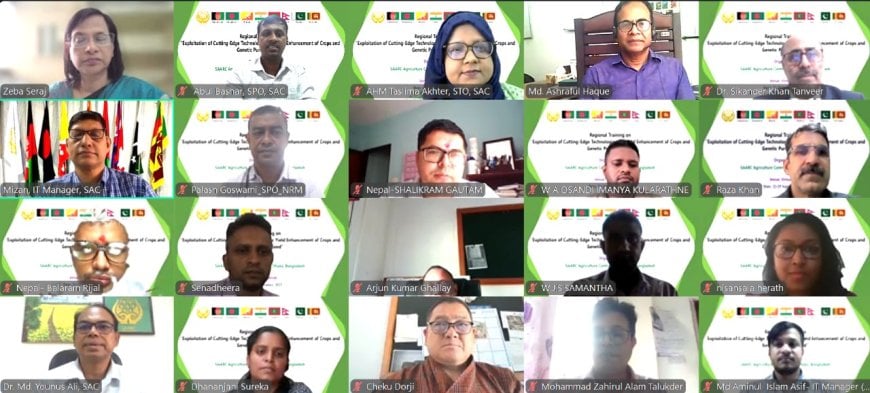
Delivering his remarks as a special guest, Tanvir Ahmed Tarafdar, Director (ARD and SDF) at the SAARC Secretariat in Nepal, stated, “The global population is rising rapidly, leaving no alternative but the adoption of modern agricultural technology.” He emphasized the importance of genetic purity of seeds, sustainable water use, and embracing advanced technologies.
Dr. Md. Mahmudur Rahman, Additional Secretary (PPC) at the Ministry of Agriculture and the chief guest, noted, “Agriculture in South Asia is currently facing the challenges of soil degradation and climate-induced disasters.” He highlighted Bangladesh’s notable progress in modern crop development technologies and the use of quality seeds, acknowledging the significant contributions of BARI, BINA, BRRI, and other agricultural research institutions. Dr. Rahman added, “Agricultural advancements must be sustainable, and for this, precision agriculture and modern research must be prioritized.”









