






































Six New Rice Varieties Enrich Bangladesh’s Grain Basket
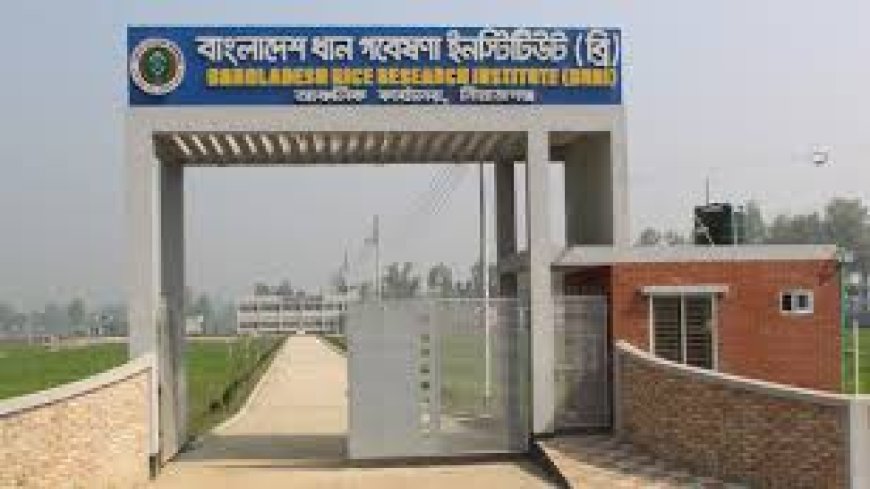



Bangladesh’s grain basket has been strengthened with the inclusion of six newly developed rice varieties, including two hybrids. Among the newly released varieties, one is vitamin E–rich, one is salinity-tolerant, one is blast disease–resistant, one is suitable for haor wetlands and cold-tolerant, and two are lodging-tolerant hybrid varieties.
With the release of these six new varieties, the total number of rice varieties developed by the Bangladesh Rice Research Institute (BRRI) has now reached 127.
Among the newly approved varieties, BRRI dhan115 is rich in vitamin E and antioxidants. It is Bangladesh’s first high-yielding black rice variety. The average yield is 7.4 tonnes per hectare, with a growth duration of 137–142 days. The grains are black in colour, and the plant is tall and slender. The weight of 1,000 grains is approximately 17.8 grams. Vitamin E and antioxidant contents are 14.98 mg/kg and 536.61 µM per 100 grams, respectively.
BRRI dhan116 is a high-yielding late-maturing Boro-season variety with an average growth duration of 154 days. Across ten regions, it produced 13.75 percent higher yield than BRRI dhan92. The average yield is 8.59 tonnes per hectare, while under favourable conditions it can reach up to 10.36 tonnes per hectare.
BRRI dhan117 is a short-duration, salinity-tolerant, and blast disease–resistant variety. The average yield is 8.6 tonnes per hectare, which can increase to 9.90 tonnes with proper management. The grains are golden in colour, and the growth duration ranges from 129 to 135 days. The amylose content is 24.2 percent, and protein content is 9.3 percent.
BRRI dhan118 is a cold-tolerant variety suitable for haor areas. Even if sowing is delayed until the last week of October, the crop does not suffer from sterility. Under normal conditions, yields range from 6.9 to 8.5 tonnes per hectare. The amylose content is 28.3 percent, and protein content is 9.1 percent. Across ten regions, it recorded 22.83 percent higher yield than BRRI dhan28.
The two hybrid varieties—BRRI Hybrid Dhan 9 and BRRI Hybrid Dhan 10—are lodging-tolerant, meaning they are resistant to falling over, and are also moderately salinity-tolerant. From seedling to maturity, they can tolerate salinity levels of 4–8 dS. Under normal field conditions, they yield 9.5–10.5 tonnes and 9.7–10.7 tonnes per hectare, respectively.
The six high-yielding rice varieties developed by BRRI were officially approved for nationwide cultivation at the 115th meeting of the National Seed Board, held on Thursday, 5 February, at the Ministry of Agriculture.
The meeting was chaired by Dr. Mohammad Emdad Ullah Mian, Secretary of the Ministry of Agriculture. Senior officials from relevant ministries and departments, including Dr. Mohammad Khalequzzaman, Director General of BRRI, were also present.
It was informed at the meeting that, including the newly released ones, 39 BRRI-developed varieties are tolerant to various adverse environmental conditions. As BRRI-developed varieties and technologies have reached farmers at the field level, Bangladesh has now become the third-largest rice-producing country in the world. While per capita arable land declined from 20 percent in 1971 to 10 percent at present, the population increased by two and a half times during the same period. Despite this, food production has increased nearly fourfold.
DBTech/BTN/SM/OR









