






































ISP Industry at Crossroads: Challenges and Choices in Bangladesh's Digital Landscape
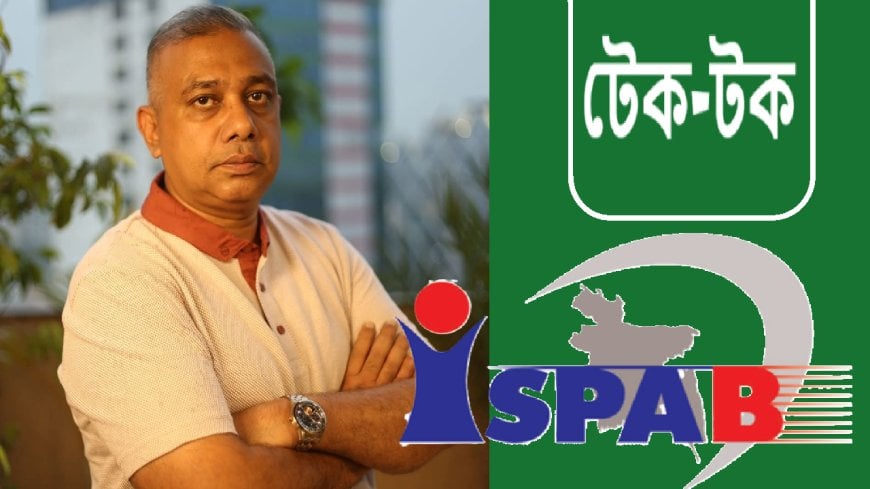



An exclusive interview with ISPAB President Aminul Hakim by SM Emdadul Haq, Executive Editor of digibanglatech
The hope for telecom sector reforms following the July uprising has gradually turned into apprehension, now shadowed by contradictory decisions. As the internet service industry completes 30 years in 2025, ISPAB President Aminul Hakim identifies this as its most challenging period yet. In an exclusive interview with digibanglatech, he outlines solutions requiring government-user collaboration.
Mohammad Aminul Hakim, recently elected President of the Internet Service Providers Association of Bangladesh (ISPAB) for 2025-2027, brings extensive leadership experience including three previous terms as ISPAB president and two as secretary-general. Professionally serving as CEO of Amber IT Limited, he concurrently chairs the Bangladesh Internet Governance Forum (BIGF), the national chapter of the global Internet Governance Forum.
digibanglatech: What is the current state of Bangladesh's ISP industry?
Aminul Hakim: Our ISP industry began in 1996, making it a 30-year-old sector. However, 2025 stands as the most difficult year in these three decades, presenting unprecedented challenges.
The primary challenge stems from rising living costs - rent, electricity, transportation, and essentials are all increasing, yet internet prices keep declining. End-users don't perceive this reduction because media never discusses potential price hikes, nor does the government provide proper guidance. While supporting price cuts theoretically, the government offers no implementation roadmap.
Meanwhile, authorities continue collecting VAT, taxes, revenue shares (with additional VAT), Social Obligation Fund (SOF) contributions, and other levies from every layer of internet infrastructure. With 55% of revenue going to government coffers, price reduction becomes impossible without policy changes.
Post-August 5 reforms are welcome, but current policies favor foreign companies over local entrepreneurs who built this industry. National security rhetoric contradicts decisions to hand critical infrastructure to foreign entities. Thirty years on, we still lack effective sector-specific policies.
digibanglatech: What obstacles hinder the internet industry's growth?
Aminul Hakim: Connectivity now reaches every union, upazila, and village - the question is quality. The entire value chain (ITC operators, NTTNs, BSCSCL) affects service quality, yet only ISPs face blame when issues arise.
Infrastructure remains the biggest hurdle. Unlike neighboring countries where governments subsidize infrastructure, our projects like BanglaGov, Info-Sorkar 2/3, and Hi-Tech Parks exist mostly on paper. A "Fiber Bank" consolidating unused capacities from PGCB, BTCL, and Info-Sorkar projects could revolutionize rural connectivity if shared freely with local ISPs.
digibanglatech: With satellite internet entering alongside mobile and ISPs, is this an opportunity or immature challenge?
Aminul Hakim: We welcome all technologies - satellite today, maybe laser communications tomorrow. The private sector must adapt through improved service quality, proactive support, AI-driven call centers, and automation. Government support through financing for rapid tech upgrades remains crucial.
digibanglatech: Government alleges ISPs prioritize CDN over broadband improvement. Your response?
Aminul Hakim: This partial truth has logical explanations. When 70-80% of traffic globally goes to Facebook, YouTube, and TikTok, ISPs naturally focus on CDN. The real issue lies in lacking local content - China's ecosystem shows alternatives exist. Government portals often contain outdated information, pushing users toward entertainment CDNs.
digibanglatech: How to make internet both affordable and high-quality?
Aminul Hakim: Price reduction requires government action - reducing its 55% revenue share, eliminating SOF, and cutting VAT/corporate taxes. Quality depends on modern equipment (currently hampered by high import duties), user devices, and proper WiFi router deployment. BTRC's reversal from mandating dual-band routers worsened quality.
digibanglatech: Can ISPs survive alone, or are partnerships essential?
Aminul Hakim: Scale benefits all businesses. Currently, multiple ISPs maintain separate networks operating at 40% capacity - partnerships could optimize this 60% idle infrastructure benefitting all stakeholders.
digibanglatech: Post-re-election priorities?
Aminul Hakim: We're decentralizing operations beyond Dhaka and focusing on two key areas: enhancing member services and reconciling conflicting expectations between government (lower prices), users (free quality service), and businesses (sustainability).
digibanglatech: Thank you for your time amidst busy schedules.
Aminul Hakim: My gratitude to DGBangla and all readers engaging with this discussion.









