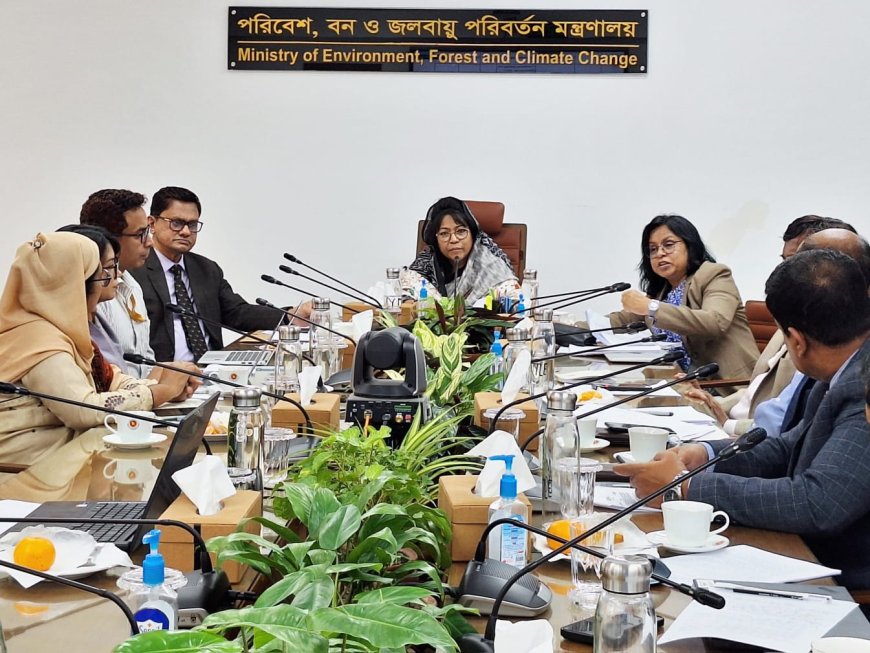
The government has taken steps to finalize a national strategy paper aimed at tackling the silent public health crisis caused by lead contamination in the country. At a meeting of the “Multisectoral Steering Committee” held today at the Ministry of Environment, Forest and Climate Change, the draft strategy was reviewed, and relevant ministries were instructed to include their respective action plans.
The strategy is being treated as a crucial national priority to protect vulnerable populations—particularly children and workers—from the severe effects of lead exposure. Through this paper, a coordinated and effective action plan will be adopted to reduce nationwide lead exposure, safeguard public health, and ensure long-term environmental safety.
The strategy outlines strict measures to regulate key sources of environmental lead—such as lead-based paint, unauthorized recycling of used lead-acid batteries (ULABs), lead-containing cookware, toys, and industrial products. It also identifies the rapid rise of e-waste, generated from the growing use of e-rickshaws and other battery-powered vehicles, as a major environmental threat and includes guidelines for its management and control.
To achieve these goals, the strategy seeks to integrate the ongoing efforts of various ministries and government agencies—covering health screenings, curriculum revisions, industrial policies, labour safety, environmental regulation, and waste management—into a unified national action plan.
The meeting was chaired by Dr. Farhina Ahmed, Secretary of the Ministry of Environment, Forest and Climate Change. Attendees included Dr. Fahmida Khanam, Additional Secretary (Environment); Dr. Md. Kamruzzaman, Director General of the Department of Environment; Siddhartha Sankar Kundu, Deputy Secretary (Environmental Pollution Control); and Sabrina Rahman, the ministry’s focal point on lead pollution control. Representatives from the Ministries of Health, Labour, Agriculture, and Education were also present. Development partners including UNICEF, the World Health Organization, and Pure Earth participated as well.
During the meeting, Secretary Dr. Farhina Ahmed said that once finalized, the national strategy paper would help protect children, workers, and other vulnerable groups from harmful lead exposure. She described it as a significant milestone toward ensuring a safer, healthier, and more sustainable future.
DBTech/BB/EK/OR