











Orthopedic Surgeons Stress Systemic Reform at BASIS Annual Scientific Congress
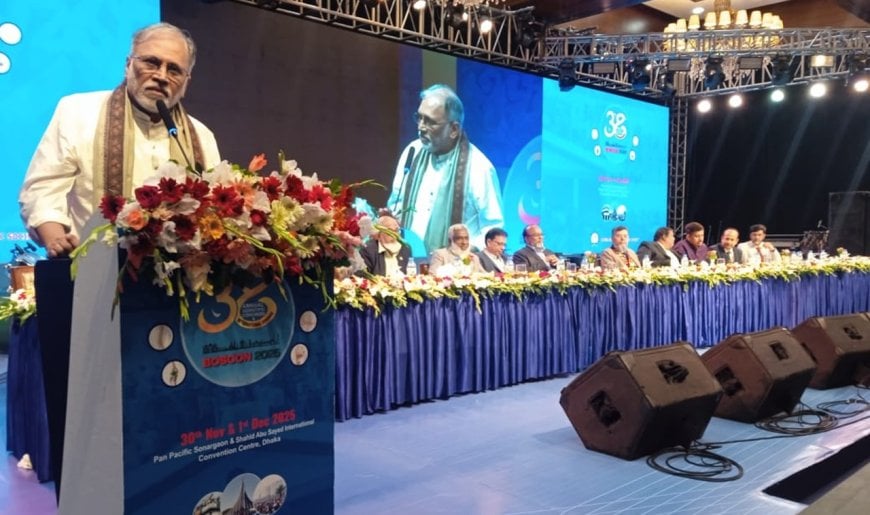



The two-day 38th Annual Scientific Congress of the Bangladesh Orthopedic Society has concluded in Dhaka. The event, held at a city hotel, brought together more than 1,500 orthopedic surgeons from across the country, including 14 foreign experts.
The conference was attended as chief guest by Professor Dr. Md. Sayedur Rahman, Special Assistant to the Chief Adviser in charge of the Ministry of Health and Family Welfare. Special guests included Md. Saidur Rahman, Secretary of the Ministry of Health and Family Welfare; Professor Dr. Najmul Hossain, Director General of the Directorate General of Medical Education; Professor Dr. Forhad Halim Donar, Advisor to the BNP Chairperson and Executive Director of the Ziaur Rahman Foundation; Professor Dr. Harun Al Rashid, President of the Doctors’ Association of Bangladesh (DAB); Professor Dr. Md. Nazrul Islam, President of the National Doctors Forum (NDF); and Dr. Md. Zohirul Islam Shakil, Secretary General of DAB.
The conference was presided over by Professor Dr. Md. Abul Kanan, Director of NITOR and Convener of the Bangladesh Orthopedic Society.
At the inaugural session on 30 November, welcome remarks were delivered by Professor Dr. Wakil Ahmed, Dr. Erfanul Siddiqui, and Dr. Shah Mohammad Aman Ullah. A vote of thanks was offered by Dr. Mizanur Rahman. Representatives from Bangladesh Medical University (BMU), including its Proctor and orthopedic specialist Dr. Sheikh Farhad, were also present.
Call to Strengthen Equity in Healthcare
In his keynote address, Professor Dr. Md. Sayedur Rahman said that 18 crore people of the country depend on physicians for healthcare, and the government is working to transform the health system into a welfare-centric model to ensure treatment based on patient need.
He stressed that the present system does not fully guarantee fairness for all patients, especially in access to ICU facilities, radiotherapy, proper diagnosis, essential medicines, and emergency care. Physicians, he said, have a moral responsibility to advocate for systemic reforms:
“The public cannot determine what changes are needed in the health system. It is the responsibility of experts and policymakers—including doctors—to shape those decisions.”
He urged that healthcare must not fall prey to commercial interests and expressed gratitude to orthopedic and ophthalmic specialists for their services to those injured during July’s mass movement.
A Milestone for Orthopedic Advancement
Member Secretary of the Orthopedic Society, Dr. Erfanul Siddiqui, reported that the 2025 conference saw a total of 1,575 participants, including faculty, senior and junior surgeons, and foreign experts.
A total of 202 scientific papers were presented across 30 high-level scientific sessions, making the conference a landmark event for the orthopedic community.
He said the congress aims to create a platform where global innovations converge with Bangladesh’s local context, generating ideas that translate into improved clinical practice. Rapid advancements in trauma care, arthroplasty, spine surgery, oncology, sports medicine, pediatric orthopedics, and rehabilitation demand that Bangladesh strengthen its capacity to keep pace with global progress.
He emphasized that the ultimate beneficiaries would be the patients, as improved surgical techniques, peri-operative care, and rehabilitation practices would ensure safer, more effective, and humane treatment.
Commitment to Future Progress
Special guests highlighted that orthopedics is among the disciplines in Bangladesh that have made the most progress. From treating war-injured freedom fighters after 1971 to serving millions today, orthopedic surgeons have consistently played a crucial role in national healthcare.
They stressed the need to further develop and modernize orthopedic services to meet future patient demands.
DBTech/PS/EK/OR