






































Coding Hope:
Building Sovereign AI Architecture for a Trillion-Dollar Economy of Bangladesh



The geographical divide between Dhaka and Silicon Valley spans over twelve thousand kilometers. Yet, the chasm that matters most today is vastly more subtle and formidable: it is an asymmetry of mindset, engineering depth, venture capital, institutional trust, and that critical fraction of a millisecond that isolates an emerging nation from sovereign compute infrastructure. In this unfolding era of artificial intelligence, Bangladesh refuses to linger as an idle spectator on the periphery. For over a century, global industrial revolutions were unilaterally imposed upon our economy; in this digital paradigm, we intend to act as primary architects of our technological destiny.
This strategic ambition directly underpins an overarching macroeconomic mandate. Prime Minister Tarique Rahman has articulated an unambiguous national trajectory: doubling the economic footprint within this decade and scaling into a trillion-dollar economy by 2034. This roadmap is far from rhetorical posturing; it is an actionable developmental framework anchored upon export diversification, disciplined fiscal governance, aggressive capital formation, and a high-yield domestic manufacturing substrate. Its scope traverses renewable power grids and precision pharmaceuticals to advanced electronics, digital public infrastructure, agro-industrial processing, high-value textile manufacturing, biopharma, and modern intermodal logistics. Having recently crossed the half-trillion-dollar threshold, doubling national output within eight years is undeniably an audacious challenge. Yet, if industrial productivity is structurally decoupled from low-complexity labor and anchored upon high-end digital capabilities, this vision transforms from speculative optimism into an intuitive, mathematically grounded reality.
Economic diplomacy must execute a direct, vanguard role in actualizing this transition. Contemporary trade diplomacy cannot remain restricted to the traditional exports of ready-made garments (RMG) and leather; it must aggressively integrate jute, diversified creative industries, and, critically, deep technology as the fundamental catalyst of compound growth. The mandate across our foreign missions has been fundamentally redefined: our embassies are no longer passive outposts for conventional protocol and ceremonial trade discussions. They are operating as frontline technological conduits designed to translate domestic intellectual capital into international joint ventures, strategic technical standards, institutional investments, and global market access. Just as the pioneering policies initiated under martyred President Ziaur Rahman laid the dual bedrock of our modern economy through readymade garments and expatriate remittances, the journey toward a trillion-dollar frontier demands an unyielding third pillar: an empowered domestic and diaspora class of knowledge workers, organically tethered to a sovereign state capable of monetizing compute capabilities with the same strategic clarity historically applied to optical fiber.
The doctrine of 'Bangladesh First' does not advocate insular digital protectionism. As Prime Minister Tarique Rahman has reinforced, it designates a prepared Bangladesh—an economy globally integrated, structurally autonomous in policy determination, and fiercely resistant to functioning as an expendable pawn on another superpower's computational chessboard. We seek strategic global coalitions; yet, the structural prerogative to govern how, where, and to what social ends our sovereign intelligence layer is deployed will never be outsourced.
What Is Intelligence For?
The sheer volume of commercial software licenses or overseas cloud subscriptions an economy procures is an entirely vacuous metric of technological readiness. The definitive benchmark is whether computational intelligence exponentially elevates the human agency and economic productivity of our citizens. A software engineer in Dhaka must be empowered by localized AI co-design suites to build in seven days what historically demanded a month, while retaining absolute intellectual property over the output. An artisanal Jamdani weaver in Rupganj must command generative multi-modal interfaces to project the heritage of her loom directly to an Italian haute-couture boutique in Milan, negotiating global margins without surrendering pricing leverage, original aesthetics, or design provenance to predatory intermediaries. A smallholder farmer in Faridpur must effortlessly digest hyper-local predictive climatology in his native dialect to optimize input cycles and mitigate crop volatility. These are not decorative technological metaphors; they represent the precise operational baseline of our digital transition.
An artificial intelligence infrastructure incapable of parsing the colloquial dialect of a farmer in Barisal or adapting to the cognitive journey of a young woman learning to write code in Kurigram is fundamentally deficient for Bangladesh. The developmental vulnerability of the Global South is systemic: emerging economies are systematically pressured into adopting proprietary models trained on foreign corpora, monetized through external rent-seeking mechanisms, and regulated by external jurisdictions—a transaction routinely celebrated as modernizing progress. Absorbing imported technological platforms in the absence of indigenous domestic capacity is nothing short of an accelerated form of digital colonization.
Sovereign Creators, Not Captive Consumers
Our institutional stance is unequivocal: Bangladesh must transition from being a passive consumer market into a sovereign producer of artificial intelligence. Every taka of domestic public revenue and every dollar of foreign direct investment allocated toward artificial intelligence must yield tangible domestic equity: an uncompromised internal capability, a curated national dataset, an auditable open-weight foundational model, or a high-throughput innovation cluster accessible to our youth. For a nation of over 170 million people—whose diaspora already forms the engineering backbone writing leading-edge code across Silicon Valley—renting commercial intelligence while failing to cultivate endogenous compute infrastructure represents a fundamentally extractive economic proposition.
This was the core message delivered during our high-level bilateral engagements across California. In late September, a high-level ministerial delegation led by the Prime Minister’s Adviser on Economic Affairs and Planning, Professor Rashed Al Mahmud Titumir—comprising leadership from the Ministry of Foreign Affairs, the Ministry of Primary and Mass Education, and executive advisers across Posts, Telecommunications, Information Technology, and Science—convened with the executive leadership of NVIDIA, Apple, Cisco, Meta, and Plug and Play, alongside leading institutional researchers, venture capitalists, and the Non-Resident Bangladeshi (NRB) engineering community. The deliberations bypassed generic pleasantries to confront structural priorities: sovereign compute availability, algorithmic cybersecurity, applied R&D pipelines, workforce upskilling, and the institutional rails necessary to connect high-potential Dhaka startups with global institutional capital. The strategic execution orchestrated by our Consulate General in Los Angeles exemplifies how diplomatic outposts must function as frontline economic and technological accelerators.
On September 28, at the global headquarters of Plug and Play in Sunnyvale, both sides formalized a strategic framework agreement designed to establish specialized AI Centres of Excellence connected directly with the proposed 'Bangladesh Tech Centre'. This foundational platform has established a concrete runway aimed at mobilizing over $500 million in prospective investments spanning early-stage venture acceleration, corporate syndicates, and advanced manufacturing—including specialized semiconductor automated test and packaging (ATP) operations. Nevertheless, institutional interest does not constitute realized capital, and an MoU is not a physical research laboratory. The immediate task before the state is converting diplomatic momentum into binding term sheets, physical fabrication sites, multi-disciplinary engineering teams, and globally competitive graduates who elect to build their enterprises domestically.
Identity, Dignity, and Sovereign Governance
Within our doctrine of 'Sovereign AI', two foundational pillars remain entirely non-negotiable: cultural self-determination and human dignity.
Regarding identity, our imperative is rooted in national sacrifice. A nation that shed blood to preserve the sanctity of its mother tongue cannot tolerate an artificial intelligence infrastructure that fails to process the nuances, socio-historical depth, and localized idiom of the Bengali language. Such a system is not an objective computational utility; it is a vector of cultural erasure. Across governance, healthcare, jurisprudence, agriculture, and public education, the primary foundational medium of our models must be authentic Bengali—not a superficial, automated translation layer retrofitted post-training. An algorithm that flattens the rich ethnolinguistic nuances of the Chittagong Hill Tracts into an oversimplified "generic rural demographic" fails the most fundamental test of institutional utility. In applied machine learning, localized context invariably supersedes superficial content.
Regarding dignity, our governance doctrine dictates an absolute hierarchy: human rights precede platform monetization. We welcome multinational technology enterprises that build local capacity, honor statutory tax obligations, unlock venture networks, and accept unreserved legal accountability for system harms. In our high-level engagements with corporate platforms, including Meta, we have delivered an uncompromising mandate: physical and corporate jurisdiction within Bangladesh is not a nominal courtesy; it is the sole structural mechanism to hold algorithmic networks accountable for digital extortion, targeted disinformation, gender-based violence, and the systemic erasure of women from the public digital sphere. Artificial intelligence must function to liberate humans from routine mechanical drudgery; it must never be deployed to displace labor into economic precariousness. Algorithmic safety and data rights are not decorative footnotes to innovation; they are its non-negotiable legal preconditions.
Code Hope: The Democratic Imperative
This is the operational essence of 'Code Hope'. Having studied computer engineering, I have witnessed firsthand the profound distance that corporate systems can engineer between abstract computational code and localized human reality. In orchestrating the preparatory frameworks for the upcoming 'Dhaka Dialogue' on Ending Technology-Facilitated Gender-Based Violence, our inter-ministerial coalitions arrived at a foundational truth: code is the architecture through which an abstract human aspiration begins to move, and that movement must be safe. A young woman in Dinajpur who architects an original software engine should never have her economic destiny circumscribed by traditional employment deficits; concurrently, she holds the fundamental constitutional right to navigate a digital ecosystem that does not penalize her visibility with misogynistic violence. We are not designing computational systems for an insular technical elite. We are engineering a decentralized digital public space where female technologists, industrial workers, handloom weavers, and first-generation engineers participate with absolute structural parity.
The identical standard applies to our historical economic structures: cottage industries, handloom cooperatives, agriculture, and primary education. The state’s mandate is not to dismantle indigenous industries under the banner of algorithmic modernization; it is to accelerate their access to global markets while safeguarding their autonomy and artistic provenance. We categorically reject productivity metrics that fail to translate into tangible wage growth, equitable margins for rural artisans, or expanded educational horizons for the girl child.
Compute Infrastructure as National Sovereignty
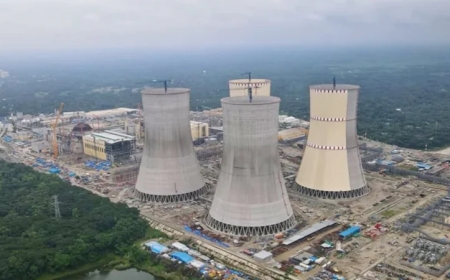
Compute represents the ultimate, material foundation of this geopolitical reality. Bridging the conceptual divide with global tech monopolies is a question of political will; however, bridging the physical distance to hyper-scale infrastructure is measured strictly in milliseconds of latency, data jurisdiction, and sovereign administrative control. Building resilient domestic infrastructure—clean baseload power, dense fiber networks, high-performance data centers, and the indigenous talent required to orchestrate them—is not an exercise in industrial nostalgia. It is the uncompromising definition of contemporary national sovereignty. A state lacking the sovereign capacity to train, host, audit, or terminate algorithms within its domestic borders remains indefinitely vulnerable to external geopolitical leverage. There is no viable developmental alternative to building national compute capacity.
We do not claim that Bangladesh has arrived at its final destination. Rather, we have instituted the rigorous strategic discipline required to materialize it: prioritizing foundational engineering over superficial application subscriptions; mandating native vernacular integration across core models; transforming diplomatic missions into high-tech commercial engines; negotiating bilateral pacts that enforce absolute technology transfer rather than perpetual licensing; and constructing a digital commons secure enough to protect the dignity and freedom of every woman. A trillion-dollar economic future will not be achieved through political slogans. It will be built line by line, through the patriotic hands of our own engineers and innovators.
The computational distance has begun to narrow. Crossing the remaining threshold is the definitive historical mission of our generation.
Author || State Minister for Foreign Affairs, Government of the People’s Republic of Bangladesh; Policy Strategist on Technology, Trade, and Economic Diplomacy.
Editor's Note ||
As the trajectory of global macroeconomics pivots toward artificial intelligence and high-density compute infrastructure, remaining passive consumers of imported algorithms poses a structural risk of digital colonization for emerging economies. Bridging technical engineering expertise with sovereign diplomatic execution, the author presents a strategic framework linking high-tech diplomacy, sovereign compute, and industrial policy. By identifying domestic knowledge workers as the critical third economic engine—alongside ready-made garments and remittances—this treatise provides an actionable blueprint for sustainable, self-reliant modernization. The article is published with editorial standardization to inform national and global policy discourse on sovereign AI, inclusive tech transformation, and long-term economic resilience.









