




































Cyber Protection and Agentic AI Policy
NICTF Calls for Zero Trust Architecture and AI Policy for Cyber Security
- Calls for finalizing CII list, 24/7 SOC operations, and open bug bounty programs
- Demands clear governance policy for agentic AI risks and mandatory deepfake labeling
- Recommends 48-hour patch update limit as 77.3% BD domains rely on PHP




To safeguard national security, the Nationalist ICT Forum (NICTF) has called for finalizing the Critical Information Infrastructure (CII) list, launching round-the-clock Security Operations Centers (SOC), establishing Zero Trust Architecture, and formulating clear policies on agentic Artificial Intelligence (AI) and deepfake labeling. The organization also urged mandatory security standards in technology procurement and the launch of open bug bounty programs.
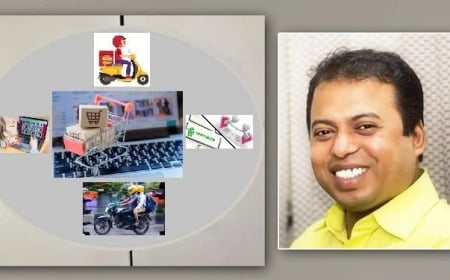
On 15 November, Sunday, the newly formed committee of NICTF made its formal debut through a special seminar titled "National Defense in the Tech Revolution: Bangladesh's Preparedness and Way Forward." Presenting the keynote paper at the event, NICTF's newly elected Office Secretary Md. Mizanur Rahman Mun outlined these proposals and technical recommendations.
Highlighting technical vulnerabilities in the country's cyber landscape, Mizanur Rahman Mun revealed that 89.3 percent of local servers and 77.3 percent of BD domains rely on PHP. Without accountability for updating security patches or conducting regular audits, these infrastructures remain severely exposed. Pointing out that syndicate-based procurement wastes public funds, he stated that genuine cyber protection cannot be ensured without dismantling corrupt syndicates.
Combating Agentic AI and Cyber Threats
Citing global cyber incidents from the past 15 days, Mizanur Rahman Mun said, "Cyber security is now national security. National defense is incomplete without Internet of Things (IoT) security. Currently, agentic AI poses the greatest threat. Recently, an agentic AI named ARTex attacked 200 organizations across 14 countries in 11 days, seizing domain admin panel access in under three hours. Therefore, an AI governance policy must be formulated immediately."
To strengthen cyber resilience, he recommended maintaining two online backups alongside one offline backup, enforcing multi-factor authentication, and setting a 48-hour deadline for security patch updates. He also emphasized conducting monthly phishing simulations, biannual cyber drills, and thorough vendor risk assessments.
Building Skilled Cyber Force and Structural Challenges
Regarding the government's plan to build a 20,000-strong skilled cyber force, he expressed hope that the government would utilize NICTF in recruiting personnel. However, he identified legacy systems, the lack of professional certification requirements in recruitment rules for Chief Information Security Officers (CISO) at critical state infrastructures, and a lack of awareness as major hurdles even if skilled manpower is developed.
Presided over by NICTF President Engineer Rafel Kabir, the seminar was attended by Bangladesh Nationalist Party (BNP) Acting Secretary General Advocate Ruhul Kabir Rizvi Ahmed as the chief guest. Ambassador and Deputy Permanent Representative of Bangladesh to the UN A K M Wahiduzzaman and Association of Engineers Bangladesh (AEB) Convener Engineer Shahrin Islam Tuhin attended as special guests. Welcome remarks were delivered by First Vice-President Rupam Razzaque, Vice-President Hasibur Rashid, Vice-President Jannatul Haque Shapla, and Organizing Secretary Jubayer Real.
//DBTech/IHOR/SCDRE/FOED//