






































Cosmic Colonizers: Charting the Course for a Martian Habitat
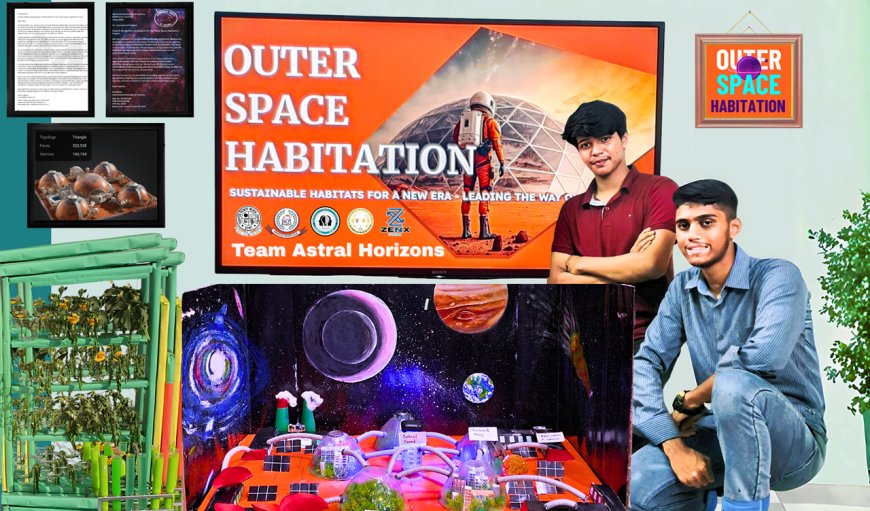



Abir Khan, a student of Mohammadpur Government College, and Mohammad Ali Mishal, from Government Science College, are envisioning a future where humans colonize Mars. As a first step toward this ambitious goal, the duo has developed a research-friendly Martian caravan suited for scientist habitation. United by their curiosity about Mars’s geology, energy dynamics, chemistry, and habitability, they formed a collaborative initiative called Team Astral Horizons.
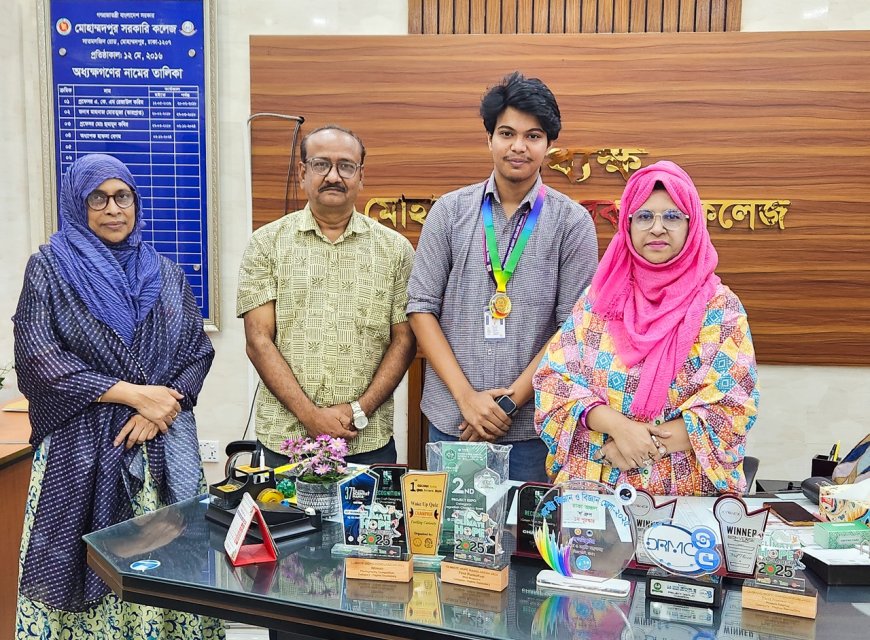
Their brainchild—the Outer Space Habitation (OSH) project—has earned the distinction of being Bangladesh’s first astronomy-based space research project to gain international recognition. The initiative has already garnered over 50 national awards and more than five international honors, including acknowledgments from the Astronomical Society of Victoria, Explore Mars Inc., the Mars Innovation Challenge, and the Space Innovation Challenge.
OSH is no longer just a research concept; it now stands as a symbol of innovation, determination, and self-reliance for Bangladesh’s youth, showcasing their readiness to conquer the frontiers of space.
To elevate their mission further, the team is continuously adding advanced features to the project—such as a portable environmental suit, mobile farming unit, recycling pods, a multi-layer analytic scanner, artificial lighting control systems, and a climate regulation chip. These enhancements are aimed at ensuring maximum safety, stability, and productivity for researchers operating in Martian conditions.
Through OSH, Abir and Mishal hope to not only prepare for life on Mars but also discover solutions for Earth. Their questions stretch across the cosmos: How did life begin? How did humans become so intelligent? And where might our next home be?
During the Eid holidays, they shared their inspiring story of ambition and cosmic courage with SM Imdadul Haque, Executive Editor of DigiBanglaTech.news, from the red-green shores of Bangladesh to the vast unknown of space.
Interviewer: How did you spend Eid? Did you enjoy the holiday?
Abir: During Eid, we focused on refining our AI and digital systems. We’re currently training our AI further to improve these systems’ effectiveness. In addition, we’re preparing for the global round of WICE, hoping to bring honour to Bangladesh and elevate our country’s presence on the world stage.
Interviewer: When and where is WICE?
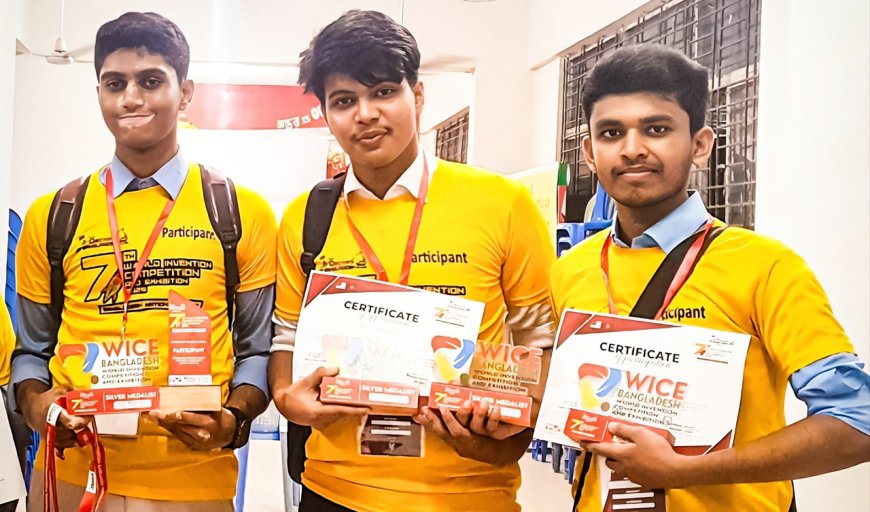
Mishal: It is scheduled for 21–26 September in Malaysia. On 30 May, at the Bangladesh round held at Imperial College in Dhaka, our team earned a silver medal in Social Science Innovation, Innovative Life Science, and Environmental Science categories. So far, we have won over 50 national awards from events such as the National Science and Technology Festival, NovaTheater Astro Science and Science Fair, the National Science Fair, and the 46th National Science Week.
Interviewer: Is there a story behind your team name, Astral Horizons?
Abir: “Astral” points to space, stars, and boundless possibilities—the frontiers we aim to explore. “Horizons” symbolize our goal to push beyond limits. The name reflects our mindset: not being constrained, but constantly reaching for new frontiers. Astral Horizons represents our determination, our courage to venture into unknown corners of space, and our commitment to charting a new future for humanity.
Interviewer: How did the Outer Space Habitation (OSH) project begin?
Mishal: Since school, we had a deep interest in astronomy. In college, we wanted to do something impactful—something that would bring our country recognition on the global stage. One day, we came across a post about SpaceX planning a Mars mission for 2027 and 2031. One of us said, “What if we could make Mars habitable like Earth?” That sparked our journey. We thought: if it’s possible, why not Mars? Driven by that idea, we began brainstorming, planning, and working tirelessly. There were many challenges, but our goal was clear. Gradually, we began designing technologies and systems to make a human research habitat on Mars possible. With courage and determination, Alhamdulillah, we’ve begun establishing a prototype that now represents Bangladesh internationally and brings us national pride. Our next goal is to stabilize and enrich this research habitat with Mars rovers, connector rovers, and other crucial prototypes.
Interviewer: What are the defining features of this Outer Space Habitation model?
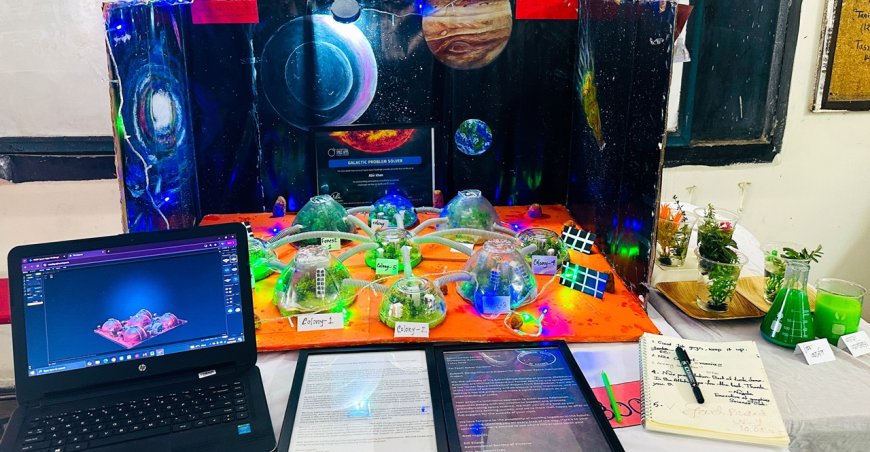
Abir: It is a “research-ready habitat colony” designed for scientific study of Martian environment, energy, chemistry, and livability. We believe that initiating research on celestial bodies like Mars could dramatically expand human knowledge—just as the space station expanded it from 0.04% to 4%. Our model stands on five scientific pillars: oxygen production via cyanobacteria, hydroponic farming, detoxifying Martian soil, recycling water and waste, and AI‑controlled environment systems. Importantly, we’ve moved beyond concept to 3D modeling, visualization, and printing. We’ve even designed a dome mask suited for Mars’ acidic atmosphere and low pressure conditions.
We’ve analyzed every risk—Marsquakes, meteor showers, solar storms, acid rain—and designed specific preventive measures: shock-absorbing base floors, artificial magnetic shields, dense shelter walls, and chemical-resistant coverings.
Interviewer: What inspired you to look beyond Earth and into space?
Mishal: Since school, we were passionate about astronomy. In college, we sought a meaningful way to elevate our country’s global standing. Then came the post about SpaceX’s plans for Mars. One of us asked, “What if we could make Mars Earth-like?” That question turned into our mission. Slowly, with clear vision, we built technologies and designs to realize our dream. Alhamdulillah, we’ve succeeded in constructing a successful Mars Human Research Colony. We’re representing Bangladesh on international stages and earning national acclaim. Our next targets include enhancing stability and effectiveness, and working on prototypes for Mars rover and other devices. With support, we can take this even further, Insha’Allah.
Interviewer: Earth already has many habitable zones at lower cost and effort—why go to Mars?
Abir: True, places on Earth like the Sahara or Antarctica can be made habitable more easily. But our aim is not habitation; it’s research. Humanity loves knowledge—it thrives on learning. A century ago, our understanding of outer space was about 0.04%, but telescopes and space stations pushed that to 4%. If we research on Mars and build habitats, our knowledge could increase enormously. We might discover new energy sources, minerals, and elements unseen before. That knowledge could transform Earth too. And establishing a framework to terraform Mars may unlock future possibilities for mankind.
Interviewer: What is OSH’s primary goal in this context?
Mishal: OSH is a student-led scientific research initiative aimed at creating a sustainable, secure research habitat on Mars. It’s not about long-term settlement, but enabling scientists to study Mars’ environment, chemistry, resources, and habitability. The project is built on our five pillars: oxygen via cyanobacteria, hydroponics, soil detoxification, recycling systems, and AI‑managed living conditions. It’s more than research—it embodies innovation and the capability of young Bangladeshis.
Interviewer: How do you mitigate Martian environmental risks—quakes, storms, UV radiation?
Abir: We’ve identified each risk and designed targeted solutions. We chose a location with minimal seismic activity via geological mapping. For dust storms, we developed an ion‑absorption device covering a 10‑meter radius. To shield UV radiation, we designed a triple‑layer glass dome filled with 10 meters of water. Also, since Martian atmospheric pressure is only about 0.6% of Earth’s, we simulated Earth‑like pressure using a water column—ensuring researchers can conduct work safely there.
Interviewer: Do you envision applying similar thinking to Earth’s hostile environments?
Abir: Yes. Earth faces environmental crises—climate change, pollution, natural disasters. The technologies we’re developing—water recycling, oxygen generation, hydroponics—can help in barren or desert regions. Dust and UV shielding approaches might assist areas hit by tornadoes or strong storms. Mars tech can guide Earth’s resilience efforts. We are not just creating solutions for Mars; we’re bringing them home to Earth.
Interviewer: How does AI fit into your colonization model?
Mishal: AI is central to habitat life‑support management. It monitors oxygen, pressure, humidity, waste systems, temperature, and lighting through real‑time sensor data. It makes autonomous decisions—like boosting cyanobacteria photosynthesis if oxygen dips—ensuring continuous and safe operation. We’re training the AI to reduce false signals, enhance accuracy, and introduce new features like scalable cloud systems. Future development may allow it to analyze research data and make intelligent recommendations.
Interviewer: Where and how is your data stored, and have you built an AI agent?
Mishal: We use secure cloud platforms like AWS and Google Cloud to store real-time and critical data. They are accessible and fast for data analysis. We’ve created an AI/ML-based agent that processes this incoming data, controls oxygen and recycling systems, alerts faults—essentially acting as a “habitat guardian.” We’re continually training it for better accuracy and functionality, adding new features to enhance environmental control.
Interviewer: How do you test risk management for quakes, dust storms, and UV threats?
Mishal: We innovated specific techniques: geological mapping minimized quake risk; an ion‑charge device neutralizes nearby dust storms; a triple-layer glass dome plus deep water layer filters harmful UV. We simulated Martian pressure with water columns, ensuring researchers can operate without harmful physiological conditions.
Interviewer: Considering Earth’s environmental dangers—have you thought of applying OSH solutions here?
Abir: Indeed. Earth faces climate crisis, pollution, and disasters. Our Mars-built technologies—water recycling, hydroponics, oxygen generation—can be crucial in barren zones on Earth. Dust suppression and UV shielding technologies can help regions hit by tornadoes or extreme weather. Space research is giving us tools not just for Mars, but for Earth’s sustainability.
Through courage, ingenuity, and scientific rigor, Abir and Mishal—and all members of Team Astral Horizons—have positioned Bangladesh on the frontier of space research. Their Outer Space Habitation project is an inspiring testament: when curiosity meets dedication, any horizon—even Mars—can be within reach.









