




































High Smartphone Costs, Digital Divide Hindering Bangladesh’s Digital Transformation



Industry stakeholders have identified high device prices, lack of digital skills, security concerns, and limited access to relevant local content as major barriers to Bangladesh’s digital transformation. They also warned that allowing multiple SIM registrations under a single individual is creating opportunities for financial fraud and cyber scams.
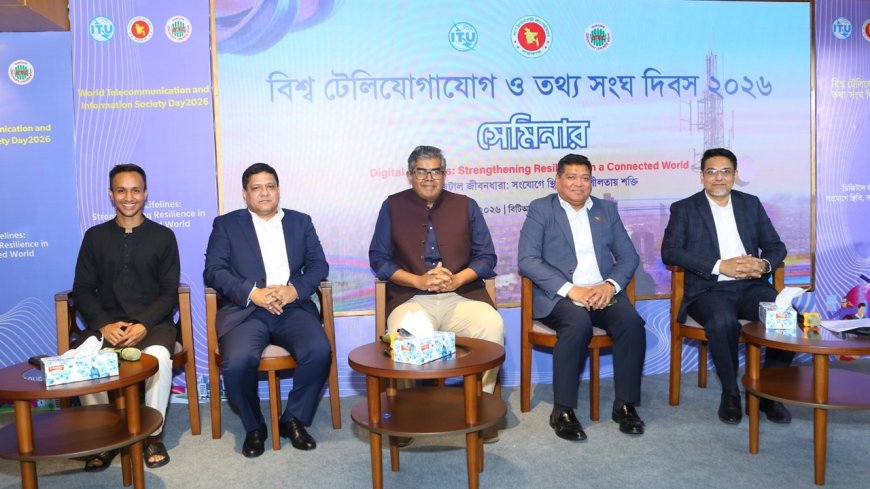
The observations were made on Sunday during a seminar titled “Digital Lifestyle: Resilience in Connectivity, Strength in Tolerance”, organized at the headquarters of Bangladesh Telecommunication Regulatory Commission in Agargaon, Dhaka, marking World Telecommunication and Information Society Day.
Speakers at the event noted that an average user in Bangladesh has to spend nearly 25 percent of their monthly income to purchase a smartphone, making digital access difficult for a large segment of the population.
Presenting sector statistics, the discussants said Bangladesh currently has around 245 million Mobile Financial Services (MFS) accounts, through which monthly transactions exceed Tk 1.5 trillion. Despite significant growth in mobile internet usage, they said the country still faces a major “usage gap” in digital access.
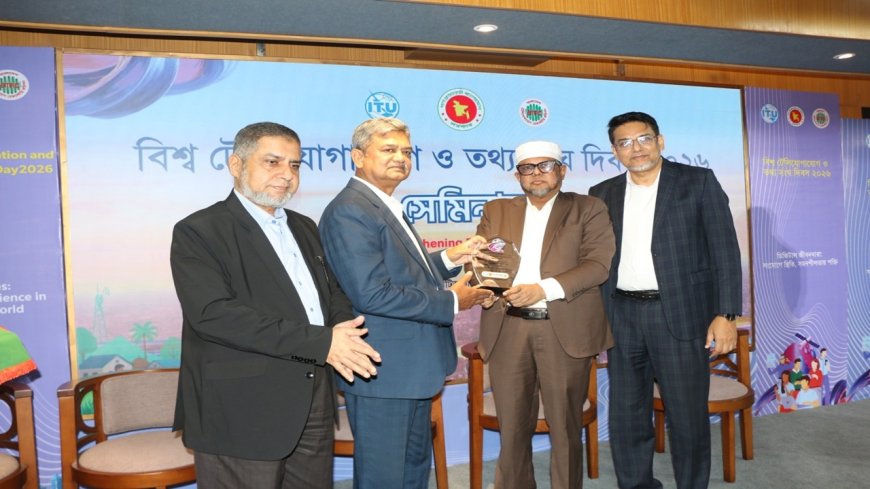
Participating in the discussion, Hasibur Rashid, Chief Executive Officer of Intercloud Limited, emphasized the need for entrepreneurs to adopt data center and cloud-based OPEX models to reduce costs and operational risks.
Meanwhile, A K M Fahim Mashroor, Co-founder and CEO of Bdjobs.com, said the world is advancing at “rocket speed” while Bangladesh is moving at a “turtle’s pace.” He criticized the government for treating the telecom sector primarily as a source of tax revenue, similar to cigarettes, despite internet access no longer being a luxury product. He also stressed the need to integrate AI into education and healthcare services and alleged that the use of multiple SIMs is increasing scam activities.
Responding to the allegation, Shahed Alam of Robi Axiata said such claims were unfounded, adding that the company is using AI-driven models to improve service quality and address concerns related to “spread and prey” fraud tactics.
The seminar began with the presentation of three keynote papers. The paper titled “Connectivity as the Lifeline of a Resilient Digital Economy” was presented by Syed Md. Shamsur Rahman, Deputy Chief Technical Officer of ZTE Corporation Bangladesh Limited. Another keynote on “Digital Payments as Critical Rails of Economic Continuity” was delivered by Major General (Retd.) Sheikh Md. Monirul Islam, Chief External and Corporate Affairs Officer of bKash. The presentation “From Access to Impact: Delivering Meaningful Digital Services for Inclusive Growth” was delivered by Dr. Asif Naimur Rashid, Chief Business Officer of Grameenphone.
The panel discussion, moderated by BTRC Spectrum Division Commissioner Mahmood Hossain, featured speakers including Fahim Mashroor, Shahed Alam, Hasibur Rashid, and Shahir Chowdhury, Founder and CEO of edtech platform Shikho.
In his welcome speech, Brigadier General Md. Aminul Haque, Director General of BTRC’s Spectrum Management Division, said digital connectivity is no longer just a technological convenience but has become a critical lifeline for the economy, education, healthcare, and disaster management.
Speakers at the seminar stressed that ensuring affordable internet, quality telecom services, secure data infrastructure, and accessible smart devices is essential to building a resilient and inclusive Digital Bangladesh. They also highlighted the direct relationship between investment and service quality in the telecom sector, saying continuous investment is necessary to ensure better customer experience.
They further argued that reducing existing taxes and duties on smartphones and internet services could significantly expand digital inclusion, helping more people access education, employment, and entrepreneurship opportunities.
The speakers also warned that Bangladesh risks falling behind in global competition if its large youth population is not transformed into a technology-skilled workforce. In the age of AI, automation, and platform-based economies, they said expanding digital education and technology accessibility is increasingly important.
At the closing session, BTRC Vice Chairman Md. Abu Bakar Siddique said telecom regulators must work by balancing the realities and interests of all stakeholders, including the government, industry, and the public. He emphasized the need for collective efforts to build a safe, inclusive, and digitally empowered Bangladesh.
The seminar was attended by representatives from government and private organizations, telecom experts, technologists, academics, and journalists.
As part of the WTISD 2026 celebrations, a two-day telecom fair is also being held on the BTRC premises on May 17–18. Around 30 telecom and technology-related organizations — including mobile operators, smartphone manufacturers, tower companies, ISPs, ICX associations, banks, and robotics firms — are participating in the exhibition. Students from various schools and colleges also visited the fair and interacted with exhibitors.
DBTech/SI/EK/OR









