



















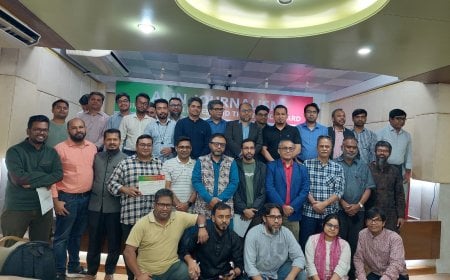




























Estonia Supports Digital Transformation
Bangladesh Advances One Citizen One ID
- Estonia's expertise to support Bangladesh's digital public infrastructure
- Government seeks technical assistance for One Citizen One ID
- National Data Governance Authority establishment is underway.




Bangladesh is seeking to accelerate its digital transformation by drawing on Estonia's experience in digital governance, citizen identification and interconnected public services. Cooperation between the two countries is expected to support the development of Digital Public Infrastructure (DPI), the implementation of One Citizen One ID and the establishment of a National Interoperability Framework. The initiative aims to strengthen digital identity management, improve coordination among government agencies and make public services more accessible through integrated technology systems.
Estonia's non-resident Ambassador to Bangladesh, Kristi Karelsohn, paid a courtesy call on Faqir Mahbub Anam, Minister for Posts, Telecommunications and ICT and Science and Technology, on Wednesday, November 18, 2026.
The meeting took place at the ICT Division office in Dhaka.
Discussions focused on digital transformation, Digital Public Infrastructure (DPI), One Citizen One ID, interoperability and strengthening bilateral cooperation in the information and communication technology sector.
Advancing One Citizen One ID
During the meeting, Faqir Mahbub Anam said providing integrated digital services to Bangladesh's large population remained a major challenge.
However, he expressed confidence that strong political commitment, technological capacity and international cooperation could help address the challenge.
He said the government was highly committed to implementing One Citizen One ID and was working to make the initiative operational as quickly as possible. Estonia's experience and cooperation were playing an important role in this effort.
The minister also noted that Bangladeshi officials had gained practical experience during their visit to Estonia, particularly in digital administration, citizen identity management and interconnected public services.
A project being implemented in Bangladesh with funding from the European Union and support from Estonia's e-Governance Academy and the British Council is expected to strengthen the foundation for the country's digital transformation.
The minister requested the ambassador to ensure continued access to Estonia's expertise and specialist support for implementing the initiative.
Estonia Offers Digital Governance Expertise
Ambassador Kristi Karelsohn described ongoing digital cooperation between Bangladesh and Estonia as highly promising.
She said Estonia was interested in sharing its experience in digital governance and e-governance with Bangladesh.
The ambassador expressed hope that the ongoing project would further expand cooperation between the two countries and create opportunities for Estonian ICT companies to operate in the Bangladeshi market.
She also highlighted the role of the private sector, alongside government leadership, in developing Estonia's digital services and Interoperability Framework.
According to her, public-private partnerships could also play an important role in developing Bangladesh's digital infrastructure.
Data Governance and Legal Foundations
ICT Division Secretary Md. Mamunur Rashid Bhuiyan said the European Union-funded project was providing important support for developing One Citizen One ID and the National Interoperability Framework.
He further said the National Data Governance Act, the Personal Data Protection Act and the Cyber Security Act had established the necessary legal foundations for implementing the initiative.
Steps are also underway to establish a National Data Governance Authority.
The authority is planned to operate under the Prime Minister's Office. Once established, it is expected to improve coordination among government agencies and strengthen data management.
The secretary reaffirmed the government's full political commitment to implementing the initiative.
Expanding Trade and Investment Opportunities
Alongside digital cooperation, the meeting also addressed opportunities to expand trade and investment in several promising Bangladeshi industries.
The sectors discussed included ready-made garments, pharmaceuticals, shipbuilding, leather goods and footwear.
Faqir Mahbub Anam said the government was working to diversify exports beyond the ready-made garment sector and attract foreign investment in pharmaceuticals, shipbuilding, leather goods and other industries.
Senior officials of the ICT Division and relevant representatives were also present at the meeting.
//DBTech/MJU/SCDE/FOED/









