
















































Logging off is not a remedy. It is an eviction from public life.
The False Divide: Digital Violence Is Real Violence and a Crisis of Citizenship



|
There remains a polite reflex, still common in newsrooms and certain courtrooms, that treats online harm as an inferior species of injury: unfortunate, perhaps ugly, but not entirely violence. The recommended prescription is almost always self-help: change the password, deactivate the account, do not feed the trolls. This advice mirrors the older, patriarchal instructions given to women across physical streets and kitchens: leave the room. Yet that digital "room" is precisely where contemporary employment, banking, education, journalism, and democratic politics actively take place.
Liz Kelly’s conceptual continuum of sexual violence was formulated decades before the ubiquity of smartphones, yet it articulates modern digital realities with uncomfortable precision. The primary function of a continuum is not to rank an indecent exposure beneath sexual assault; it demonstrates that disparate practices share an identical purpose: restricting women’s access to public space and demonstrating to spectators the punitive cost of visibility. Technology-facilitated gender-based violence (TFGBV) does not replace physical violence and confinement; it extends and amplifies them through connected devices, platform architectures, and synthetic media. A physical stalker and a coordinated doxxing swarm do not belong to separate spheres—they represent a unified perpetrator using two interconnected doors.
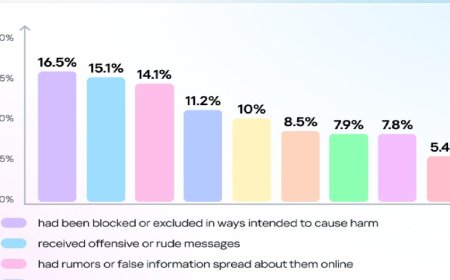
The physiological body records every blow. Sleep fractures. Cortisol does not differentiate between a menacing footstep in an alleyway and a targeted digital smear campaign. Women retreat first from comment threads, then from journalistic bylines, and ultimately from public leadership candidacies. UN Women reports that 38 percent of women globally have personally endured online violence, and 85 percent have witnessed it; over 40 percent have engaged in defensive self-censorship, and nearly one in five has retreated from professional discourse entirely. In Bangladesh, findings by the Bangladesh Bureau of Statistics (BBS) reveal that 89 percent of female social media users have encountered online harm at least once, yet fewer than one in five ever formally reports the abuse. An injury this systemic and chronically under-reported cannot be trivialized as a niche content moderation challenge; it is a structural crisis of equal citizenship.
Legal and judicial establishments continue to falter upon archaic evidentiary dogmas requiring a photographic image to prove physical bodily harm. When non-consensual imagery is computationally generated via artificial intelligence, law enforcement personnel and family members still colloquially ask whether the harm is "real." That inquiry is the false divide at work. The genuine harm lies in the predatory distribution, the family blackmail, the dissolved employment contract, and the traumatic isolation of the victim. Any conception of justice that delays action until it sees a physical bruise will perpetually miss the architectural reality of modern abuse.
In Bangladesh, National Helpline 109 routinely logs distress calls detailing digital extortion, the non-consensual circulation of private imagery, synthetic impersonation, and sextortion. These callers are not expressing subjective emotional discomfort; they are articulating a destructive trajectory that frequently terminates in forced withdrawal from workplaces, classrooms, and community life. An administrative apparatus that merely catalogs these grievances without building actionable investigative capacity has tacitly accepted the false divide as state policy.
Until statutory laws, editorial newsroom standards, and corporate platform architectures recognize digital violence as an unyielding restriction on human movement across public domains—both physical and virtual—the burden of remedy will remain an unfair, privatized task imposed upon the targeted individual. The insistence on establishing unified legal definitions at forums like the Dhaka Dialogue represents an effort to dismantle the outdated "vacuum theory" of the internet. There is no isolated digital vacuum; there are only shared public rooms from which women are continually instructed to retreat.
Author || Chief Innovation Officer and Director General, International Trade, Investment & Technology, Ministry of Foreign Affairs, Government of the People’s Republic of Bangladesh. He is a diplomat and innovation strategist operating at the intersection of international trade, technology investments, and AI governance, actively engaged across Digital@UNGA, education and AI, sovereign compute, and economic diplomacy.
Editor's Note || The systemic assessments and critiques presented in this article represent the author's own policy perspectives. Published with editorial standardization to advance inclusive digital governance, legal modernization, and structural protections for women in the technology ecosystem.









