









































Trial Supply Begins
Rooppur Commercial Power Targeted for Next Year
- The first unit has supplied up to 360 MW to the national grid during testing
- Bangladesh aims to raise output to 1,200 MW by January
- Commercial supply will begin after a 10-month trial operation




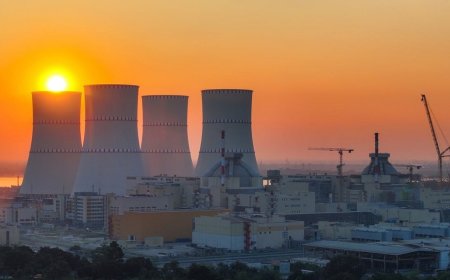
Bangladesh has taken a major step towards nuclear power generation. For the first time, the first unit of the Rooppur Nuclear Power Plant has supplied electricity to the national grid on a trial basis. The plant, located in Ishwardi, Pabna, was connected to the grid at 3:16 pm on Tuesday (17 November). During the initial test, it supplied up to 360 megawatts (MW) to assess grid synchronisation, equipment performance and operational stability. The trial connection does not mean that commercial production has begun.
Rooppur authorities say the first unit will start commercial power supply at full capacity after completing a 10-month trial operation, as stipulated in the contract with the Russian contractor. Output will be increased gradually after the required tests and regulatory approvals.
After the initial grid connection, Science and Technology Minister Faqir Mahbub Anam said, “Today, we synchronised for the first time and tested it on the grid. We supplied electricity to our transmission system and tested output of up to 360 megawatts.”
Project officials said the plant had to undergo a grid synchronisation test before supplying electricity to the national transmission network. The process checks whether the voltage and frequency of the generator's output match the national grid. It also verifies whether the grid can receive electricity from the plant.
A day earlier, Rooppur Nuclear Power Project Director Kabir Hossain described grid synchronisation as a test. He said, “Synchronising with the grid will show whether the grid is receiving the electricity and whether the recipient can take it. It is a test; it does not mean regular power supply has begun.”
He added, “Electricity will also flow during this test. Since this is the first time, it may continue for five or 10 hours. After the test, we will understand whether the plant is ready to supply electricity to the grid.”
Kabir Hossain said the plant would move to the next stage of supplying electricity to the national transmission network if the test results were satisfactory.
Following the supply of up to 360 MW on Tuesday, Faqir Mahbub Anam said the operation was running smoothly. “Mashallah, all is fine. At this moment, we have brought it up to 300 megawatts and kept it stable for now,” he said.

He said the plant would remain at this level for a day or two while further tests were conducted. Output would then be raised gradually as the plant moved towards its final connection to the national grid. The government aims to supply between 1,100 MW and 1,200 MW by January.
Asked when electricity would reach consumers' homes, the minister said the immediate priority was to complete the plant's operational tests successfully. He described Tuesday's test, which supplied up to 360 MW to the national grid, as a major milestone. The next step would be to increase output gradually towards 1,000–1,200 MW by January. All the electricity would be supplied to the national grid.
Rooppur Advances Through Testing Stages
Sources involved with the power plant said the process of generating energy through nuclear fission was initially scheduled to begin in September. However, the schedule was delayed after a defect was detected during safety valve testing. Following corrective work and successful completion of the necessary tests, controlled nuclear fission began in the first unit on 11 October with approval from the Bangladesh Atomic Energy Regulatory Authority (BAERA).
On 29 October, BAERA approved the results of the physical tests, allowing the project to move to the next stage, known as the “C Stage”. On Tuesday, the plant entered the next phase by supplying electricity to the national grid on a limited trial basis. If the tests at this stage are successful, the plant will move to the “D Stage”, the final stage.
The plant must obtain the necessary licences and approvals from BAERA before its generation capacity can be raised to 100 per cent. Rooppur authorities will submit a report on the test results to the regulatory authority. Once approval is granted, the process of increasing generation capacity will begin. Trial supply to the national grid will continue during this period. It may take several months to reach full capacity.
According to a Bangladesh Atomic Energy Commission press release, the first unit began supplying 350 MW to the national grid at 3:16 pm on Tuesday in the presence of Science and Technology Minister Faqir Mahbub Anam.
During the first phase, the plant will supply electricity to the grid for eight to 10 hours. The tests will assess the performance and stability of the turbine, generator and integrated operating system connected to the grid. The plant will then be disconnected from the national grid for further technical tests. After a break of around 28 hours, it will be reconnected for another four to six hours of power supply.
The commission said each phase would involve testing the performance of the plant's equipment, turbines and generators, as well as their coordination with the national grid. If the results are satisfactory, the plant will need BAERA's approval to proceed to the next phase. Trial electricity supply will resume after the approval.
Power Grid Bangladesh PLC said the plant in Ishwardi, Pabna, was connected to the national grid at 3:16 pm on Tuesday. According to the company's statement, the trial run began with the plant synchronised with the national grid. Its output stood at 350 MW at 3:45 pm.
Grid synchronisation is the process of connecting a power plant's generator to the national grid. It checks whether the voltage and frequency of the electricity generated by the plant match the grid's requirements. However, trial grid connection does not mean commercial generation has started. Before commercial operation, the plant's equipment, safety systems and power delivery capacity must be tested at different output levels.
Earlier, controlled nuclear fission began successfully in the first unit of Rooppur on 11 October at 3:34 pm. This stage of a controlled nuclear chain reaction is known as “first criticality”. At this stage, nuclear fuel inside the reactor begins producing heat in a controlled manner.
At the time, Nuclear Power Plant Company Bangladesh Limited Managing Director Md. Zahedul Hasan said trial operations at different generation levels could continue for seven to eight months after the plant was connected to the national grid. The results of each test would determine the next stage, he said.
Continuous Power Supply Planned
According to sources at the Rooppur plant, it is designed to provide a steady supply of electricity around the clock. Fresh nuclear fuel will be required every 18 months. A unit may need to remain shut down for up to two months for fuel waste removal, refuelling and maintenance.
Sources involved with the project say operation of one unit could save Bangladesh around US$1 billion in fuel imports annually. However, the project has already fallen about three and a half years behind its original schedule.
Professor Shafiqul Islam of the Department of Nuclear Engineering at the University of Dhaka said a smart grid would have reduced the risks associated with integrating such a large power source. Bangladesh's conventional demand-and-supply management system still carries the risk of grid failure, he said.
Rooppur is expected to provide a large volume of continuous electricity. Therefore, managing demand on the grid will be crucial. Professor Islam stressed that grid transmission tests must be completed efficiently.
Bangladesh's power transmission grid is not yet smart. It operates through a conventional system based largely on demand forecasts. Electricity from several sources is already being added to the grid, while solar power generation is also increasing. The trial integration of nuclear electricity has now added another major source.

At 3:16 pm on Tuesday, Rooppur began supplying 350 MW of nuclear electricity to the national grid. Plant officials said trial generation could continue for several months. With the start of grid supply, Bangladesh has entered the group of countries generating nuclear power, becoming the 33rd country in the world to do so. However, formal recognition is expected after the necessary tests are completed and full-scale supply begins.
Plant sources said continuous and stable electricity supply to the national grid cannot be guaranteed during the trial phase. The Power Grid Company of Bangladesh (PGCB) will take the necessary measures to maintain grid balance when the first unit is temporarily shut down or its output fluctuates. Officials of the Bangladesh Power Development Board (BPDB) will also monitor the supply situation.
Project Cost and Construction History
The Rooppur Nuclear Power Plant is the largest single development project in Bangladesh's history. Russian contractor Atomstroyexport is building two units in Ishwardi, Pabna, each with a generation capacity of 1,200 MW. The two units are expected to produce a combined 2,400 MW. The Bangladesh Atomic Energy Commission, under the Ministry of Science and Technology, is implementing the project.
Bangladesh and Russia signed an intergovernmental cooperation agreement in 2011. Under the agreement, the Bangladesh Atomic Energy Commission and Atomstroyexport, the engineering arm of Russia's state nuclear corporation Rosatom, signed a contract in December 2015 to build the power plant.
The original project deadline was December 2025. It has been extended twice, with the revised completion date set for June 2028. Although the contractor's agreement allows the project period to be extended, there is no provision to increase the project cost for that reason. However, the rise in the US dollar exchange rate has added around Tk26,000 crore to the cost. The current estimated project cost stands at Tk138,686 crore.
The first unit's trial connection to the national grid marks a major milestone in Bangladesh's energy sector. The immediate priority, however, is to complete all safety, technical performance and grid synchronisation tests before commercial power generation begins.
//DBTech/SMIH/RESME/FOPTE//









