





































































































































































Policy, Performance, and Progress: ICT Priorities for the New Government



Following the landslide victory of the Bangladesh Nationalist Party (BNP), led by Tarique Rahman, with a two-thirds majority in the National Parliamentary Election held on February 12, preparations are underway for the swearing-in of the new government on February 17.
Amid lingering debates over the previous administration’s “Digital Bangladesh” vision—particularly regarding implementation gaps, cost efficiency, and broader controversies—several fundamental challenges and priorities have emerged for the incoming government in the science, technology, and telecommunications sectors.
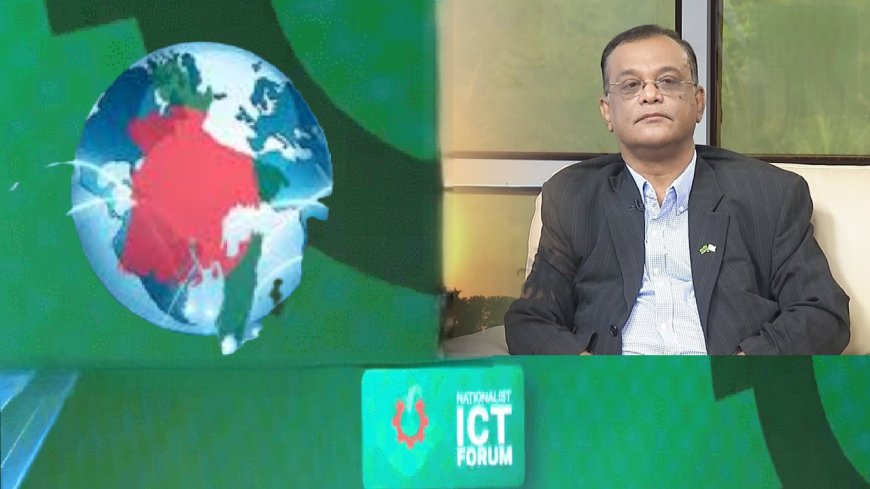
In this context, President of the Nationalist ICT Forum, Rafel Kabir, has identified policy continuity and implementation shortcomings, the quality and cost of digital infrastructure, and the overall investment and innovation climate as the most pressing challenges facing the new administration.
Speaking to Digibanglatech on Monday, February 16, ahead of the swearing-in ceremony, technology analyst and entrepreneur Rafel Kabir noted that although many sound policies have been adopted in Bangladesh, implementation often remains weak. In a rapidly evolving technological landscape, maintaining policy stability while ensuring timely updates is a significant challenge, he said.
Emphasizing the need to enhance the quality of digital infrastructure while reducing costs, he pointed out that nationwide broadband standards, uninterrupted internet connectivity, and the rationalization of data pricing remain unresolved issues. Strengthening 5G readiness, expanding fiber-optic networks, and improving spectrum management are urgent priorities.
He also highlighted the limited availability of investment in startups and deep-tech sectors, as well as the shortage of research funding and a robust venture capital ecosystem. Strengthening collaboration between universities and industry is essential to foster innovation, he added.
On the issue of skilled human resource development, Rafel Kabir—Founder Executive of DNS Group, a company operating in internet and satellite-based communication technology services—said there is a shortage of skilled professionals in artificial intelligence (AI), cybersecurity, semiconductors, and cloud computing. Modernizing curricula and introducing industry-aligned training programs are critical steps.
He further stressed the need to give top priority to cybersecurity and data protection. As the digital economy expands, cyber risks are increasing in parallel, he warned. Establishing a strong data protection framework and building effective cyber response capabilities will be essential.
Addressing policy coordination and regulatory reform, Rafel Kabir—who also serves as Chairman of the supporting committee of the Bangladesh Association of Software and Information Services (BASIS)—said there remains a lack of coordination among various agencies in the ICT and telecom sectors. Without a unified and integrated regulatory vision, achieving desired progress will be difficult.
Discussions with the newly elected leader make it clear that for the incoming government, the central question is no longer about announcing policies but ensuring effective implementation and accountability. To build a technology-driven economy, adopting a coordinated strategy encompassing infrastructure, human capital, investment, and cybersecurity will be the demand of the time.
DBTech/MSH/MUM/OR