






































Anti-Retroviral Therapy Center Launched at Rajshahi Medical College
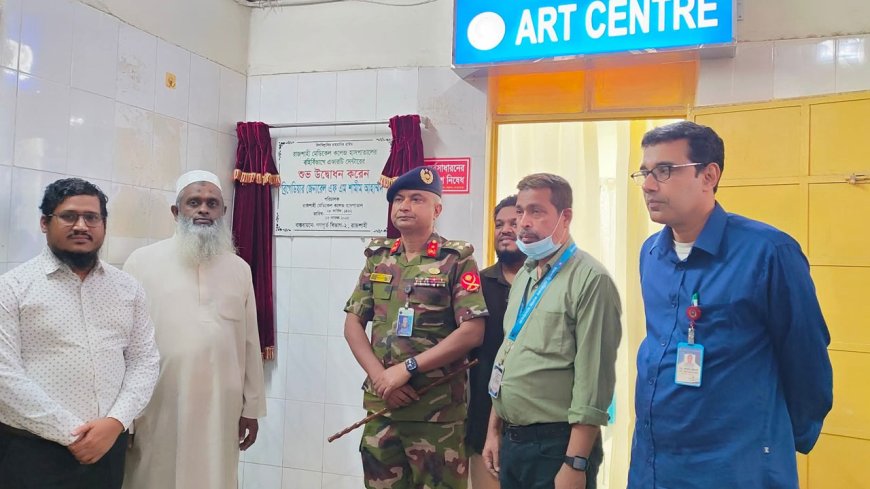



The long-anticipated Anti-Retroviral Therapy (ART) Centre has finally been launched at Rajshahi Medical College (RMC) Hospital. On Saturday, 15 November, the centre was inaugurated by Brigadier General AFM Shamim Ahmed, Director of the hospital’s outpatient department.
According to RMC authorities, the centre will now provide free testing and treatment for HIV-positive patients. As a result, patients will no longer need to travel to Bogura’s Shaheed Ziaur Rahman Medical College (SZRMC) for treatment. They will now receive medicines directly from the newly launched centre. Dr Ibrahim Md Sharaf will serve as the focal person of the ART Centre.
Sources indicate that HIV screening has so far been conducted at the HTC Centre located in the hospital’s outdoor unit, but no treatment services were available. In all districts of the Rajshahi division, patients who tested positive had to go to SZRMC in Bogura where free treatment and medication were offered.
Notably, a decade ago on 13 August 2015, the hospital’s AIDS Service Centre was inaugurated by the then chairman of the hospital management committee and local Member of Parliament, Fazle Hossain Badsha, to provide HIV/AIDS testing and care under the Confident Approach to AIDS Prevention (CAP) programme. Until now, RMC primarily offered HIV testing and counselling, while comprehensive treatment and medication remained unavailable—forcing patients to travel to Bogura. Considering this situation, the decision was taken to open a treatment centre at RMC.
Meanwhile, in the first ten months of this year, 28 new HIV-positive cases were detected at the centre, while one AIDS-related death was recorded. Physicians have reported increasing HIV transmission through same-sex relationships in Rajshahi, highlighting the urgency of raising awareness and establishing treatment facilities such as the newly opened centre.
Data from the RMC HIV Testing and Counselling (HTC) Centre show that between 2019 and October 2025, a total of 12,464 samples were tested, of which 93 cases were confirmed HIV-positive. Among them, 25 were men, two were women, and one identified as third gender. During the same period, eight patients died of HIV-related causes. Most affected individuals were between 20 and 35 years old. On average, 10 to 15 people come for testing daily. Those who test positive receive counselling and are assured: “HIV cannot be fully cured but can be controlled. With regular treatment and medication, patients can lead normal lives.”
Officials reported that HIV testing began at RMC Hospital in 2019. No positive cases were recorded in the first year among 77 samples. Two cases were identified in 2020, eight each in 2021 and 2022, 24 cases in 2023, and 27 more in 2024. Until October 2025, another 28 individuals tested positive.
Analysis reveals that in 2024, 16 of the 27 infected individuals contracted HIV through same-sex relationships, 10 through sex workers, and one through blood transmission. In 2025 (up to October), 17 of the 28 infections were traced to same-sex relations, 10 to sex workers, and one to blood transmission.
Rezaul Karim, Counsellor at the HTC Centre, said that many patients experience severe emotional distress after testing positive, with some even contemplating suicide. “We counsel them to stay mentally strong,” he said.









