





































Digital Demand Drives Eid Sacrifice Shift



Although the COVID-19 crisis has largely subsided, the trend of “online cattle markets” has steadily added a new dimension to urban life in Bangladesh each year. Among the most recognized platforms were the government-supported 'digitalhaat.gov.bd', a joint initiative of the Department of Livestock Services and a2i under the ICT Division, and 'Digital Haat' initiated by Dhaka South City Corporation (DSCC) in collaboration with the e-Commerce Association of Bangladesh (e-CAB) and the ICT Division.
However, both platforms, which gained popularity for their convenience in managing the entire Qurbani process, are now practically inactive. The a2i is currently operating at a slower pace under administrative scrutiny, while the platforms have ceased operations this year due to various allegations and internal investigations. Despite this, individual farms and privately run online cattle markets have stepped in to meet the growing urban demand.
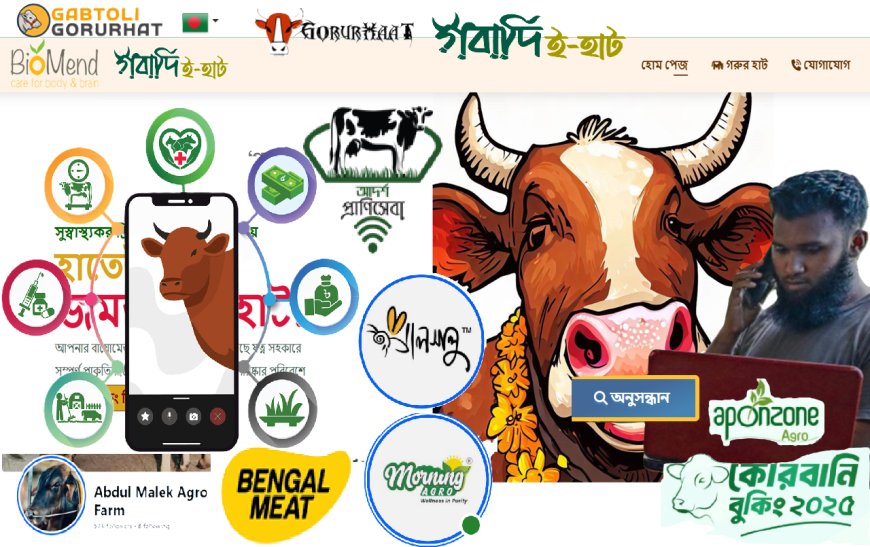
Following news of a COVID-related death reported on Thursday, public interest in private online haats has surged. Some residents, having returned home after being stuck in traffic for hours, have even decided to perform Qurbani in Dhaka instead. Buyers are increasingly turning to platforms like Bengal Meat, Bikroy.com, Othoba.com, Praniseba.com, GabtoliGorurHaat.com, GorurHaat.com, Gobadi-eHaat.com, Morning Agro, Samurai Agro, BiomendHaat.com, and Facebook pages such as Lalsalu and Aponjon Agro for their sacrificial animal purchases.
Entrepreneurs report that demand for shared Qurbani (where multiple individuals share a single animal) is particularly high this year, though they are struggling to accommodate all customers. Rising cattle prices, lack of space, and a shortage of butchers have made individual sacrifices increasingly difficult. As a result, lower- and middle-income city dwellers are opting for shared Qurbani, which costs between BDT 20,000 to 35,000 per share, depending on the animal and service.
The majority of platforms facilitating these services rely heavily on Facebook, which causes some hesitation among cautious buyers. Yet, convenience and affordability are driving many to take part in shared sacrifices online.
Fida Haque, CEO of Praniseba.com, reported selling over 150 sacrificial cattle so far, including 90 through online transactions. “For the fifth consecutive year, we’ve grouped seven buyers for shared Qurbani and already confirmed bookings for 25–30 such groups,” he stated. “Demand is still high, but we’re now being selective due to the logistical challenge of sacrificing and delivering meat on Eid day. We're trying to match customers who prefer sacrificing on the second or third day of Eid.”
Asif Ahanaf, founder of Aponjon Agro, shared that all 100 cows at their farm had already been sold, including 10 via shared sacrifice. “We are still receiving heavy demand, but we’re not offering sacrifice-and-deliver services this year, so we had to turn down many buyers,” he explained.
Bengal Meat, which has been offering online Qurbani services for 11 years, reported that last year it sold 65 cattle for shared sacrifice, involving 455 individuals. This year, it has already received orders for around 80 animals.
AKM Shayadul Haque Bhuiyan, Head of Supply Chain and Export at Bengal Meat, said, “Every year, we receive online orders for over 400 cattle. Shared Qurbani is only available to customers within Dhaka. Those who participate in shared Qurbani will receive frozen meat from our nearest outlets starting from the fourth day of Eid. For those purchasing an entire animal, delivery begins the day after Eid. Since we process the meat following international standards and freeze it, immediate delivery is not feasible.”
Saiful Islam, owner of Lalsalu Shop—a popular platform for shared Qurbani since 2020—stated, “This year, local cattle are being sold at BDT 550 per kg live weight, while hybrid cattle are priced at BDT 520 per kg. However, we currently do not have any hybrid cattle left. We are charging BDT 20,000 per share, inclusive of all costs. Of the 400 cattle we initially had, only about 34 remain. Larger cattle are divided into seven shares, while smaller ones into five. Each buyer receives approximately 18 kg of meat per share, excluding the head, tripe, and feet.”
As Qurbani approaches, urban consumers are increasingly relying on digital solutions to fulfill their religious obligations in a convenient, cost-effective, and collaborative manner.









