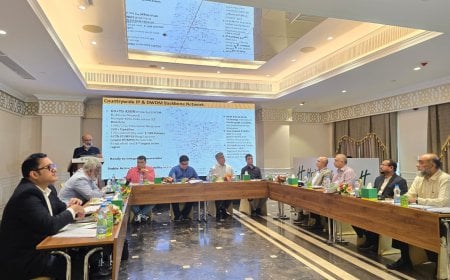
Bangladesh has been elected to two divisions under the Governing Council of the United Nations Economic and Social Commission for Asia and the Pacific (UNESCAP). The two divisions are the Asian and Pacific Training Centre for Information and Communication Technology for Development (APCICT) and the Asian and Pacific Centre for the Development of Disaster Information Management (APDIM).
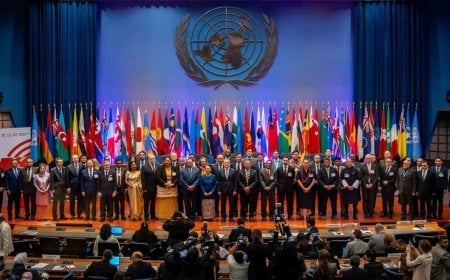
The achievement was announced during the 81st session of UNESCAP, held in Bangkok, Thailand. The conference, which began on 21 April, will conclude on 25 April.
The opening session featured remarks from Armida Salsiah Alisjahbana, United Nations Under-Secretary-General and Executive Secretary of UNESCAP; Her Excellency Paetongtarn Shinawatra, Prime Minister of Thailand; and several ministers from the Asia-Pacific region. During the session, Nepal’s Foreign Minister was elected Chair, while Mohammad Sufiur Rahman, Special Assistant and Economic Adviser to Bangladesh’s Chief Adviser, was elected Vice-Chair.

The Bangladeshi delegation was led by Dr. Anisuzzaman Chowdhury, Special Assistant and Economic Adviser to the Chief Adviser. The team included Shish Haider Chowdhury, Secretary of the Information and Communication Technology Division (ICTD), Md. Shahriar Kader Siddiky, Secretary of the Economic Relations Division (ERD), senior officials from relevant ministries, and representatives of the Bangladesh Embassy in Thailand.
A recorded video message from Professor Muhammad Yunus, Chief Adviser to the interim government of Bangladesh, was played during the opening session. In his address, Professor Yunus urged the strengthening of both regional and global cooperation.
He emphasized the need for collaborative efforts to confront shared challenges and called for the creation of a new world founded on the principles of “zero poverty, zero unemployment, and zero net carbon emissions.”
Professor Yunus also reiterated Bangladesh’s commitment to sustainable and inclusive development across the Asia-Pacific region.
In his remarks, ICT Division Secretary Shish Haider Chowdhury highlighted key regional priorities. He stressed the importance of improving multi-modal transport systems to overcome cross-border challenges, enhancing access to climate finance, and promoting cross-border solutions for sustainable and resilient urban development.
“Through the organization of a high-level side event centered on sustainable urbanization through the three zeros, Bangladesh has further advanced its vision for a sustainable future,” Chowdhury said. He explained that this approach promotes an innovative model of urban development based on the principles of zero poverty, zero unemployment, and zero net carbon emissions, drawn from Professor Yunus’s book A World of Three Zeros: The New Economics of Zero Poverty, Zero Unemployment, and Zero Net Carbon Emissions.
During the same session, ERD Secretary Md. Shahriar Kader Siddiky emphasized the importance of regional partnerships in advancing the “three zeros” agenda. He called for vibrant knowledge exchange and technical support for developing countries to help them achieve this ambitious vision through transformative urban development.
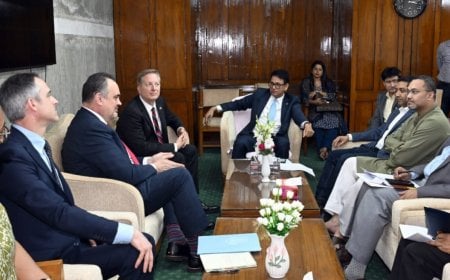
Outside of the plenary and thematic sessions, the Bangladesh delegation also held a fruitful bilateral meeting with the Executive Secretary of UNESCAP. The meeting focused on enhancing cooperation in areas such as ICT development and strengthening regional capabilities to address emerging challenges.