



































‘Shared Mandate, Shared Future’: Youth Voices Shape Climate Dialogue in Dhaka
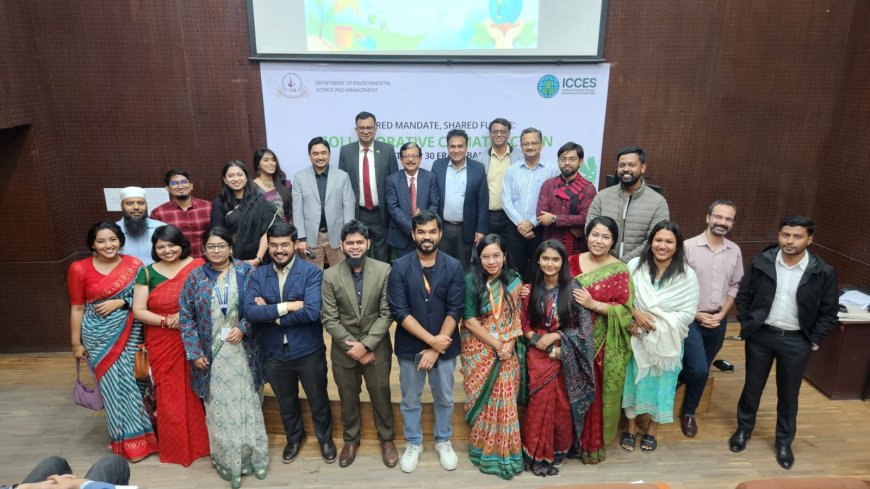



A panel discussion titled “Shared Mandate, Shared Future” was held in the capital on December 14, bringing youth perspectives into the national climate conversation. The event was jointly organized by the Institute of Climate Change, Environment and Sustainability (ICCES) and the Department of Environmental Science and Management at Independent University, Bangladesh (IUB).
Delivering the keynote address, PKSF Deputy Managing Director Dr Fazle Rabbi Sadeque Ahmed analyzed the outcomes of recent global climate conferences. He observed that neither developed nor developing countries are providing adequate support to achieve ambitious mitigation targets. Emphasizing the importance of proactive engagement, he said developing countries must play an active role to ensure climate finance works effectively in their favor.
Referring to the proposed USD 1.3 trillion climate fund, Dr Ahmed warned that capitalist interests remain embedded within it. He cautioned that without sufficient participation in negotiations, such mechanisms could evolve into a new form of colonialism.
The panel discussion featured Professor and Head of IUB’s Department of Environmental Science and Management Dr Md Hafizur Rahman; AKM Sohel, UN Wing Chief at the Economic Relations Division (ERD) of the Ministry of Finance; Dr Manzurul Hannan Khan, Executive Director of NACOM; Sheikh Tajul Islam Tuhin, Chairman of ICCES; and Sumaiya Binte Selim, Coordinator of the Gender and Youth Programme at IUB’s ICCCAD, among others. Experts from various fields also shared their insights during the session.
At the outset, speakers highlighted the necessity of the dialogue to analyze key decisions taken at COP30 in Belém, Brazil, and to integrate those outcomes into a shared and effective mandate for building a climate-resilient Bangladesh.
They noted that amid record-breaking global temperatures and the rapidly slipping 1.5°C target, COP30 had been widely viewed as an “implementation COP.” Following years of limited progress at successive COPs, significant expectations had been placed on the Conference of Parties held in Belém, on the edge of the Amazon.
However, speakers questioned what the Belém COP ultimately achieved and what its outcomes mean for countries like Bangladesh. They stressed the need to critically assess the overall state of global climate negotiations and how their results influence national policies and climate strategies in Bangladesh.
It was also noted that the Institute of Climate Change, Environment and Sustainability (ICCES) is a non-profit research and training organization dedicated to advancing climate resilience, environmental management, and sustainable development in Bangladesh and beyond. Registered as a charitable trust under Bangladesh’s Trust Act, ICCES operates through a participatory governance structure comprising a Board of Trustees, Executive Team, Advisory Council, and general members, ensuring integrity, inclusiveness, and long-term sustainability.
DBTech/SR/EK/OR









