




































































































































































IT Sector Leads in Reform Satisfaction in Dual National Surveys




The country’s information technology sector has emerged ahead in both public and private surveys conducted after the July mass uprising. In response to the question, “How satisfied are you with the interim government’s reform activities following the July movement?”—50.4 percent of respondents said the government has been successful in sector-based reforms. These findings were published by the daily Prothom Alo through its National Public Opinion Survey 2025 on Key Socio-Political Issues.
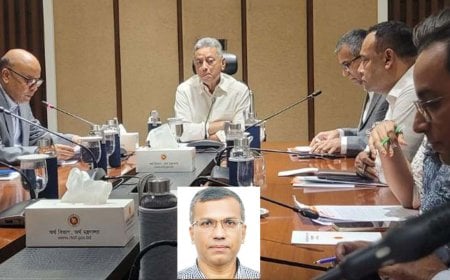
Commenting on the survey, Faiz Ahmad Taiyeb, Special Assistant to the Chief Adviser, said, “According to the findings, I could not satisfy 38 percent of the people. Our honest and sincere efforts will continue for them.”
More than one-third of the respondents, however, believe that associates of the ousted Awami League government have obstructed the reforms.
The survey collected opinions from 1,342 adults (aged 18–55) across five urban areas and five rural or semi-urban regions. Participants came from diverse income levels, classes, and professions. Data collection took place from 21 to 28 October. According to the survey agency, the confidence level of the results stands at 99 percent.
Meanwhile, a separate survey presented at the concluding session of the Bangladesh Institute of Development Studies (BIDS) annual conference in Dhaka revealed that 61 percent of the country’s bachelor’s degree holders had no work experience during their honours or master’s studies. Only 37 percent reported having any experience. Even more striking, 55 percent had no training in ICT.
The policy recommendations of the research report note that even when these graduates receive calls for job exams, their lack of prior experience prevents them from securing desired positions. It therefore suggests enhancing connections between industrial establishments and the more than 2,000 colleges under the National University.
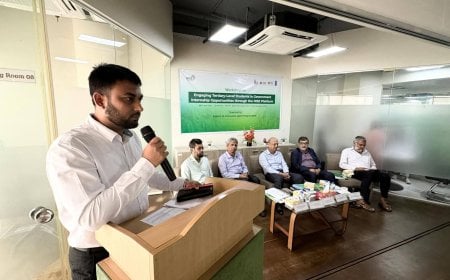
However, the National University has already introduced a 4-credit IT course under the supervision of the Ministry of Posts, Telecommunications and Information Technology, with technical support from a2i and UNICEF. The course includes 3 credits of theory and 1 credit of practical work. As part of this initiative, 90 ICT teachers were trained as core trainers on 12 November to make National University students more technology-oriented and future-ready. A programme is already underway to train at least 12,000 college teachers in ICT by 2026.
DBTech/IH/OR