






































Bangladeshi Engineer- A Former RUET Graduate Builds Rail-Cutting Machine at 20% of Import Cost
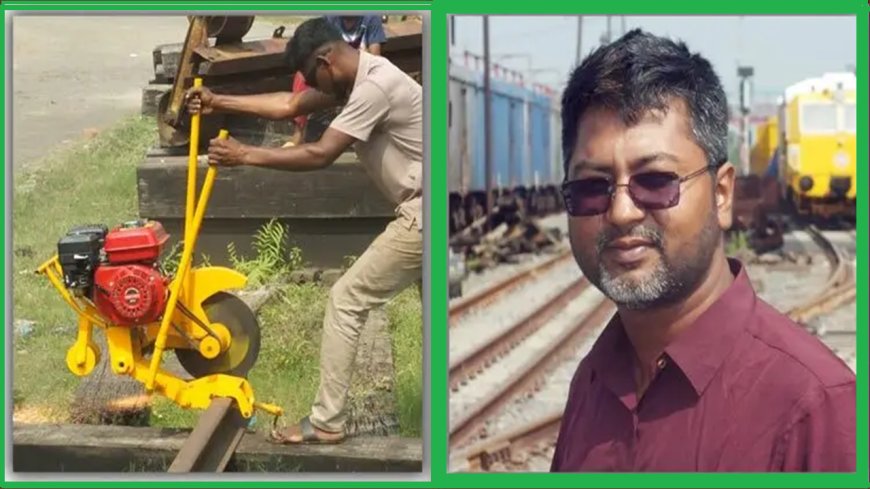



Engineer Najib Kaiser Bindu, a former student of Rajshahi University of Engineering and Technology (RUET) and currently serving as a divisional railway engineer in the Pakshi Division of Bangladesh Railway, has successfully built a rail-cutting machine using local technology and technical skills at a cost of only Tk 27,500—compared to the imported version from Germany, which costs between Tk 500,000 and Tk 700,000.
Working with the engineering division’s own workshop staff, Engineer Bindu developed the machine to cut rail tracks in just 1 minute and 20 seconds—at least 20 percent cheaper than imported machines but delivering the same performance quality.
Railway maintenance teams often need rail-cutting machines for emergency repair work following derailments or track fractures. To meet this recurring field need, Engineer Bindu, based in the divisional headquarters at Ishwardi in Pabna, began developing the machine on October 6 and completed it by October 16. Field tests demonstrated its efficiency, with the machine cutting through a rail cross-section in just over a minute.
Muhammad Abu Zafar, Assistant Executive Engineer of the Pakshi Division, remarked, “During the British era, it used to take one to one and a half hours to cut rail tracks using Heco blades. Imported German machines could do it within a few minutes, but this locally developed one now cuts a rail cross-section in 1 minute and 15 seconds. It saves time and reduces import dependency.”
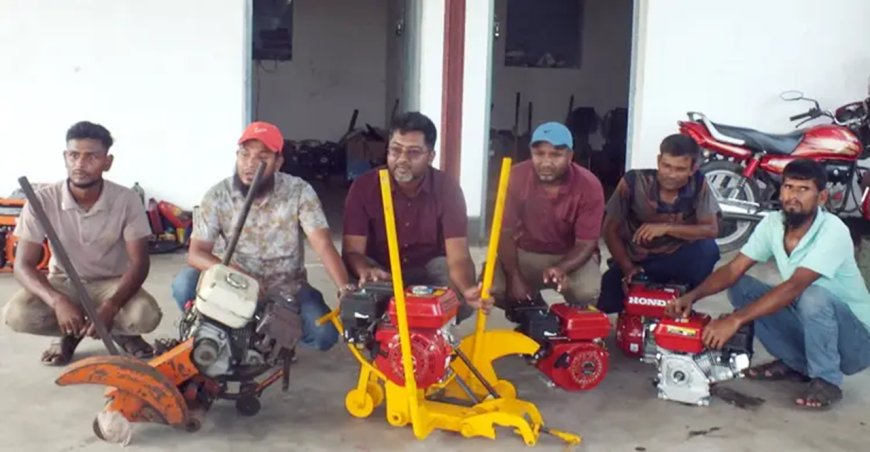
If the locally built machine proves durable, the Western Railway Division plans to mass-produce it at the Ishwardi workshop using government funds, said Divisional Railway Manager (DRM) Liakat Sharif Khan.
Bangladesh Railway Director General Afzal Hossain lauded the innovation, saying, “Engineer Najib Kaiser’s invention is undoubtedly a commendable achievement. Although it has been developed on a personal initiative, if the machine proves sustainable and effective in field use, the government will consider producing it officially for supply to both the Western and Eastern Railway Divisions.”
Explaining his invention, Engineer Bindu said, “The key feature of this machine is its flexibility—it can use cutting discs of any size. In case of derailment or accidents, railway workers can immediately cut rails using this machine. It can split a rail in just 1 minute and 20 seconds.”
The portable machine, powered by a 7.5-horsepower petrol engine, weighs about 35 kilograms. While the first prototype took 11 days to build, Bindu noted that future units could be completed in as little as five days if parts are readily available.
Besides the rail-cutting machine, he has also built a drill machine that costs only Tk 50,000 to produce—compared to Tk 1 million for imported ones.
“I love my country,” said Engineer Bindu. “My primary motivation was to keep our money within Bangladesh and prove that we can innovate using local technology.”
Born on January 26, 1989, in Rajshahi, Najib Kaiser Bindu spent his childhood in various sugar mill colonies across North Bengal, including North Bengal, Thakurgaon, Rangpur, and Shyampur Sugar Mills, due to his father’s posting. His father, Nazimul Haque, served as General Manager at the Bangladesh Sugar and Food Industries Corporation, and his mother is Lutfeyara Begum. The only son of the couple, Bindu earned his bachelor’s degree in Civil Engineering from RUET in the 2005–06 session and joined Bangladesh Railway in 2014 through the 33rd BCS as an Assistant Executive Engineer.









