






































































National Voices Call for Urgent Implementation of Padma Barrage and Second Padma Bridge Amid Drying River Crisis

National Voices Call for Urgent Implementation of Padma Barrage and Second Padma Bridge Amid Drying River Crisis
Jul 27, 2025 15:30
Jul 27, 2025 21:58

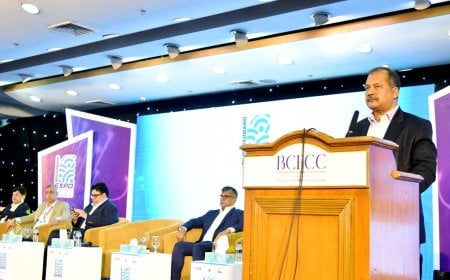
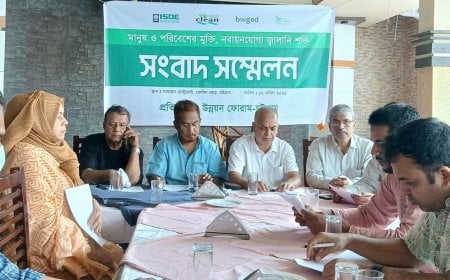
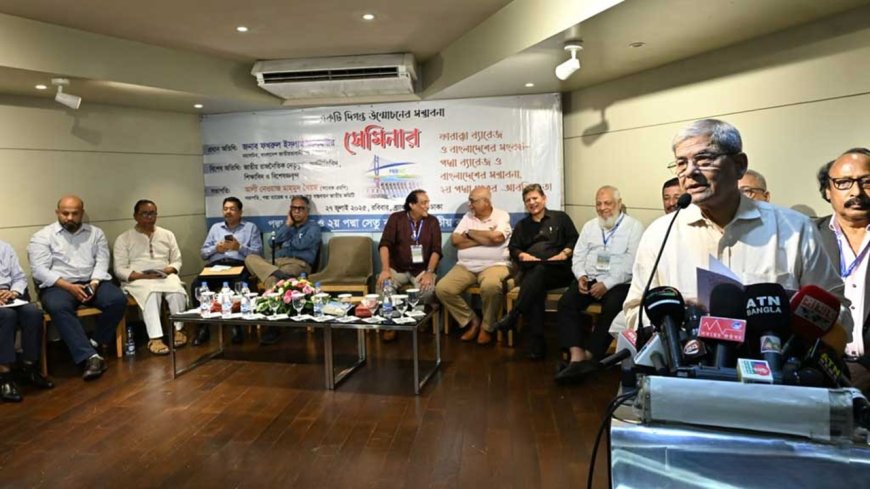
The once-mighty Padma River is now a shadow of its former self—its shrinking flow causing far-reaching impacts on agriculture, public health, and regional economies. A seminar held on Sunday, July 27, at BRAC Centre in the capital called for immediate national action to implement the Padma Barrage Project, a long-discussed water management initiative first studied in 2012. That feasibility study projected that construction costs could be recovered within five years.

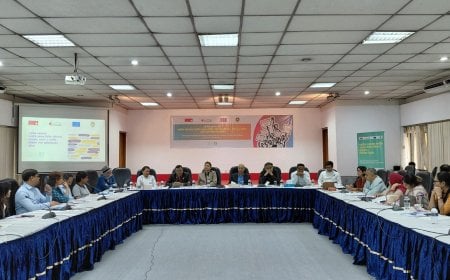
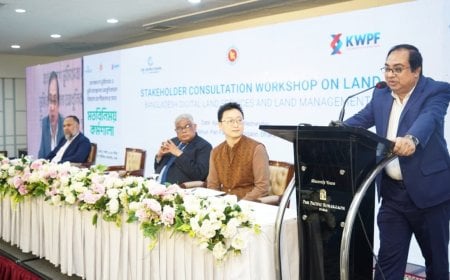
Organized by the National Committee for Implementation of Padma Barrage and Second Padma Bridge, the seminar brought together experts, political figures, and civil society representatives to amplify calls for renewed commitment to Bangladesh’s water sovereignty. The event was moderated by former MP for Rajbari-1 Ali Newaz Mahmud Khaiyyam.

Prominent speakers who expressed solidarity with the proposal included Dr. Hossain Zillur Rahman, Chairperson of PPRC; environmental and climate specialist Dr. Ainun Nishat; CPD Fellow Dr. Debapriya Bhattacharya; UK Labour Party member Romena Mahmud; engineer Gias Uddin; Ganosamhati Andolan’s Zonayed Saki; Workers Party member and North South University Vice Chancellor Abdul Hannan Chowdhury; BNP Chairperson’s adviser Shimul Biswas; and former Rajshahi City Mayor Mizanur Rahman Minu. Committee Chief Coordinator Jahangir Hossain Khan Jalal also attended.

Speakers emphasized that the Ganges water-sharing crisis, aggravated by India’s upstream activities including the Farakka Barrage, is not merely a diplomatic dispute but a national sovereignty issue. “We must break away from the mindset of a dependent partner and build unified national momentum to demand equitable rights over our natural resources,” participants urged.

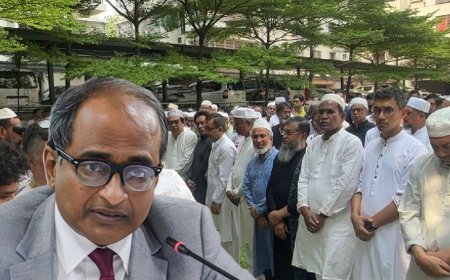
The event began with a moment of silence for the victims of the tragic aircraft crash in Uttara, which claimed the life of pilot Towkir Islam and students from Milestone School. A condolence motion was presented by Committee Secretary General Brig. Gen. (Retd.) Abu Ohab Md. Hafizul Haque.

Two documentaries were presented: one titled “Farakka Barrage and the Bangladesh Crisis: Possibilities of Padma Barrage” by former Water Development Board engineer Abdul Wadud Bhuiyan, and another on the necessity of a second Padma bridge by engineer Shahidul Imam.

Fakhrul Highlights Political Will

BNP Secretary General Mirza Fakhrul Islam Alamgir delivered the keynote address, stressing that “political commitment is essential to resolve the water-sharing crisis.” He referenced BNP Chairperson Khaleda Zia’s long-standing support for a second Padma Bridge, stating, “Almost 80 million lives are tied to the Padma Barrage and bridge. Despite seven feasibility studies, no concrete decision has been made. This is unacceptable.”

He emphasized that Farakka’s impact goes beyond Rajbari or Faridpur. “This is a national crisis affecting all of southern Bangladesh. We must build a united civic front to press for our rightful share—no matter who is in government.”

Experts Warn of Future Collapse

Dr. Ainun Nishat, a prominent climate expert, said the Padma is unlike any other river globally in its power and depth. “No existing technology can build a bridge on such a deep river easily,” he cautioned, urging that any new feasibility assessment must not rely on outdated data. He also noted that 70% of water flow currently comes from the Brahmaputra, and any barrage must be technically assessed and politically endorsed. “Eighteen parts of this decision are political,” he asserted.

He warned of an impending humanitarian crisis: “The future of the southwest is grim without the Ganges Barrage. Areas like Satkhira and Barguna are becoming uninhabitable. Climate change will make these zones unlivable within 30–40 years unless we act now.”

Dr. Nishat noted that while the 1996 Ganges Water Treaty allowed Bangladesh to receive around 35,000 cusecs of water, the actual average is far lower. “Even if we manage to divert 10,000 cusecs toward Jessore and Khulna, it could save the region. The absence of political backing is the main reason it hasn’t happened.”

Debapriya Stresses Policy Continuity

CPD Fellow Dr. Debapriya Bhattacharya called for the Padma Barrage Project to be included in the 2026–27 fiscal budget. “This isn’t just a regional issue—nearly one-third of the country’s land and population has been affected by Farakka’s impact.”

He expressed concern over the imminent expiration of the 30-year Ganges Treaty in 2026. “Where is the national debate on how we will renegotiate a stronger deal next year? We must begin technical and diplomatic preparations now.”

Debapriya also pointed out that a new government would likely revise the current budget and called for this project to be updated and funded accordingly. “The incoming administration must create a mid-term development strategy, incorporating the Padma Barrage into both its revised budget and ninth Five-Year Plan.”

Hossain Zillur Proposes Working Group

PPRC Chairperson Hossain Zillur Rahman called for the formation of a dedicated working group on the Padma Barrage, blending political will with technical competence. Addressing Mirza Fakhrul, he urged political parties to act before the next election.

“Bangladesh is at a political crossroads. The future of governance depends not just on structures, but also on vision, competence, and the application of sovereignty in meaningful ways,” he said.

Urgency Echoed by Engineers

Committee Secretary General Brig. Gen. (Retd.) Hafizul Haque delivered the welcome speech, reiterating the urgency of constructing the barrage and second bridge. Former MP Ali Newaz Mahmud Khaiyyam, in his closing remarks, described the Padma as “drying to a trickle,” calling for immediate action.

Engineer Wadud Bhuiyan explained that India’s Farakka Barrage, constructed in the 1960s–70s, deprived Bangladesh of its fair share of transboundary water resources. Engineer Shariful Islam supported the construction of a second Padma Bridge at Paturia-Daulatdia, citing JICA studies.

Engineer Mahmudur Rahman emphasized that two-thirds of Bangladesh now suffers due to India's water withdrawal via Farakka, impacting 26 districts. He stressed that a water source must be secured before initiating barrage construction.

The seminar concluded with consensus that the Padma Barrage and second bridge are essential for protecting Bangladesh’s environmental, economic, and geopolitical future.