



































Canada Bans Social Media for Under-16s
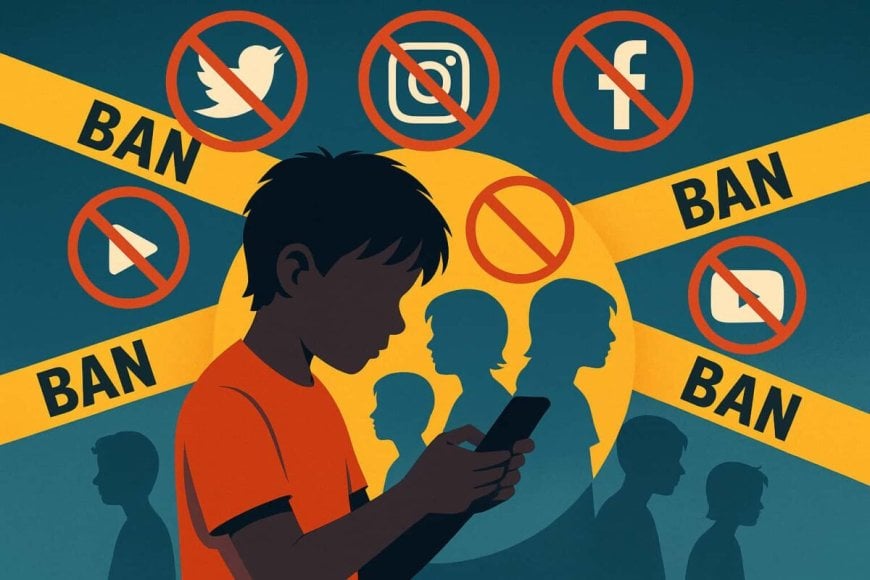



Following similar moves by Australia, Indonesia, and Malaysia, the Canadian government has introduced landmark legislation aimed at protecting children’s mental health and combating cyberbullying by restricting social media access for users under the age of 16.
The proposed legislation, titled the Safe Social Media Act (Bill C-34), was unveiled on Wednesday by Mark Miller during a press conference in Ottawa.
The bill would not only impose age restrictions on social media platforms but also introduce sweeping new obligations for artificial intelligence services and digital platforms operating in Canada.
A “Safe by Design” Digital Environment
According to the government, the legislation seeks to rebuild online platforms around a “safe by design” framework for children and teenagers.
Companies found violating the law could face penalties of up to 3 percent of their global revenue or CAD 10 million, whichever is greater.
Key provisions of the bill include:
- Removal of child sexual exploitation material, cyberbullying content, suicide-promoting material, and non-consensual AI-generated intimate imagery within 24 hours of being reported.
- Mandatory labeling or watermarking of AI-generated images, videos, and text.
- Requirements for platforms to modify addictive design features and recommendation algorithms that may encourage excessive use among children.
Stricter Rules for AI Services
While the bill proposes a blanket social media restriction for users under 16, it does not establish a minimum age requirement for AI chatbots such as ChatGPT or Claude.
Minister Mark Miller said current research has not conclusively demonstrated that AI chatbots affect children's mental health in the same manner as social media platforms. He also emphasized the growing educational value of AI technologies within Canada's broader AI strategy.
However, the legislation would impose new accountability measures on AI providers. Under the proposed rules:
- Chatbots must be designed to avoid harmful, manipulative, or dangerous interactions with users.
- If a user expresses intentions to harm themselves or others, the AI system must activate an emergency crisis-response protocol and provide appropriate support resources.
New Digital Safety Commission
To oversee implementation and enforcement, the government plans to establish an independent regulator called the Digital Safety Commission of Canada.
The commission would have authority to grant exemptions to platforms that can demonstrate robust child-safety protections and effective safeguards. Such exemptions would not apply to adult or pornographic websites.
Expert Views
Brett Caraway, an associate professor specializing in technology and privacy at the University of Toronto, described the proposal as more comprehensive than similar legislation introduced elsewhere.
According to Caraway, while some international laws primarily focus on restricting children's access to social media, Canada's proposal goes further by requiring both social media and AI platforms to redesign their systems around child safety principles.
Path to Implementation
The government of Mark Carney expects the legislation and the creation of the Digital Safety Commission to take approximately 18 to 24 months to fully implement if approved by Parliament.
Meanwhile, technology companies including Meta and Google have indicated their willingness to work with Canadian authorities on meeting the proposed safety standards.
If enacted, the Safe Social Media Act would become one of the world's most comprehensive digital safety frameworks, extending beyond age restrictions to reshape how social media and AI platforms operate for younger users.
DBTech/BMT/OR









