























































































































Foreign Firms to Operate Chattogram Port Terminals by December



Chattogram Port currently has 13 gates, but only six of them are equipped with scanning machines—three to four of which remain out of order at any given time. “A port cannot function this way. Therefore, we are working to appoint foreign operators to increase the port’s capacity. If we can do that, foreign investment will also increase,” said Senior Secretary of the Ministry of Shipping Mohammad Yusuf.
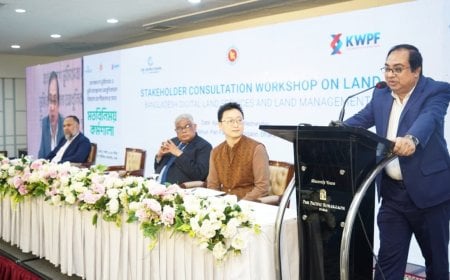
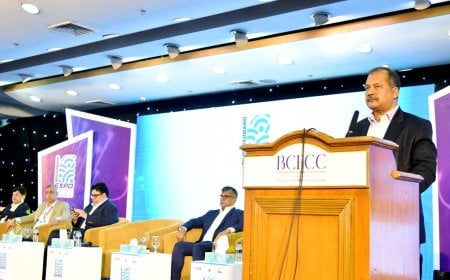
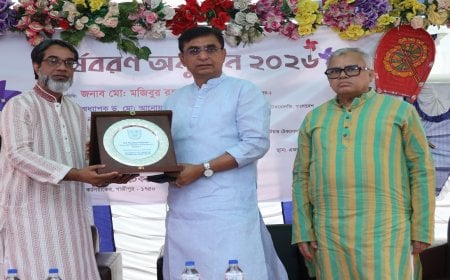
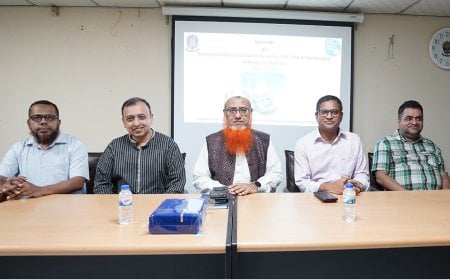
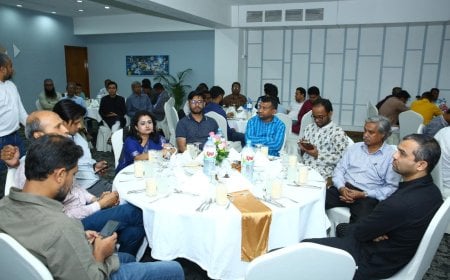
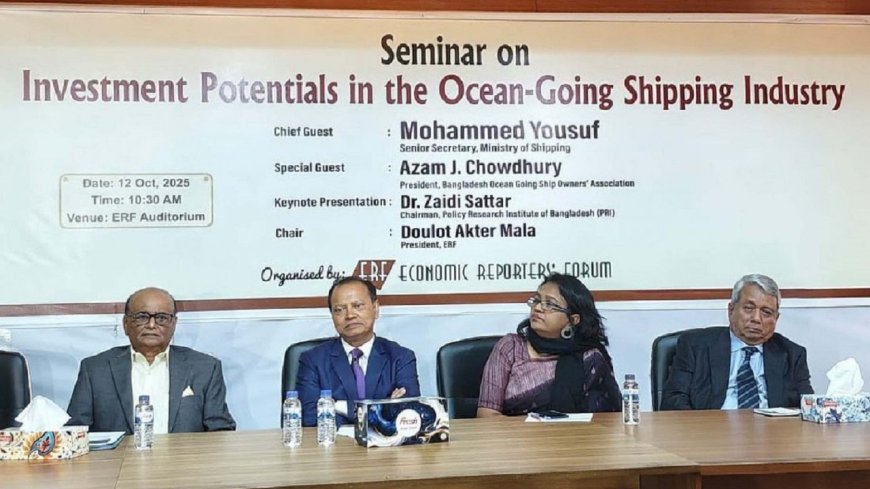
He made the remarks on Sunday, October 12, at a seminar titled “Investment Potentials in the Ocean-Going Ship Industry” organized by the Economic Reporters Forum (ERF) at Purana Paltan, Dhaka.
The Senior Secretary questioned, “Foreign operators are working at ports in Sri Lanka, India, and several other countries. If it is not a problem there, why should it be a problem here?”
He further informed that the government will sign agreements in December to appoint foreign operators for managing the Laldia, New Mooring Container Terminal (NCT), and Bay Terminal of Chattogram Port. Under the arrangement, the Laldia Terminal will be leased out for 30 years, while the other two will be operated by foreign companies for 25 years each.
Speaking as the chief guest, Mohammad Yusuf also discussed the recent tariff hike at the port. “In 2020, the government appointed a foreign consultancy firm regarding Chattogram Port. The government received their report six months ago. Based on the consultant’s recommendations, the port tariff has been increased,” he said.
“For the first time since 1986, the fees for using Chattogram Port have been raised this year. The charges had remained unchanged for nearly 40 years, so there is no scope to reduce them now. They should have been revised every five years,” he added.
Responding to a question on whether users could bear the increased costs, he said, “If service quality improves and faster operations reduce unnecessary ship idling at the port—thereby lowering demurrage—then the additional cost will not be a problem.”
As a special guest, Azam J. Chowdhury, President of the Bangladesh Ocean-Going Ship Owners’ Association, pointed out a regulatory inconsistency. “In our country, there are two kinds of flags for ships. By law, goods purchased with public funds must be carried by ships flying the national flag. This refers to government-owned vessels. But then, which country’s flag do private Bangladeshi ships carry?” he questioned.
The seminar was presided over by ERF President Daulat Akhtar Mala, with participation from Dr. Zaidi Sattar, Chairman of the Policy Research Institute (PRI), and Azam J. Chowdhury, President of the Bangladesh Ocean-Going Ship Owners’ Association. The event was conducted by ERF General Secretary Abul Kashem.
Presenting the keynote paper, Dr. Zaidi Sattar said, “The country’s ship-breaking and small-shipbuilding sectors have already laid the foundation for large-scale shipbuilding. We currently have export orders worth around 200 million dollars. If these are delivered properly, more orders will follow. To achieve that, we need a banking system tailored to the shipbuilding industry, beyond the traditional banking structure.”
He further said, “Shipbuilding depends on international trade. The global business environment is now positive. If we can take advantage of this momentum, the shipbuilding industry can grow into a two-billion-dollar sector.”
Referring to Bangladesh’s upcoming graduation from Least Developed Country (LDC) status to a developing economy, he emphasized, “We now need to focus on industries suitable for developing countries. Shipbuilding is one such sector that can establish a sustainable industrial base beyond the ready-made garments industry.”