





































Post‑Eid ATM Agony: Cash‑Starved Customers Queue, Complain and Quarrel
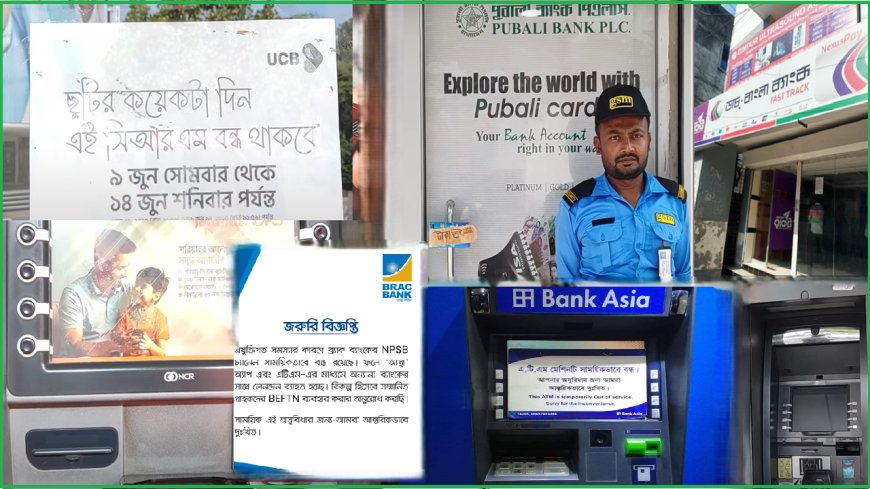



Returning to Dhaka after the long Eid‑ul‑Adha holiday, wage‑earners discovered that—even though Friday, 13 June, was already a full banking holiday—many automated teller machines were equally inaccessible. Booth shutters were down, “No Cash” notices were taped to screens and, in several cases, entire rows of ATMs sat idle.
Across the capital, customers described an unprecedented crisis. At Dhanmondi’s Simanta Square, private‑sector employee Habibur Rahman said he had visited three booths: “There is no money anywhere. I urgently need cash and am forced to borrow.” Outside a Pubali Bank booth, Sabeeha Alam called the episode “a very bad precedent—if we face misery in Eid, why keep these booths at all?”
Similar scenes played out in Mahakhali, where garment worker Runa Akter explained she had needed to send money to her sister: “I checked several booths, found nothing, then had to travel by bus to Mirpur, losing both time and fare.” Dutch‑Bangla Bank customer Anjan Dev said his card repeatedly returned the message “Out of Service,” while another client, Farida Akter, complained she could not withdraw more than BDT 5 000 at a time.
Customers who did locate operational machines endured long queues. Because the interbank National Payment Switch was deactivated for part of the break, “one bank’s card could not withdraw from another bank’s booth,” further aggravating crowds outside cash‑stocked kiosks.
Outside Dhaka, conditions were no better. In Sylhet’s Zindabazar, Chandhattā and Subidbazar districts at least ten booths displayed notices of technical failure or were padlocked outright. In Rangpur, private‑company dealer Uday Chandra Barman reported roaming three neighbourhoods without success.
Bank officials—speaking anonymously—blamed the shortage on the ten‑day holiday closure: “Branches were shut, so booths could not be refilled.” Although Bangladesh Bank had circulated a 29 May directive ordering commercial banks to ensure “sufficient cash” and continuous refilling, a senior central‑bank officer admitted that “many banks are evidently not complying.”
Bangladesh Bank spokesperson and executive director Arif Hossain Khan stated: “We were fully aware of the ten‑day break and instructed banks accordingly. Now we will identify the causes and summon the institutions; such disruptions must not recur.”
Under current regulations a single ATM may hold up to BDT 8 million; bankers argue this cap, together with security constraints, makes rapid depletion inevitable during festivals. They have called for either higher per‑booth limits or special holiday refilling teams.
Technology issues also intensified the crisis. Banks routinely lower single‑withdrawal ceilings before Eid, and Dutch‑Bangla’s temporary disabling of the National Payment Switch left its card‑holders unable to use rival ATMs; the bank later apologised.
Observers urge round‑the‑clock surveillance teams, emergency cash‑loading squads and more aggressive promotion of digital payments. As one frustrated customer in Rangpur put it, “What good is a card if you cannot get cash when you need it most?”
According to Bangladesh Bank, the country hosts 12 946 ATMs and 7 012 cash‑recycling machines, yet without coordinated management—even during the nation’s primary festival—“inevitable” public misery remains.









