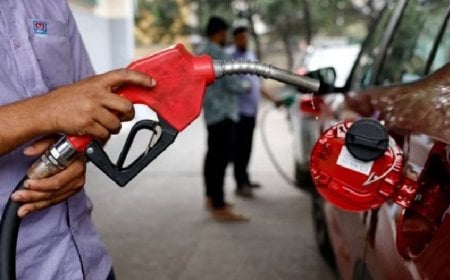
There was a time when the phrase “burning since birth,” written on the back of fuel tankers on highways, might be ridiculed. But in a twist of time, that phrase has now become a stark reality of the global economy. The geopolitical tensions among Iran, the United States, and Israel in the Middle East are no longer confined to maps—they have reached our kitchens and industrial wheels. Bangladesh is no exception. Seventeen years after witnessing a severe power crisis, even in today’s era of advanced technology, a similar shadow is once again knocking at our door.
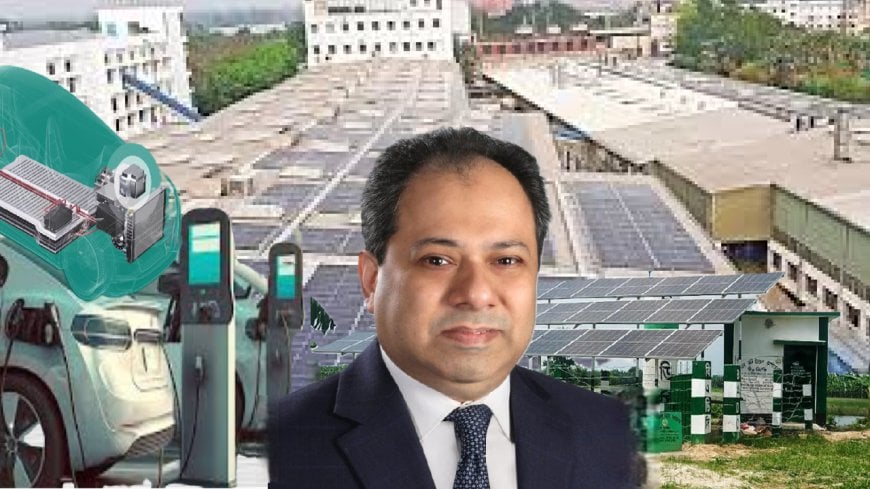
However, the solution to this crisis does not lie in imported liquid fuels; it lies in the abundant sunlight above us. If the government seeks sustainable benefits in the coming years, it must move beyond a “duty-based import” policy toward prioritizing “duty-free production” or “local assembling.” Battery hubs must be established for solar energy storage. To reduce petroleum consumption, the use of electric vehicles (EVs) and home appliances must be expanded. This requires indigenous renewable energy, stability, cost efficiency, and long-term energy security.
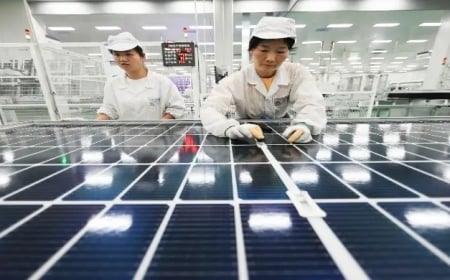
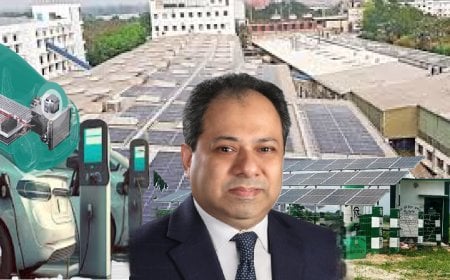
If every rooftop in urban areas can be transformed into a power station, pressure on the national grid could be reduced by half. The government can, through entrepreneurs, convert rooftops of public offices into solar hubs. By reducing dependence on imported fuel oil and harnessing the country’s abundant sunlight, the energy crisis can be permanently mitigated. In this regard, simplifying solar panel imports is essential. Additionally, to make lithium-ion or advanced sodium-ion batteries more accessible, duties on raw material imports should be reduced to zero, and at least a 10-year tax holiday should be offered to encourage local manufacturing. Long-term, low-interest “green loans” must also be ensured for solar panel installation. As battery costs decrease, solar power will no longer be limited to daylight hours. With such policy support, people across all income groups will benefit.
Similarly, to relieve citizens from the burden of fuel procurement for motorized agricultural equipment—such as irrigation pumps, harvesters, and threshers—electric solutions must be made widely available across agriculture and transport sectors. EVs are no longer just vehicles; they have become a symbol of progress. Special incentives for importing EV components such as motors, controllers, and charging equipment could enable the production of affordable e-bikes and three-wheelers, as well as the development of new vehicles tailored for agricultural and industrial needs. Duty-free EV imports would reduce the number of fuel-based vehicles, lower fuel import costs, and ease pressure on the sector, while also reducing noise and air pollution.
However, introducing EVs alone is not sufficient; adequate charging infrastructure must be ensured. Policies should mandate the installation of DC fast-charging points at every filling station nationwide. Charging stations could also be set up along roadsides, in garages, or through ride-sharing models similar to charging EV networks. At the same time, smart metering systems should offer incentives for charging EVs during off-peak hours, when electricity demand is lower, thereby facilitating grid management.
A significant portion of Bangladesh’s diesel imports is consumed by irrigation pumps. Therefore, increasing government subsidies to convert diesel-powered irrigation systems into solar-powered pumps is essential. This would reduce farmers’ costs while decreasing reliance on fuel imports.
To meet EV electricity demand, simplifying net metering could serve as an effective solution. When citizens see that they can sell surplus electricity generated from rooftop solar panels back to the grid and receive “zero” or even “negative” electricity bills at the end of the month, it could evolve into a массовое движение (mass movement).
Investors, however, will only engage when they perceive long-term policy stability. Entrepreneurs working in renewable energy should not have to navigate multiple government offices. Strengthening the Sustainable and Renewable Energy Development Authority (SREDA) and enabling a one-stop approval system could streamline processes.
Through a “green energy” movement, if Bangladesh fully embraces battery technology and solar energy today, the term “load shedding” could disappear from the national vocabulary within a few years. The country would no longer burn under energy shortages but instead move toward a sustainable future illuminated by sunlight.
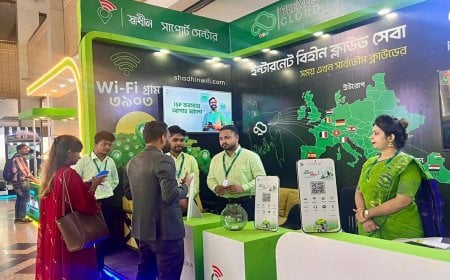
As the discussion draws to a conclusion, a question may arise: why would a telecom sector entrepreneur be so concerned about the energy sector, and why should the government take note? The answer lies in the reality that every call and every data packet in Bangladesh travels through thousands of telecom towers, and keeping these networks operational requires electricity. Much of this infrastructure still depends on diesel generators and unstable grid power. Rising fuel costs, increasing carbon emissions, and vulnerability during crises put networks at risk. In this context, “uninterrupted, clean energy” is no longer a luxury—it has become a prerequisite for the survival of the telecom sector.
Consider a remote telecom tower or an ISP point-of-presence where grid power is unreliable. Previously, diesel generators would run for hours to maintain connectivity. Now, solar panels installed on the tower, combined with lithium-ion battery banks, generate electricity during the day and store it for use at night. Generators operate only in emergencies. This “hybrid power system” not only reduces costs but also cuts carbon emissions by 40–60 percent. For telecom, where even a second of power disruption can result in thousands of dropped calls and data loss, uninterrupted power is critical.
This is where integrated energy storage systems (ESS), large-scale batteries (lithium-ion, LFP), smart energy management software, and the integration of grid, solar, and generator sources come into play. Such systems can transform telecom towers into self-sufficient micro power stations. In a country prone to cyclones, floods, and storms, telecom networks become lifelines during disasters. By combining solar energy, storage, and smart UPS systems, “disaster-resilient networks” can be developed.
Imagine an ecosystem where an entrepreneur establishes an “Energy Service Company (ESCO)” in a rural area, supplying solar power to telecom towers, local businesses, and charging stations. Electricity is sold under a “Power-as-a-Service” model, where operators pay only for usage without heavy capital investment. A telecom tower, once merely a communication symbol, can evolve into a source of energy, a hub of stability, and even a driver of local economic growth.
Bangladesh’s energy sector now faces an uncomfortable reality. The current model is not sustainable—this is no longer a matter of debate. Fluctuations in global oil prices, Middle Eastern tensions, or pressure on the dollar directly impact households, industries, and agriculture. Yet sunlight is available every day. The question is whether it will remain merely light or be transformed into energy for the future.
Statistics indicate that Bangladesh receives an average solar radiation of 4 to 5 kWh per square meter per day—nearly double that of Germany, which generates more than 60 percent of its electricity from renewable sources. This highlights the untapped potential of solar energy in Bangladesh. Experts estimate that utilizing rooftops of industrial, commercial, and residential buildings could generate 3,000 to 4,000 megawatts of electricity. In alignment with this view, the telecom sector’s adoption of this transformation could extend “network coverage” beyond maps into every layer of sustainable development.
Technology is now affordable, investors are interested, and the potential is vast—yet progress remains slow. The barrier is not technological but policy-driven. Without removing duties on renewable technologies, ensuring long-term financing at below 5 percent interest, expediting approval processes (within 30 days), mandating rooftop solar integration, modernizing the grid, and implementing effective net metering, no transformation will be sustainable.
Author: Publisher, DigiBangla; Editor, SaraBangla; Entrepreneur and Senior Vice President, ISPAB
Disclaimer: The views expressed in the opinion section are solely those of the author. The Digital Bangla media authority bears no responsibility for these views. As a reflection of diverse opinions, the article is published without editorial alteration. Any dissatisfaction or reaction remains the personal matter of the reader.