












































































































ICT Curriculum Overhaul: NCTB Integrates AI, Robotics and Cloud Skills from 2027
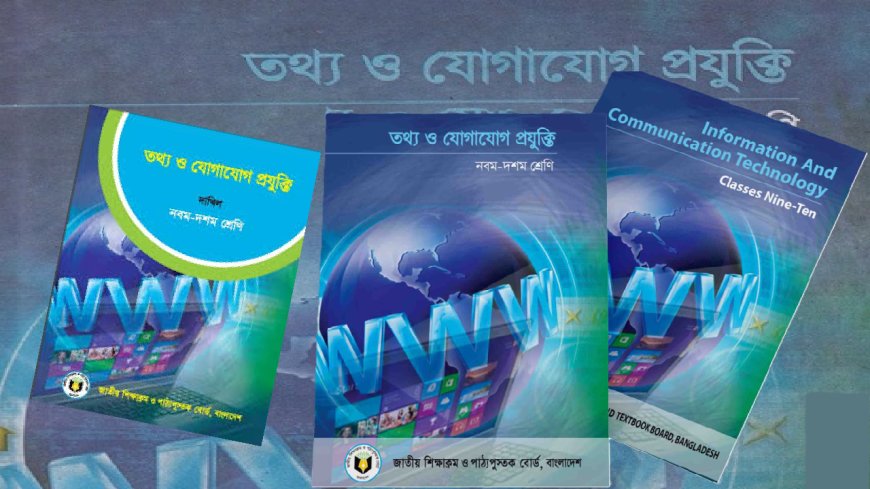



Keeping pace with the rapidly evolving technologies of the modern world has become essential for students. Acquiring technological knowledge and skills is crucial to addressing the challenges of the 21st century. In this context, the National Curriculum and Textbook Board (NCTB) has undertaken a groundbreaking initiative to introduce major changes to the secondary-level Information and Communication Technology (ICT) textbooks from the 2027 academic year. The primary objective of this transformation is to enhance students’ technological competencies and prepare them for the future.
According to relevant stakeholders, students in the Bangla medium are currently lagging behind their English medium (‘A’ and ‘O’ Level) counterparts in technological knowledge, which puts them at a disadvantage in the competitive job market. The existing ICT textbooks for Classes Six to Nine have been unable to meet the demands of the time, making this reform increasingly necessary. NCTB Research Officer Md. Abdullah Al Zobayer stated that the new curriculum will enable students to gain hands-on experience with modern technologies directly in the classroom.
The updated curriculum will incorporate advanced topics such as Artificial Intelligence (AI), robotics, the Fourth Industrial Revolution, Virtual Reality, nanotechnology, smart homes, and satellite internet (including how Starlink works). In addition, students will have opportunities to acquire practical skills in cloud computing, creating presentations using Canva, image processing with AI, and video editing.
At the same time, students will gain comprehensive knowledge of important social and ethical issues, including cyberbullying, online misinformation, cybersecurity, cyber laws, spamming, phishing, and media literacy.
For Classes Nine and Ten, these topics will be covered in greater detail. According to sources, the first chapter will include discussions on the Fourth Industrial Revolution, Virtual Reality, and nanotechnology. The second chapter will focus on media literacy, including its concepts, components, and characteristics, as well as online gambling, trademarks, necessary provisions of new laws related to digital security, types of cybersecurity, prevention and mitigation strategies, and detailed discussions on hacking, tracking, spamming, and phishing. The third chapter will cover cloud computing, digital footprints, and digital twins. The fourth chapter will teach graph creation and report writing. The fifth chapter will include practical training on creating presentations using Canva, AI-based image processing, and video editing with Camtasia. The sixth chapter will introduce the fundamentals of database management, including record insertion and deletion.
It is noteworthy that ICT was made a compulsory subject for Classes Six to Eight and Eleven to Twelve in 2013 and 2014. A decade later, in 2025, the ICT textbook was made mandatory for Classes Nine and Ten from the 2025 academic year.
DBTech/SH/MUIM/OR