





































APM Terminals Chosen to Modernize Chattogram Port: BIDA Chief Explains the Rationale in Q&A
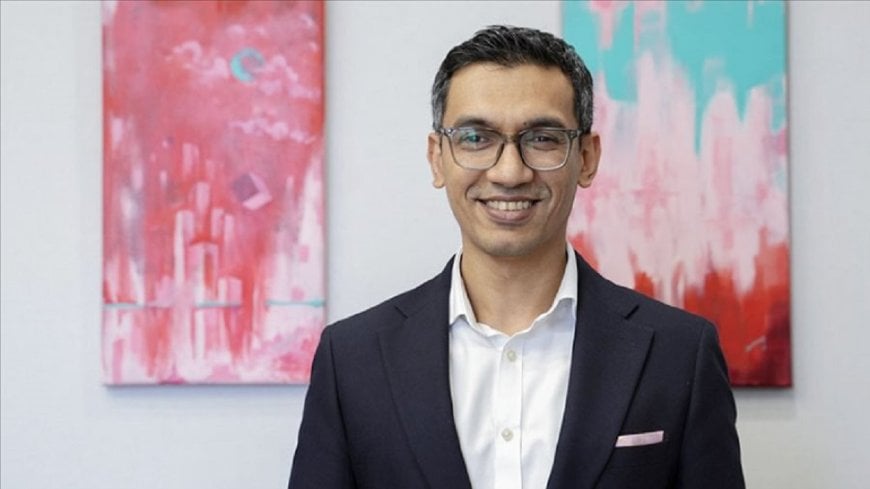



To modernize Chattogram Port, prevent corruption, and strengthen global competitiveness, the government has chosen Denmark-based APM Terminals to operate the Laldia Container Terminal. The decision aims to reduce daily long waiting times, eliminate transparency gaps, and overcome technical limitations to establish world-class port operations, said Bangladesh Investment Development Authority (BIDA) Executive Chairman Ashik Chowdhury.
According to him, “In the World Bank’s recent Container Port Performance Index, Chattogram Port ranked 334th out of 405 ports, while Vietnam’s Cai Mep Port secured the 7th position—thanks to global operator management. Bangladesh is now moving toward a similar model to bring significant changes to port management.”
He also clarified that there is no possibility of port ownership transferring to any foreign entity. APM Terminals will build a world-class terminal in Laldia Char with their own investment. After construction, they will only operate it for a fixed period. Once the contract expires, the entire infrastructure will remain under the ownership of the government.
He added, “The car is ours; they are just the driver. A driver never becomes the owner of the car.”
Q&A
Q: Why does Chattogram Port need a global operator?
The main challenges in our ports are corruption and long waiting times. Countries like Vietnam introduced tech-driven port management led by global operators and brought their Cai Mep Port to the 7th position globally. In contrast, Chattogram is ranked 334th out of 405 ports.
We need operators who can deliver maximum efficiency using new technologies and effective processes. Our young workforce will learn from them and eventually lead ports at home and abroad. Most importantly, we can hope for a corruption-free port.
Q: Is the port’s ownership being handed over to foreigners?
Absolutely not. Bangladesh retains full ownership of the port.
APM Terminals will design and construct a new world-class terminal at Laldia Char with their own investment. Bangladesh will own that terminal. Construction will take about three years. After completion, APM will manage operations for a fixed period. When the term ends, they will hand everything back to us.
Think of it this way: the car belongs to us; they are the driver. Does that make the car theirs?
Q: Who are APM Terminals and why were they selected?
APM Terminals is a fully owned subsidiary of the globally renowned A.P. Moller–Maersk Group. They operate 10 of the world’s top 20 ports and currently manage over 60 terminals across 33 countries, including Vietnam, Singapore, China, and several European nations.
Q: What are the key terms of the agreement?
Laldia Container Terminal is a Public-Private Partnership (PPP) project. Highlights:
-
Full investment from the private partner.
APM will pay BDT 250 crore as signing money and invest around BDT 6,700 crore during construction.
No government financing or guarantees. -
30-year operations contract after construction. Extensions may be allowed if they meet all commercial, social, and environmental conditions.
-
Per-container fee paid to Bangladesh. Higher volume means higher revenue for us. Even if they fail to handle containers, they must pay for a minimum guaranteed volume.
-
Chattogram Port Authority will act as the regulator.
Q: Isn't a 30-year contract too long?
In PPP models, 30 years is mid-range. Examples:
-
Mumbai Port, India (2018) – 60 years
-
Shanghai Port, China (2003) – 50 years
-
Cai Mep, Vietnam (2010) – 50 years
Q: Why isn’t the full contract being published?
Worldwide, PPP agreements are not publicly released due to legal constraints. Full disclosure can affect future tenders and bargaining capacity. Contracts also contain confidential business information.
Institutions like the World Bank and ADB recommend publishing summaries, not full agreements.
For Laldia, key public-interest information (ownership, revenue model) has already been shared with the media.
Q: Was the operator selection process transparent?
Yes. Under PPP G2G guidelines, the process included tendering, pre-qualification, technical and financial evaluation, and due diligence. Independent technical advisors, legal experts, consultants, and an inter-ministerial committee ensured transparency. All steps were recorded for audit.
Q: Are we following Sri Lanka’s path?
No. Sri Lanka’s Hambantota Port was built with Chinese loans, and inability to repay led to handing over controlling equity for 99 years.
We learned from that mistake.
Laldia Terminal:
-
Is not loan-based
-
Has no foreign equity ownership
-
Is entirely APM’s investment
-
Includes clear provisions for traffic study, risk sharing, currency risk, and step-in rights
Thus, the project is economically sustainable and transparent.
Q: What if the operator fails or violates the agreement?
The contract includes:
-
Performance-based KPIs
-
Remedies and penalties
-
Step-in rights
-
Termination clauses
-
Handover provisions
If APM fails, the government or port authority can intervene and take control.
Q: Why build a new terminal instead of fixing existing ones?
Existing terminals are undergoing digitalization, yard redesign, and management reforms.
Adding a world-class terminal at Laldia will increase operational competition.
Capacity expansion is essential to overcome bottlenecks and meet growing demand.
Q: Why is everything happening so fast?
It’s ironic—people complain that government offices move slowly. But when dedicated officers work tirelessly and push a major project forward with focus and urgency, some start complaining again!
“Don’t look for parallels—it’s just coincidence,” he said humorously.
Q: Is there any national security risk?
No. Navy, Coast Guard, Immigration, Customs, and other agencies will continue operating under standard security protocols.
All technologies will follow government-approved standards including data localization, cybersecurity, background checks, and access control.
Management remains under direct government oversight.
Q: What will the country gain?
-
Additional 800,000 TEU annual capacity—around 44% more than now
-
Lower transport cost per unit
-
Faster import and export processes
-
Ability to handle ships twice the current size
-
Direct shipping routes with distant countries
-
500–700 direct local jobs, plus over 1,000 indirect jobs
-
World-class training for local engineers and managers
-
Transfer of digital terminal operations, lean methods, and flow frameworks
-
Bangladesh’s first green, environmentally friendly port
Q: Why are some people protesting?
Three groups:
-
Those claiming to be “experts” without reading or understanding PPPs—writing misleading articles and chasing views
-
Those who profited from corruption and extortion at the port—now upset
-
Ordinary citizens who genuinely care, and will one day proudly show their grandchildren the progress made through collective effort
On 16 November (Sunday night), BIDA Chairman Ashikur Rahman Chowdhury posted this detailed Q&A on his verified Facebook page to address public concerns. Thanking his colleagues, he wrote:
“When I grow old and walk with a stick along Laldia, I will proudly tell my granddaughter that this infrastructural transformation in Chattogram—and the country—was possible because of our collective effort.”
DBTech/BT/IK/OR









